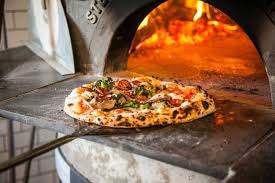
Food in Italy is very regional, by which I mean that each region has its own particular dishes and those dishes which traditionally can be found all over the country have regional variations. But it’s not a free for all! Anyone who has visited different parts of Italy will know that, for example the shape of the pasta changes quite markedly. Also the further South you go the less likely it is that you will find traditional cooking using butter and the further North the more likely it is that creamy (usually unsalted) butter is used in preference to olive oil.
Pizzas can be found all over Italy, indeed all over the world. The breaking news is that they were not invented in Chicago but in the south of Italy (Naples or thereabouts) and the first documented proof of their existence goes back to the 10th century AD where they are mentioned in a Latin document from the Southern town of Gaeta. This simple flat bread dish has a noble heritage and is deserving of respect. Good pizza chefs produce a superbly thin base with traditional toppings. They do not stuff the crusts with plastic cheese or scatter tinned pineapple chunks on top.
There are other well known Italian dishes that are equally badly treated as they are ‘re-interpreted’ in the mass production kitchens and fast food restaurants of the world.

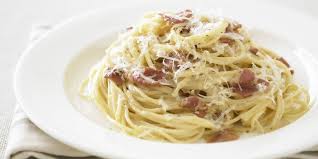
Carbonara is the one that most easily springs to mind. It’s best known as Spaghetti alla Carbonara but as it’s a dish that has its origins in the Lazio region (Rome in fact) it’s often served there with Fettuccine. There are 4 ingredients in the sauce. FOUR! They are: Eggs, bacon (about which more in a moment), black pepper and cheese. That’s it. No mushrooms. No cream. No garlic. No Nutmeg.
Even Nigella Lawson gets it wrong but a receipt uploaded by a Jamie Oliver fan to his website is quite good.

There is some legitimate variation about those ingredients but frankly there’s no room for adding anything else. The eggs can be yolk and white together, just yoke or all of the yolks and some of the white. As for the bacon; its important to note that ‘bacon’ in Italy is different to what we know as bacon in the UK. Try making a bacon sandwich with Pancetta! It’s very nice but it’s simply not right. For Carbonara there are two possibilities when selecting the ‘bacon’. The preferred option, in my opinion, is to use cubes of pancetta, making sure there is some fat for flavour. The alternative is a similar looking ingredient called guanciale. Guanciale is another bacon-like product made the from the cheek of the pig (guancia being the Italian for cheek) and is the meat traditionally used in another pasta sauce, amatriciana. Coarsely ground black pepper, and lots of it, is key to the Carbonara sauce. Whilst the origin of the name of the sauce isn’t certain we can be sure it relates in someway to carbon so it’s important that the pancetta is well fried and has lots of little black bits and the pepper not so finely ground so it too can be seen in all its black beauty. These two together represent the carbonesque nature of the dish. The cheese should properly be Pecorino Romano a sheep’s milk cheese, coming from the same area as the dish itself, with a lovely salty taste .
The sauce in Italy is a coating for the pasta not a sloppy soup for the pasta to sit on or under and this one in particular is quite dry. If it’s too dry you can stir a spoonful or two of the pasta cooking water in to loosen it a bit.
Ingredients (4 people)
300g dried Spaghetti
150g cubed pancetta or guanciale
6 free range egg yolks (or 4 whole eggs)
100g of Pecorino Romano finely grated (or substitute Parmigiano Reggiano or Grana Padana)
Method
Bring a large pan of water to the boil, add a good pinch of salt and cook spaghetti accruing the instructions on the packet. Don’t overcook the pasta and should have a definite ‘bite’ and not be too soft.
Meanwhile fry the pancetta in a large frying pan until its nicely browned. Removed the pan from the heat.
Beat the eggs in a bowl and add 2/3rds of the cheese and lots of coarsely ground fresh black pepper. Mix it all together and set aside until the pasta is cooked.
Drain the pasta, reserving a cup of the pasta water. Add the pasta to the frying pan (which should off the heat) and pour the egg mixture on top. Quickly combine the pasta, the pancetta and eggs until the pasta is evenly coated. If you delay the eggs may well scramble. In fact it should become lovely and creamy (without adding cream!). If it seems a bit too dry, then add some or all of the reserved pasta water.
 Serve immediately with the remaining cheese sprinkled on top and if necessary a few more turns of black pepper.
NB. Eggs differ from one another and spaghetti comes in slightly different
thicknesses so you may have to experiment until you find the right method for your ingredients but never ever add cream or if you do, don’t call it Carbonara!
 My Kind of Food
Leave a comment