New discoveries for our series, Adam’s Wines
I wouldn’t say that I’d been searching for it for the 8 years I’ve lived here, but I have been longing for it. The ‘it’ is the experience of being able to pop into a local wine producer, see where the wine is made, sample the juice and buy a few bottles to take home. This is something very easy to achieve in France but a much rarer opportunity in Italy. I’ve only done it twice before here and both were in prestigious wine producing areas (Francaicorta and Tuscany).
Lodi lies in the vast expanse of the Pianura (the plain) that covers the south of Lombardy and much of Emilia-Romagna (46,000 sq km). It is a significant feature of the geography of Northern Italy, surrounded by the Alps and the Apeninnes and drained by the mighty River Po and its tributaries. This is one of the most important agricultural areas in Europe, producing some of Italy’s best know food products.
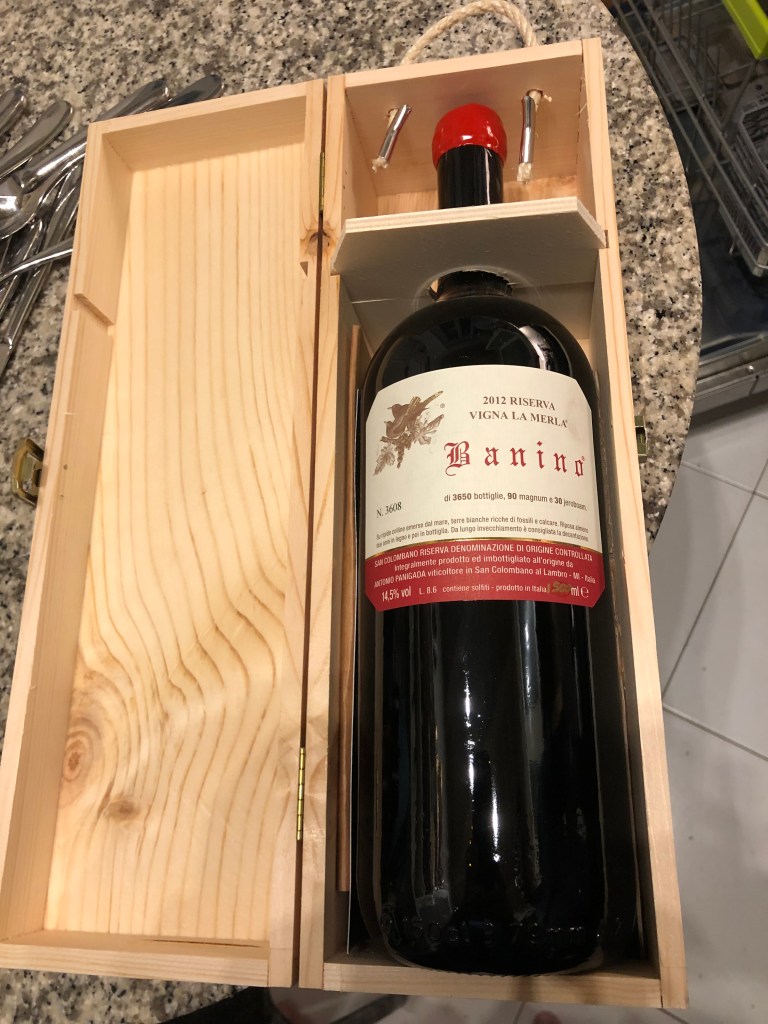
Last weekend we went for lunch to a restaurant which I’ve mentioned here before, and nervously chose a wine produced locally in San Colombano al Lambro (15 km from Lodi). I say nervously because the last time I’d tried wine from this area it was pretty rough to say the least. In fact what were served a Banino Rosso Vigna la Merla, 2013 Riserva, which was so nice that we not only ordered a second bottle but bought a 2007 to take home – purely for research purposes of course!
Yesterday we called the producer and set off to discover more about him and his wines.
San Colombano is a small village situated between Lodi and Pavia just as the land starts to form small hills on the western edge of the pianura. These hills are the Colli Milanese and provide a lush green backdrop to the town. The town itself is named for the Irish monk St Columbanus who brought Christianity to the village and planted the first vines in the early 7th century. The citizens of the village are called banini (as in Colombanini) and the name of the wine is Banino. There are brown tourist signs in these parts that supposedly guide one along La Strada del Vino, maybe it’s time to explore more.


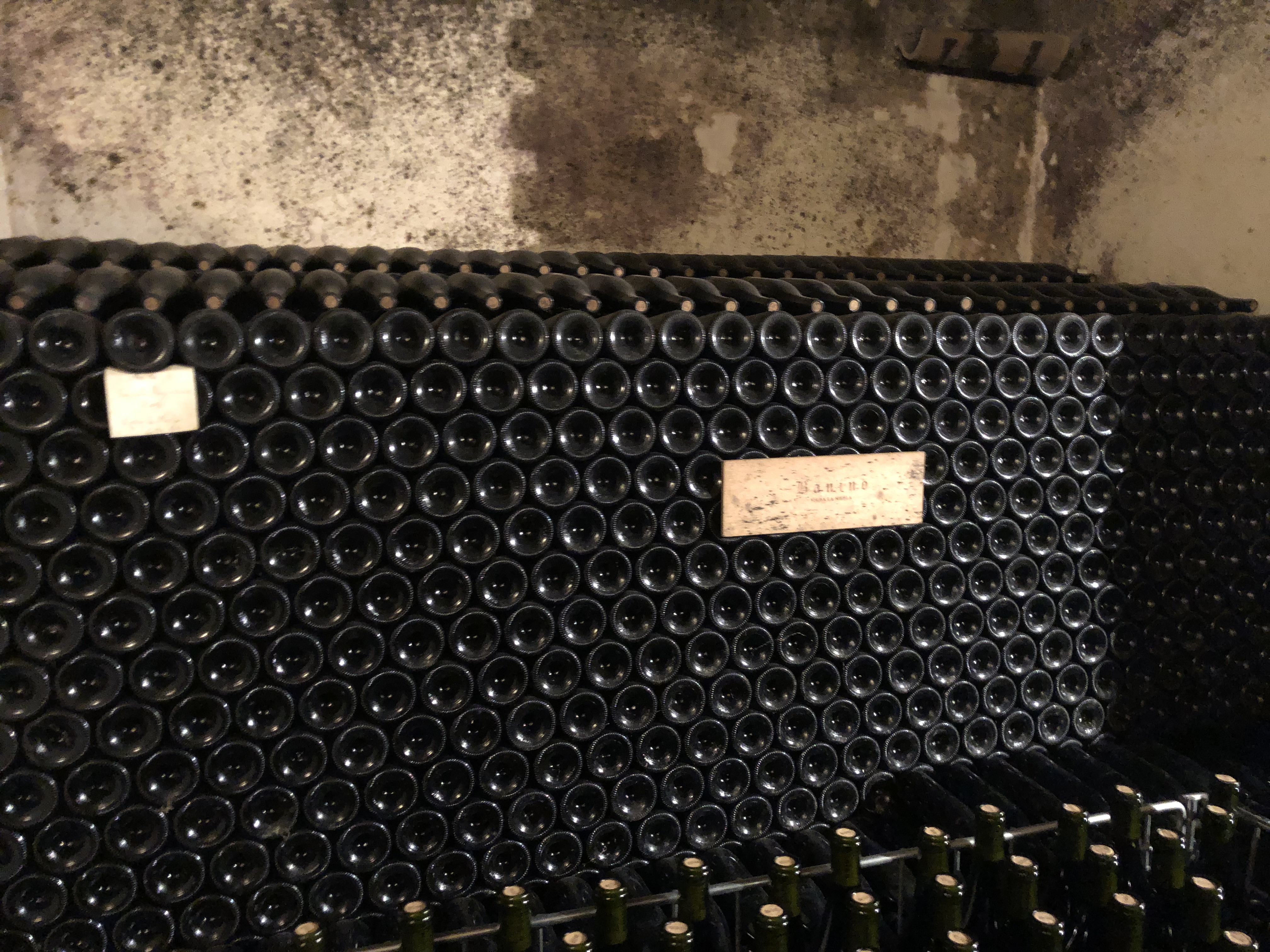
Antonio Panigada, whose family owns Banino wines, cultivates 5,000 hectares of the hillsides. The ‘terroir’ reflects the history, having been pushed from the sea in the Miocene period while sea-life fossils can be found on the tops of the hills. The vines are managed without the use of herbicides or chemical fertilisers and harvesting is done entirely by hand. The cellar is in the centre of San Colombano and everything to do with the production of the wine is carried out within its courtyard and small buildings. It’s a perfect example of how to pack things into a small space. Their publicity speaks of ‘wines that taste of wine’ and that don’t follow the fashions of the day. Bravi!
We hope to share some of tastings of the wines we bought yesterday (far too many!) in the coming weeks.

 My Kind of Food
Leave a comment