I’ve been fortunate enough to have eaten in Modena’s world class Osteria Francescana twice. On the second occasion, despite it already being fully booked, Chef Massimo Bottura kindly allocated us a table in recognition of the fact that one of the guests had recently undergone a long period of hospitilisation and this would be one of his first meals out after discharge, to celebrate my birthday.
Massimo Bottura and guests at Osteria Francescano
Osteria Francescana, however worderful it is, isn’t however the sort of place normal mortals can aford to eat on a regular basis. Fortunately it’s philosophy of using and promoting local products, a high level of precision and skill in cooking and above all, great hospitality, has been replicated in Franceschetta58, its stablemate in the same city of Modena, in the Italian food capital region of Emilia-Romagna.
Chef Vincenzi
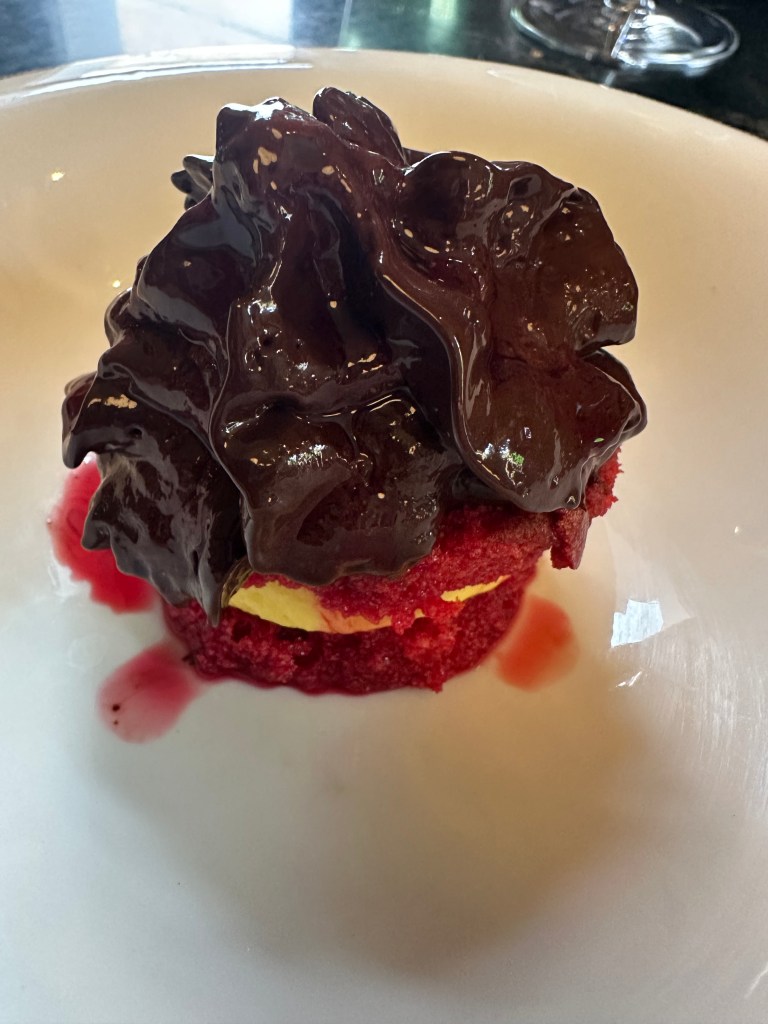
Franceschetta58 is located in a side street otuside of the city centre and could easily be missed. It’s so small that the kitchen is split between the main restaurant bulding and space on the other side of the road. Young Chef Francesco Vincenzi was trained by Bottura at Osteria Francescana and prepares two tasting menus, one of their own classic dishes and a more seasonal one as well as fairly extensive à la carte. We chose the smaller seasonal tasting menu and all of the plates were packed with flavour, the only exception, in my view, being the so-called Zuppa Inglese pudding course, which I found to be fairly bland and as much unlike a trifle as you could imagine. That said the experience taken as a whole was superb. I’ll be back and might even take the nephew! 🤩
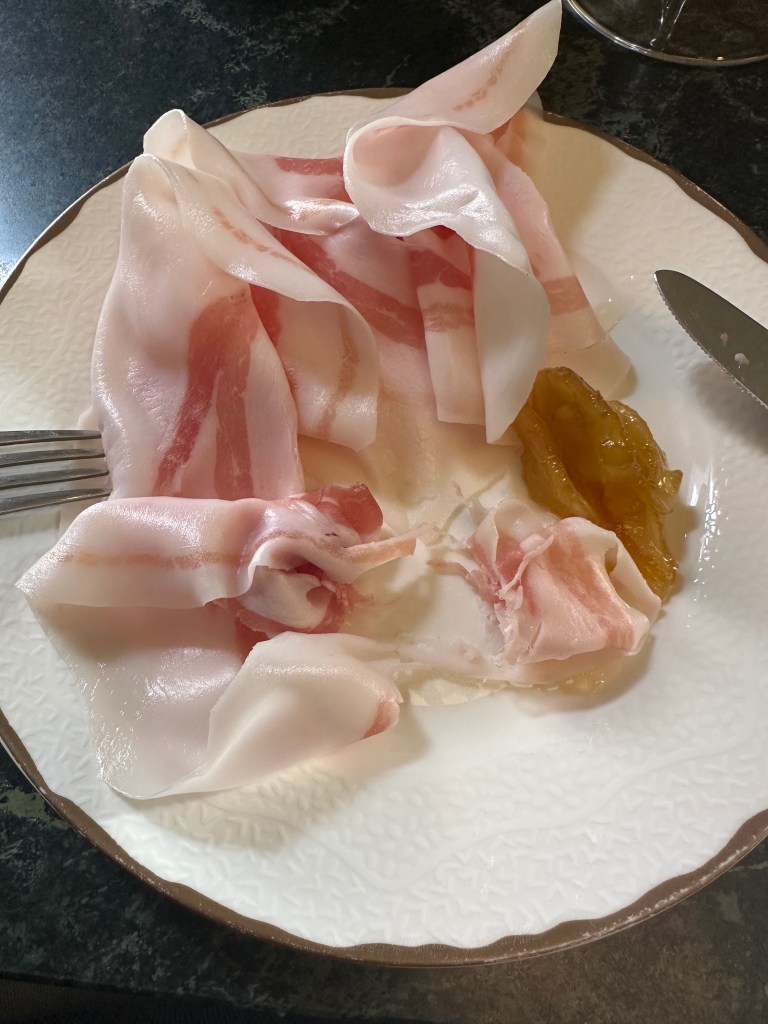
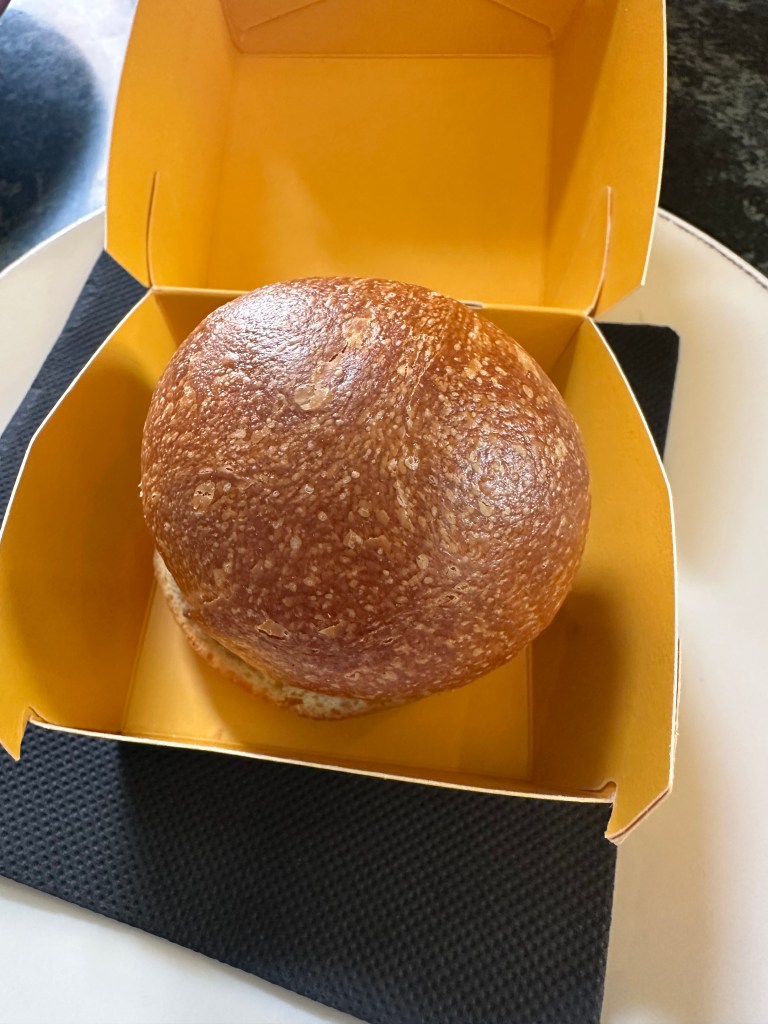
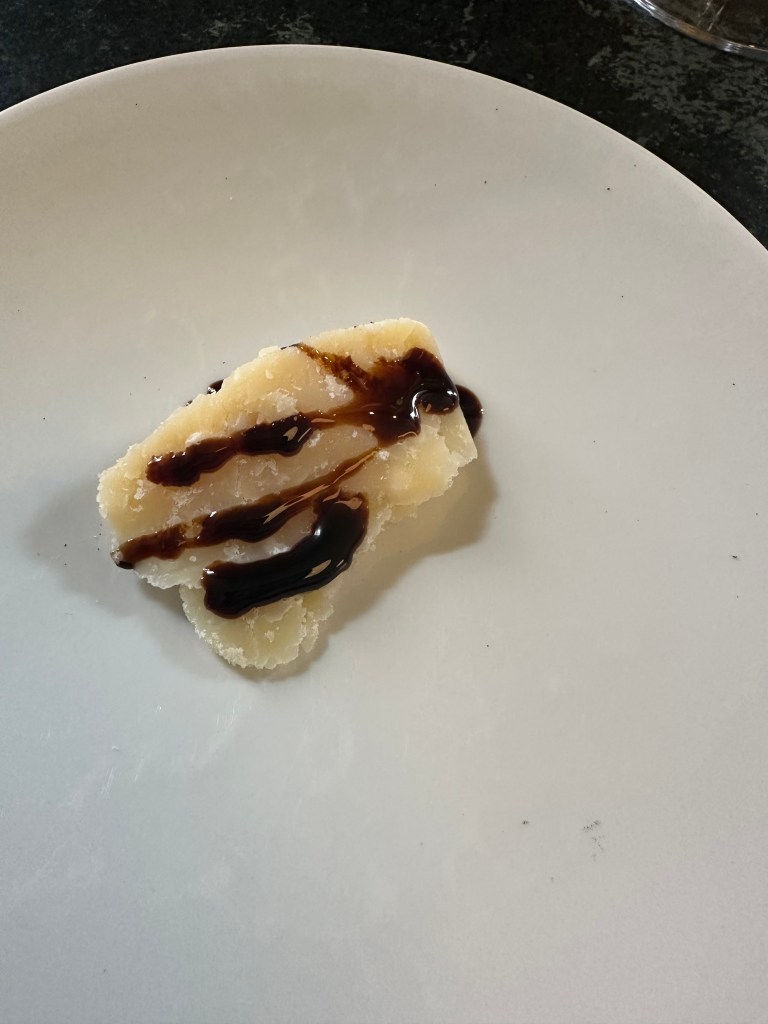
Amuse bouche of Brussel SproutLocal pancetta and apple mostardaNot from McDonald’s but…Emilia Burger by Massimo Bottura made with Cottechino and with Balsamic Mayo and Parmigiano Reggiano Venison Mezze Penne with both venison ragu and venison tartarTortellini by “Tortellante” with Parmesan CreamRoast Guinea Fowl with chicory and liver patePre-desert Modonese. Aged Parmesan with Aceto Traditionale di ModenaZuppa Inglese!
Bottura is undoubtedly worth a bob or two judging by the car he comes to work in but as well as his cooking he is also renowened for his efforts in the realm of social enterprise. The tortellini dish pictured above, which was exqusite by the way, exemplifies his charitable works. That dish is by ‘Tortellante” which is a social enterprise in Modena founded by Bottura as part of his not-for-profit organisation, Food for Soul as way to help youg adults with autism to gain independence through developing skills in making traditional hand-rolled tortellini. The trainees are paired with local rezdore, who are expert pasta makers willing to pass down their skill sot a new generation.
I’ve recently returned from a holiday in the Philippines and what an amazing journey through a beautiful country it was.
In meeting in Manila with a Filipino friend who lives and works in the UK, I rather arrogantly offered my view of what I expected Filipino food to be like having prevously tasted hardly any of it! I opined that, as in the British Isles we have Scouse, Lancashire Hot Pot, Irish Stew and Casseroles various, they are all at the end of the day variations on a pot of meat and veg. and Filipino food would be similar; lots of differently named dishes, all looking remarkably the same and served, of course, with steamed rice.
How wrong I was!
During almost three weeks of traveling around I tasted a wide range of dishes and all in all experienced a cuisine that I’m very close to classifying as the best I’ve so-far discovered.
The cuisine of these 7,600 plus islands is the fruit of many different cultures, ranging from the indigenous roots of the islands, through Spanish, Malay, Chinese and of course the USA as well as what I might call the pan-Asian/Indochine style.
Regionality is a key component of Filippino food. When I told a Pinoy friend that I was going to visit Mabalacat, in the province of Pampanga, he immediately referenced the fact that Pampanga is famed for the dish Sisig.
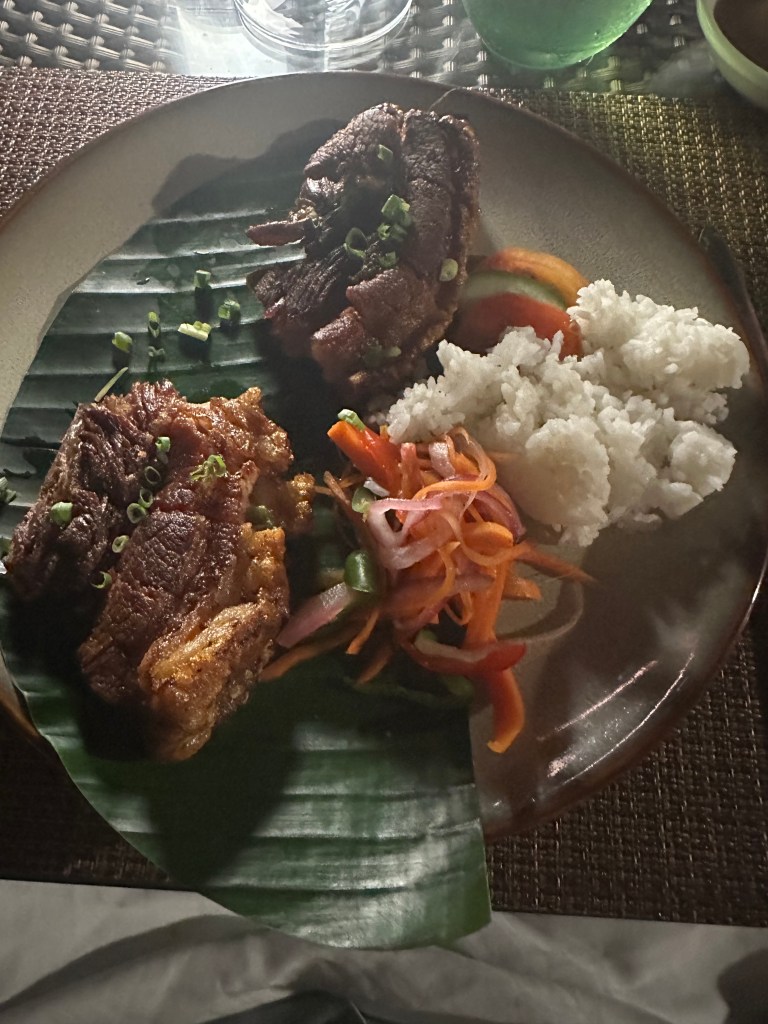
Sisig is served hot and sizzling, usually on a cast iron skillet and is made from belly pork, pigs ears and pork jowl and livers, finished with freshly squeezed Calamansi, the tiny and ubiquitos Filipino Lime.
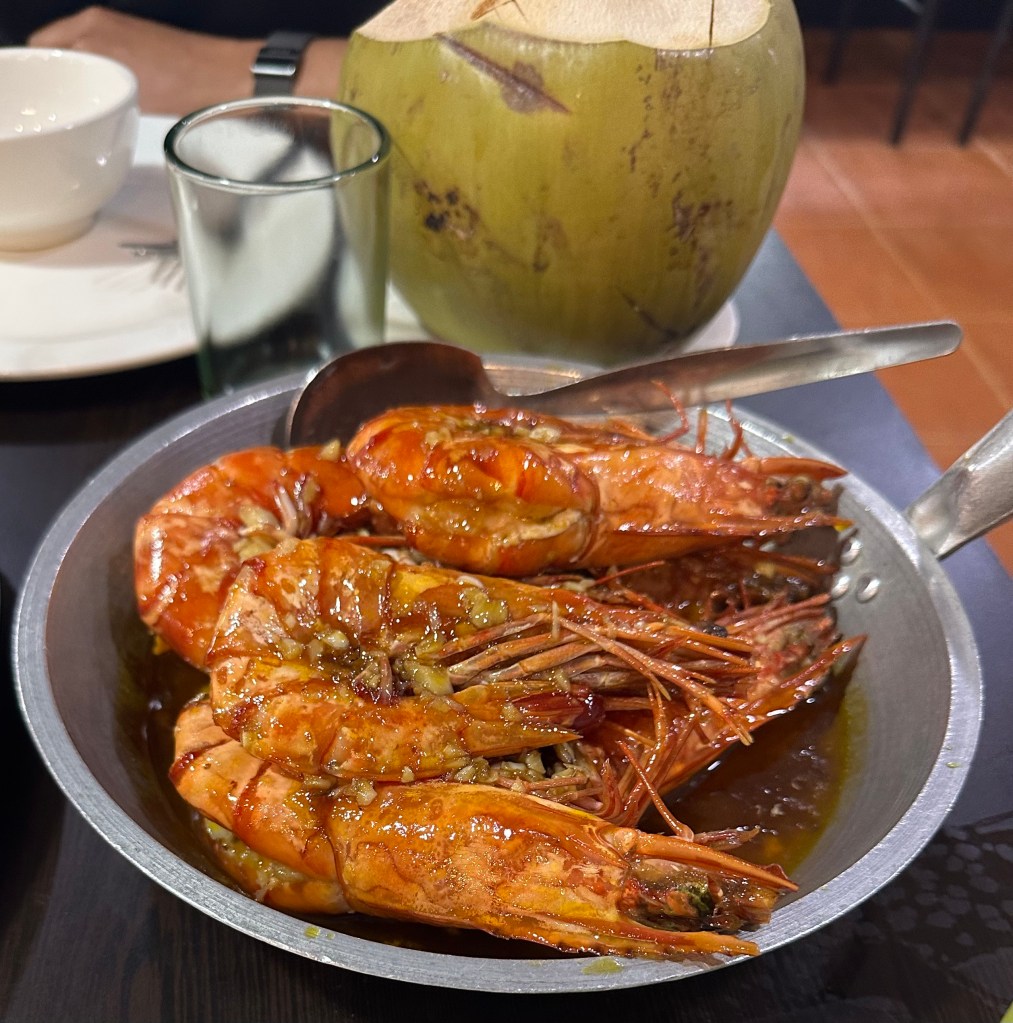
In many other dishes I tried, the protein, (pork, chicken, prawns of beef) is marinated in a variety of lovely things like soy sauce, vinegar and small amounts of chilli. This is adobo.
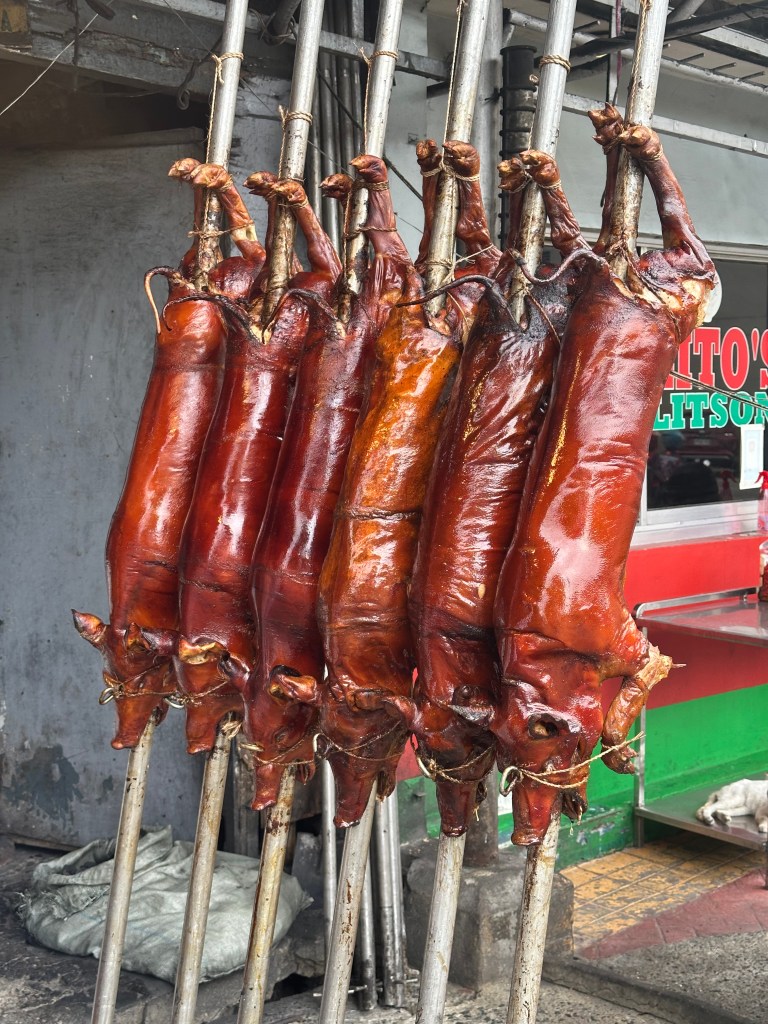
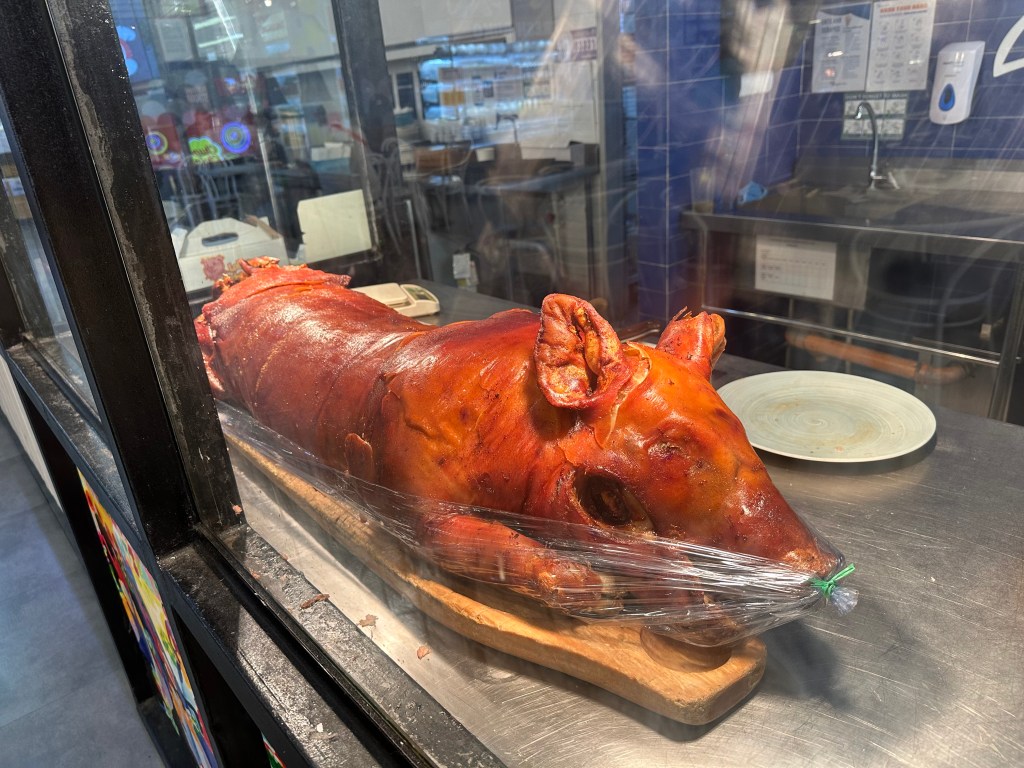
Lechon is roast whole pig, most typically suckling pig and in Cebu which is famous for it, it might be flavoured with lemongrass, herbs and spices. Lechon was one of the small number Pinoy dishes I had tried in London before making the trip, where it was served in a much less rustic way to satisfy the restaurant critics desire for symmetry and precision.
Of course there are more challenging things to eat while in the Philippines. I (quite easily) resisted tht invitation to try Balut for example. Balut is a fertilised egg (duck egg typically) where the growing chick inside has been allowed to develop to up to three weeks gestation before the egg is steamed and the whole thing eaten from the shell with salt and vinegar. It’s not for me. Neither was I willing to try Soup Number 5, famed for its aphrodisiac properties and made from the testes and penis of bulls. I might’ve given it a go, if I hadn’t first googled it and seen an image of a very large phallus floating in a bowl of dark broth. It is a comfort to me that some of my Filipino friends don’t eat these dishes either; I’m in good company.
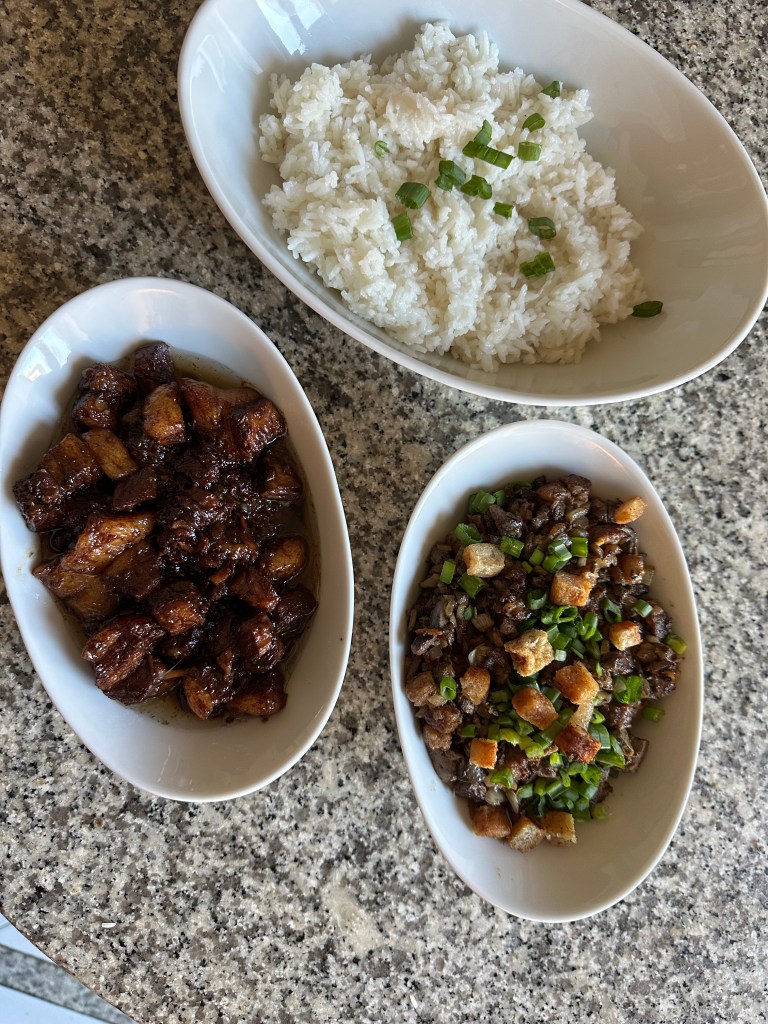
When I travel and taste new dishes I am often inspired to cook something similar at home. I usually do this without following a recipe closely and adopt a free-style approach. When I tried this with Filipino food it didn’t quite work for me, so I’ve been trying to prepare dishes by closely following the recipes and disvovered that the deliciousness of what I tasted there can be repalcated at home. House guests who come to visit this year know what to expect!
SisigFiddlehead Fern SaladLugaw/Congee with century eggLechonPork Adobo and Sisig at homeOctopus Adobo at home
The Hans Cristian Andersen fairy tale, The Ugly Duckling, recounts the story of a sad and unloved water bird, living in a family of ducks and ducklings. The protagonist is ashamed that he isn’t like the other ducklings who in turn, consider him to be ugly. The happy ending is when, in the company of a flock of swans, seeing his own reflection in the water, he realises that the ugly duckling is nothing of the sort but is, in fact, a very fine swan.
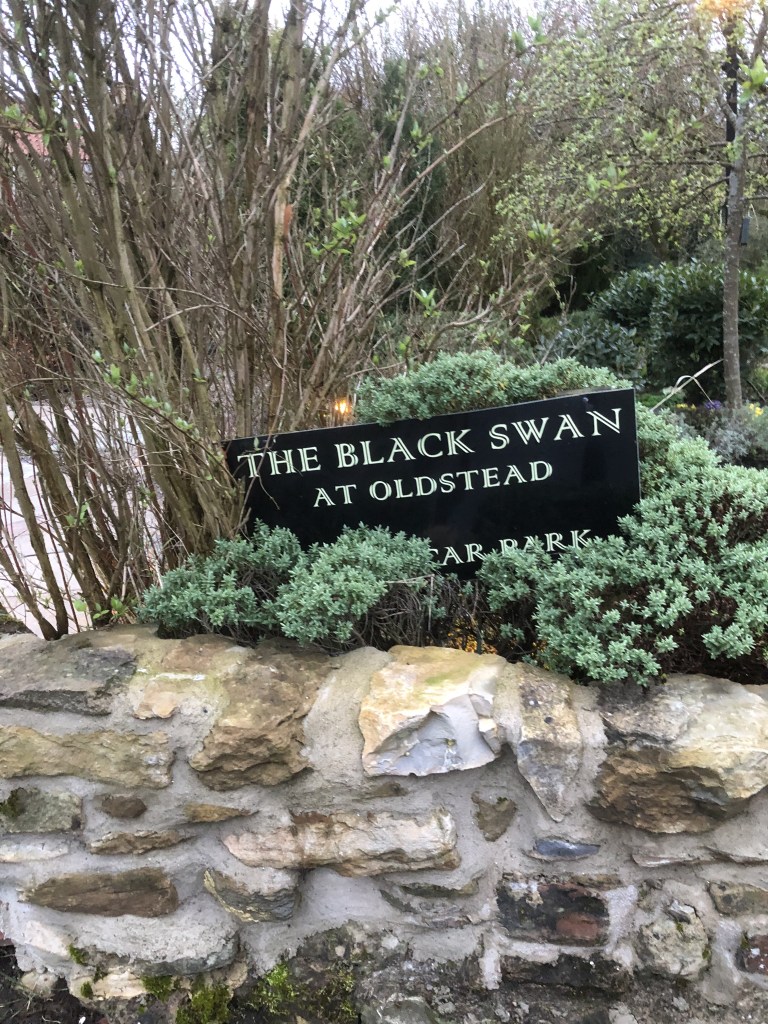
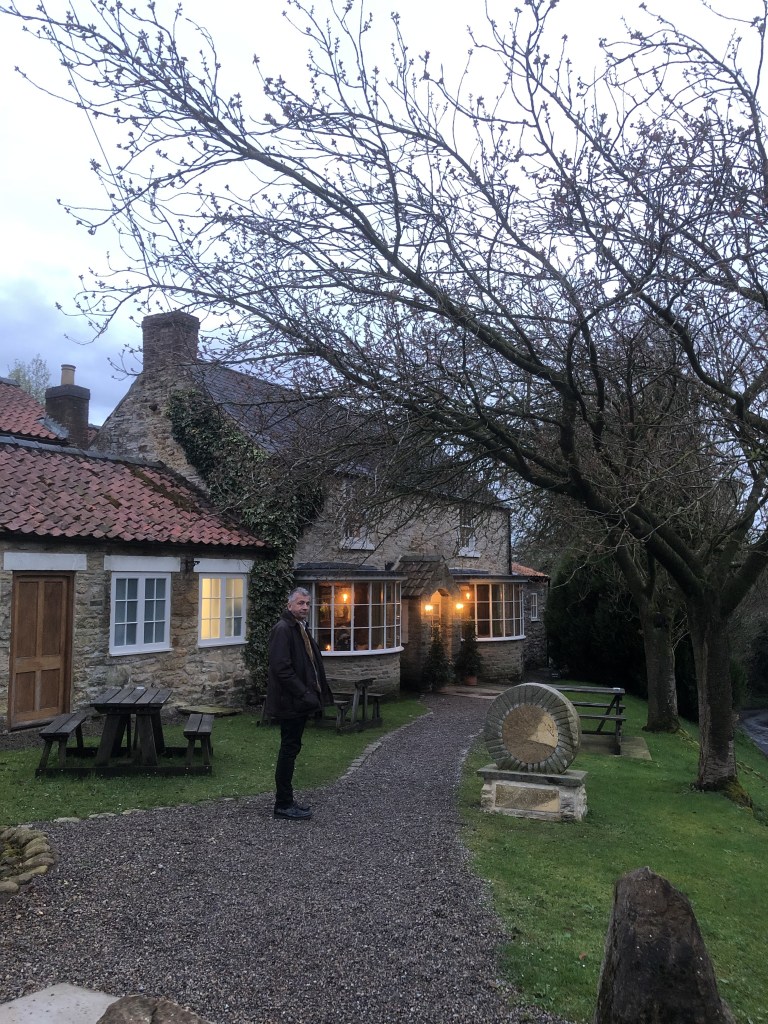
In the North Yorkshire Moors National Park, between Thirsk and Helmsley, there is The Black Swan at Oldstead, owned by locals, the Banks family, whose son Tommy heads up the kitchen. Previously an unsuccessful pub, adjacent to their family farm, Ann and Tom Banks bought it in 2006 and started the business with their two sons, James and Tommy. None of them had any experience of the catering industry and Tommy was only 17 years old, two years younger than his brother. Tommy got ill soon afterwards and was unable to work for more than a year. While he was laid up he read a lot of cookery books and watched food programmes on TV.
When the global financial crisis hit in 2008, it impacted negatively on the Black Swan and the family made the crucial decision to stop trying to run a nice country pub and instead turn it into a destination restaurant. Things sort of ticked over and they kept making small incremental improvements until in 2011, under the then Head Chef, Adam Jackson, they won a Michelin star. In 2013, Jackson moved on, leaving Tommy, who had been working under him, to step into his shoes, at the age of 24. With a lot of hard work they retained the star, making Tommy the youngest starred chef at the time. This attracted a lot of welcome media attention and critical acclaim but Tommy was unsatisfied and wanted to make the Back Swan’s menu more original and less a re-working of what he’d discovered by reading cookery books. As the Banks’s were farmers, the obvious thing to do was to focus on that as the inspiration for the restaurant.
The decision was made to build the menu primarily around what could be grown in the two-acre plot behind the restaurant and what could be foraged. With Tommy focussing on the kitchens, James refined the front of house service, mum Ann developed the accommodation side and dad Tom threw himself into the garden. By 2016, despite working exceptionally hard the family still didn’t feel they had arrived at a point of balance and weren’t making much money. Tommy’s appearance as a competitor on the BBC’s Great British Menu changed all of that. Winning the competition for two years in a row gave him the opportunity to showcase his cooking at a national level. Its also how I came to know about the Black Swan.
Arriving at the Black Swan on a snowy evening in March 2022 was like arriving at a rather well-to-do country pub. The bar-top, a nice big slab of oak is by famed Yorkshire woodworker Robert Thomson, universally known as the mouseman, from nearby Kilburn. A welcome warming fire was blazing in the grate and it all felt very homely. The welcome was as warm as the fire and we chose pre-dinner drinks from an innovative cocktail menu.
Tommy’s menu follows a deep-seated philosophy about using seasonal ingredients. He does so though in a way which is very different to the current trend, amongst some chefs, of only using what can be harvested freshly, today. The ingredient list majors on things they grow on the farm or can source relatively locally. Exmoor Oscietra caviar was an example of something which had travelled from further afield within the UK from farm to plate, truffles from Alba were another with a few airmiles attached. Most other things though were very local. The point is they weren’t all in season right now, because Tommy and his team preserve excess produce throughout the year and use them in a preserved state when they’re out of season. The walls of the restaurant are lined with pickling jars full of things that will be used in the kitchen. It’s a fascinating, deeply traditional way to cook and is exactly what previous generations did. I loved this aspect of eating at the Black Swan. A tasting menu is offered and we dined on seaweed, Lobster (making an appearance twice on the menu) landed at nearby Whitby, halibut and clams, chicken, pork , rhubarb, bee pollen, nasturtiums, sea buckthorn and Jerusalem artichokes (fresh from the garden). Everything was packed with flavour, delightful to look at and light on the palate.
Canapes at the barPreservingWhite truffle from Alba
To my embarrassment I mostly forgot to take photographs of the food. This only happens to me when I am so very wrapped up in the experience of eating and enjoying hospitality that nothing else seems to matter at that moment.
An interesting and very welcome tradition is for the chefs to serve a course in turn to each table. This enables them to experience first hand the customer reaction to what they are being served and of course the customer has a real-time encounter with the person who prepared the dish. It’s much more acceptable than the chef doing a sort of lap of honour towards the end of the evening or, worse, as I’ve seen in some places the chef coming out of the kitchen only to speak to her or his friends, ignoring everyone else!
Tommy Banks himself served one of the courses and by coincidence when he arrived, unseen, at our table we were comparing the Black Swan (very favourably) with Mirazur in the South of France (until recently best restaurant in the world). Tommy genuinely seemed pleased to hear these remarks and responded with “I’ll take that”. And it was no empty complement, I genuinely enjoyed the experience at the Black Swan much more than either of my two visits to Mirazur, where I’ve vowed never to return. The Back Swan however has gone right to the top of my list of restaurants to re-visit, hopefully many times. It is quite simply, a very fine swan indeed!
Recently, while in London, I took the opportunity to have a toot (as they say in Lancashire) at what had been Le Caprice restaurant in Arlington Street. It was a sad sight and I wish I hadn’t done it. A place that generated so many happy memories was now just a shell of what it had once been. I wrote about the demise of Caprice here, so I don’t intend to bleat on about it again now.
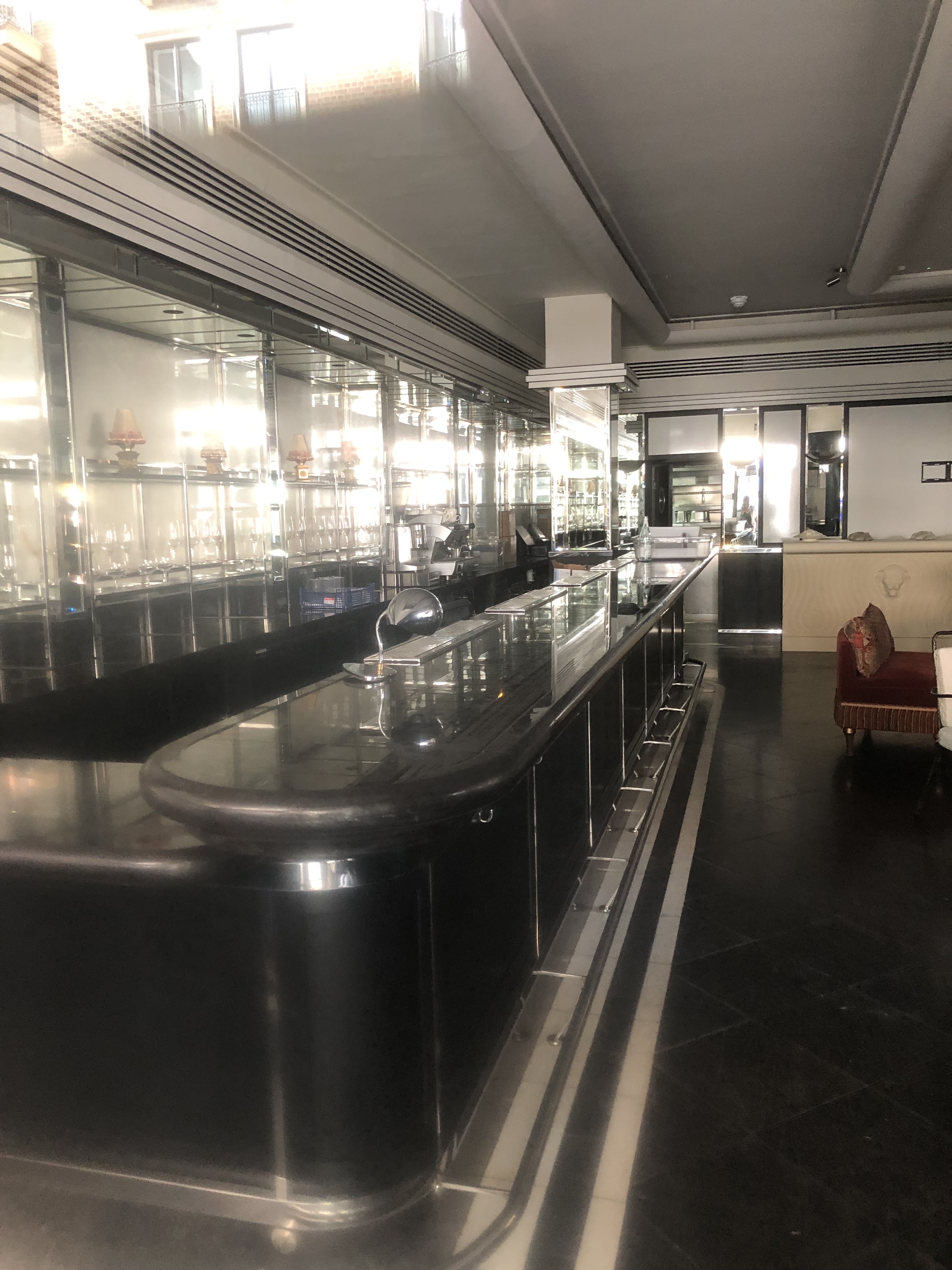
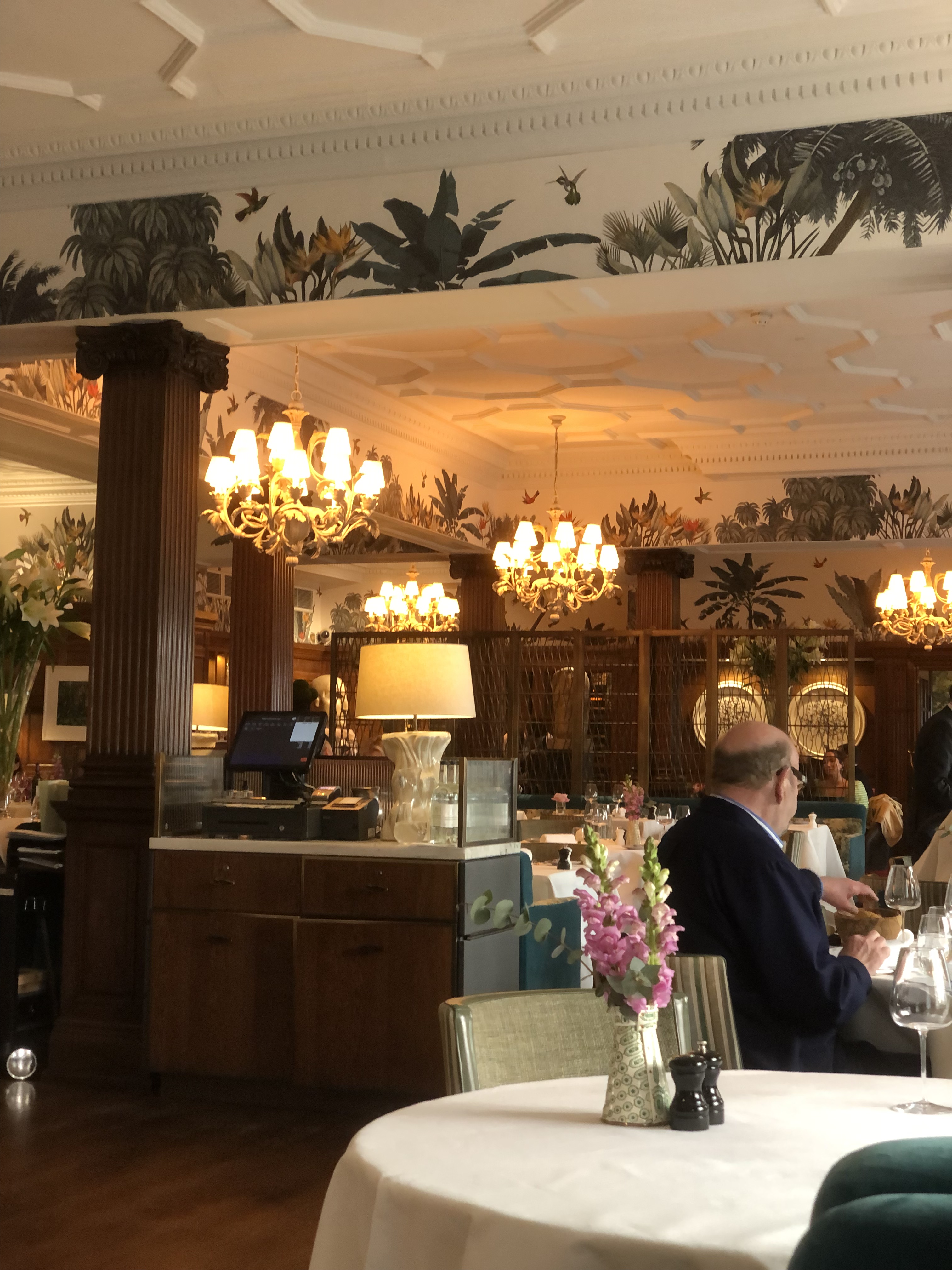
Part of the reason for being in London that day was to see what Jesus Ardono and his team were now doing for Rocco Forte, in Brown’s Hotel in Mayair. The flagship restaurant in Brown’s is Charlie’s and in appearance it’s the antithesis of Le Caprice, against which I was inevitably comparing it. Caprice was designed on a monochrome palette whereas Charlies’ is a riot of colour with decoration, in what I can only describe as ‘jungle’ style. The room is large and at first glance seems more formal. The design was the work of Olga Polizzi, daughter of the later Sir Charles Forte after whom the restaurant is named. Olga is Director of Design for Rocco Forte Hotels. Personally I find she often takes good ideas a little too far. The plates in Charlie’s seem not to show off the food to best advantage and are too busy. Give me a round white plate any day.
Immediately on arrival in the dining room there was a huge wave from Jesus from across the bar area and a very welcome surprise as Paul Stabbins, who had looked after us so well on many visits to Caprice, crept up behind us to give us a very warm welcoming hug. Immediately I felt at ease and gained certainty that the spirit of Caprice was alive and well and would soon dominate Charlie’s. With these two, front of house, I’m certain that the journey to create something special is being driven forwards with gentle determination and a sense of generous hospitality.
Jesus offered us a choice of tables, both in prime position at the end of the room. He was particularly proud of his decision to install semi-circular banquettes at some of the tabs around the perimeter of the dining room and so we chose one of those, a great spot, he said, for people watching.
The menu is fairly classic with modern twists and the kitchens are led by chef Adam Byatt (of Trinity in Clapham). I was pleased to see that some Caprice classics had made the move to Mayfair and sit alongside the carve-at-the-table roast meat trolley.
I had Omelette Arnold Bennett with English Lobster to start, followed by Chicken Kyiv the price of each one sold being donated to the British Red Cross to help Ukrainians displaced by the current Russian war of aggression. Both dishes were enjoyable and well prepared but I would have liked my Kyiv to have given up more unctuous butter when I cut into it. Next visit I’ll try the Calves Liver and Bacon which is always a good litmus test
Omelette Arnold Bennett with LobsterChicken Kyiv
The hospitality industry has taken big hit because of the Covid Pandemic with many good staff leaving the industry for more flexible and better paid jobs. Recruiting, training and retaining front of house staff, even in the best restaurants must be very challenging at the moment. Charlie’s has a little way to go to before it delivers the über efficient, yet friendly and appropriately infomal service we saw at Caprice. I’m confident that they will get there though and will certainly go again next time I’m in London to see how things are progressing. In the meantime, I wish Jesus, Paul and their team ‘in bocca al lupo”. See you soon my friends!
Hospitality is where its at. It is what I try to offer friends and visitors to my home and above all else it’s what I look for when I go to a restaurant. Food and drink may be an important part of the mix but the expectation of being in a restaurant which ticks all the boxes, goes well beyond that and it is why the ‘poshness’ factor isn’t really that much of an indicator. Plenty of simple trattorie make the hospitality grade for me and more than a few of the (supposed) best restaurants in the world fail.
For many years I’ve become increasingly frustrated as I’ve watched the big names in the restaurant sector loose focus on hospitality in favour of big business. I can think of Jamie Oliver and Antonio Carluccio. Oliver began his career in the Neal Street Restaurant, which Carluccio ran with Terence Conran, in Covent Garden, London, before moving to the River Cafe in Hammersmith. Carluccio and Oliver expanded to most of the market towns of England, whereas River Cafe is what it always has been. Of River Cafe the Red Michelin Guide says, “Little has changed at the iconic River Café since it opened thirty-five years ago: the welcome from the staff is just as cheery, the atmosphere as warm and comforting…”.
River Cafe, London
Both Oliver and Carluccio moved away from offering hospitality as their raison d’être to running businesses which expanded with off-shoots linked to their famous names to the point, in the case of Oliver, to catastrophic collapse.
Antonio Carluccio
One thinks also of the internationally famous chefs like G Ramsey, skilled cook and even more skilled multi-national business man. I don’t particularly like his food and even less so his aggressive personality but if I did, I would much prefer to go a a restaurant where I could eat food that Ramsey had been closely involved in creating – or even cooking (as was once possible)! I’ve scarcely more chance of eating food cooked by Chef Ramsey in my own apartment than I have by going to one of his very many restaurants around the world. His saving grace is that his model has produced some amazing chefs who have gone on to create their own style of hospitality without becoming mini-Ramseys themselves, chief among them, in my view, is Angela Hartnett.
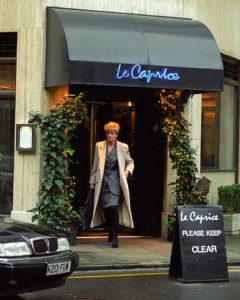
I’ve written in the this blog previously that one of my personal favourite restaurants of all time, was Le Caprice, in St James’ in London. Le Caprice was first opened in 1947 by a former maitre d’ from The Ivy, Mario Gallati, then in 1981 it was given a new lease of life, when it was take over by Chris Corbin and Jeremy King (now running Brasserie Zedel and the Wolsey).
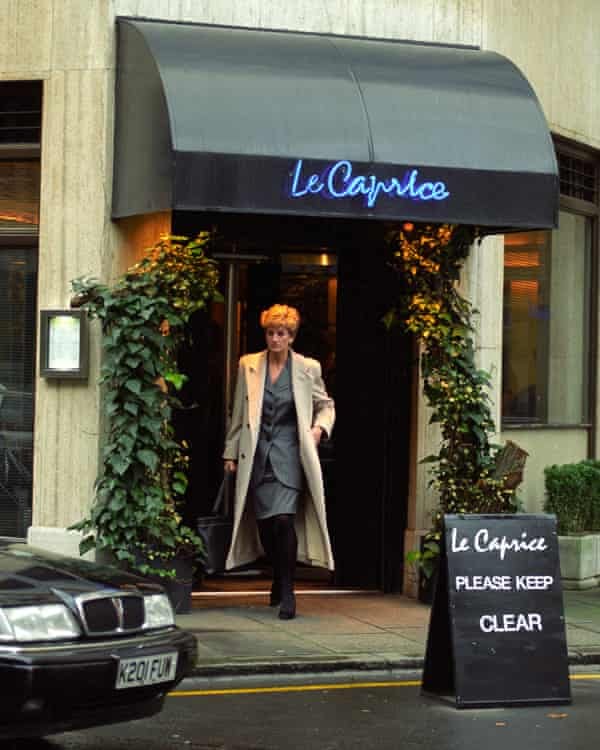
Diana, Princess of Wales leaving Le Caprice
Le Caprice was a fixture of the London dining scene throughout its history and all returning clients, whatever their level of celebrity, were welcomed by one or all of the maitres d’ like old friends. Regulars like Princess Diana, Mick Jagger and Elizabeth Taylor, sat cheek by jowl with more common-place folk, like me. As it happens I was at the next table on the day that Lord Archer (Jeffrey Archer) had his first restaurant meal there after his release from prison in 2003. On another occasion I had to facilitate a frail Earl Snowdon (former husband of the late Princess Margaret) navigate between the tightly packed tables on his way to the loo. Despite the sometimes high-end clientele, we more regular folk were always treated with the same sense of welcome and generous hospitality. This to me is a very good thing – almost priceless and very rare.
Caprice had stable mates in London; Scotts, Daphnes, The Ivy, Rivington, 34 and J Sheekey. They were different from each other but with a common stylistic feel and that essential spirit of hospitality, paired with simply good food. Then the rot set in.
I first became suspicious when I noticed that more and more people on social media were claiming to have eaten at ‘The Ivy’. Of course they didn’t mean THE Ivy in West Street, Central London but one of a number of provincial spin-offs under the auspices of The Ivy Collection. As a brand within the Caprice Holdings portfolio, it is doing well, recording a £94.8m turnover in 2020 but without a doubt this is diminishing the original Ivy name. Le Caprice and Rivingtons paid the price as both are now closed. Richard Caring, the mega-rich owner of Caprice Holdings said that Le Caprice closed in 2020 because the lease had expired (what, all of a sudden?). The abrupt closure took the world of restaurant critics by surprise as people like Tom Parker-Bowles and Jay Rainer tweeted Jesus Adorno, the face of Caprice to many, to find out what the hell was going on. The effects of Covid and lock-downs on the hospitality industry has also been cited as a reason. We have to question the lease expiry explanation when the site of the restaurant has continued to be used by Caprice Holdings as a training facility. The official line of the company is that Le Caprice will return, but at a different location; time will tell. Certainly Jesus has closed his tenure at Le Caprice which began in 1981 by moving to Browns Hotel and the Forte Group.
Why, oh why can’t local restaurants, doing sterling work, stay as they are? Has no one heard of the phrase, ‘if it ain’t broke, don’t fix it’. Of course restaurants are businesses and need to turn a profit but please, let’s keep the expansionist business advisors and venture capitalists away from the places where we love to eat and put the masters and mistresses of hospitality back in charge. At its heart a restaurant is a kitchen skilfully preparing yummy food and a dining room delivering a warm welcome and excellent service.
I’m becoming more and more keen to search out the lesser well known restaurants that are sticking to what they do best and I’ll say more about this in my next post.
Look at the blue is the meaning of “mirazur” which is the name of a 3 Michelin starred restaurant at Menton, on the French Italian Border. Its location, perched on the cliffs above the town, gives a beautiful day time view of the sparkling blue Mediterranean Sea seen through enormous picture windows which make the wall on one side of the dining room. At night the blue is replaced by the darkness of the night, pierced by the twinkling lights of Menton town and harbour below. After my second visit I’m coming to the conclusion that the view is perhaps this restaurant’s greatest asset.
Of the chef, Mirazur’s website says:
Through his personal interpretations of ingredients and flavour combinations, Mauro Colagreco has forged a style of his own. He has absorbed his Italian-Argentinian cultural heritage and that of the chefs with whom he trained, and now follows his intuition as he draws on the local culture on both sides of the border.
Inspired by the sea, the mountains and the fruit and vegetables grown in his own gardens, Mauro invents colourful, pictorial dishes that play with textures and bold contrasts.
Let’s keep that in mind as we review my experience of dining at Mirazur last Thursday evening as part of a party of three, to celebrate a birthday. Let’s also keep in mind that as well as holding the highest accodale of the Michelin Red Guide (3 stars), Mirazur has frequently been at the top of the World’s 50 Best Restaurants list and in the penultimate list in 2019, it was ranked as the best in the world.
The welcome at Mirazur, if you’re driving comes in two stages. First the car park guy welcomes you and takes your name and your car keys, then you go down the path to the reception desk where someone else takes your name and flicks through the reservation system before asking to take coats and telling you how welcome you are. At this level and price point I think they could at least have pretended to have known we were coming. It would have been even better if they had known that this wasn’t the first visit. ‘Welcome back gentlemen’ would’ve started things off very well. This ‘being known’ is the reason I go back to a very small number of places time and time again. It moves the whole experience away from being a commercial transaction to that of an act of hospitality.
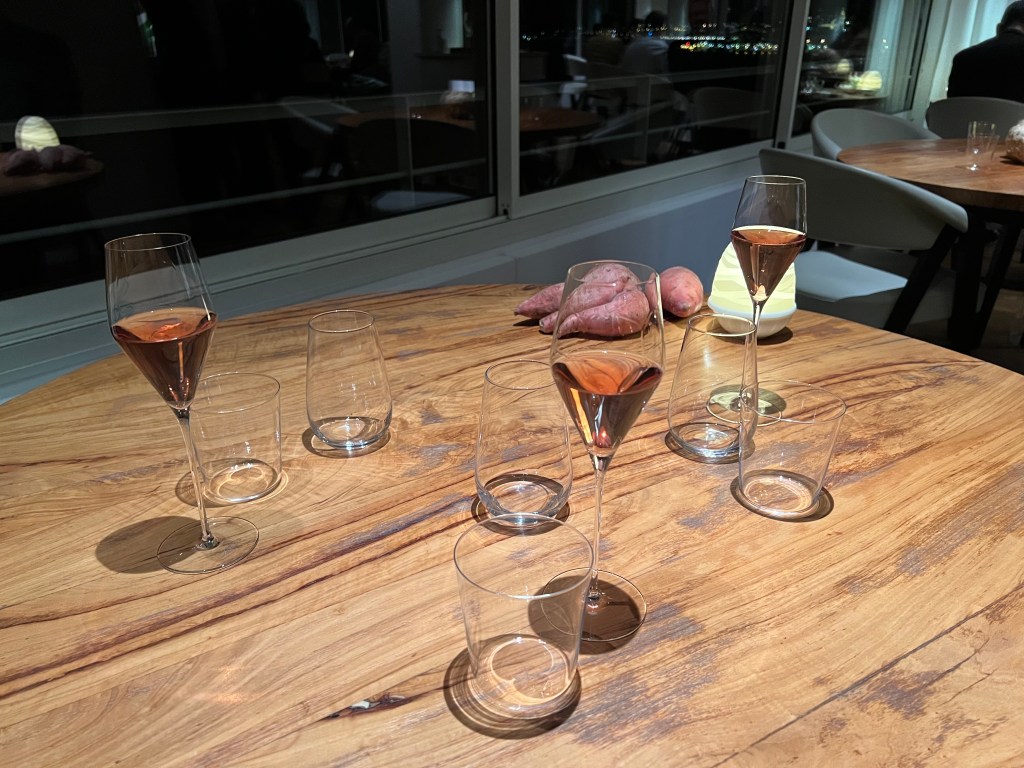
We were seated at a table where my view was of the black night outside the windows which were acting like mirrors. My two companions were able to enjoy the view of the twinkling lights down below. The sommelier arrived and took our order for water and a glass of Champagne. When the water and Champagne arrived further tumblers were placed before us with just a finger of water in each. This was a flavoured (ginger extracrin this case) water. I could neither smell nor taste anything, but I was suffering from a blocked nose. One of my fellow diners could detect a mild ginger taste and the other thought he could smell it.
After a while ‘one of the maître d’s‘ (sic) came to tell us how things would work. We’d chosen to come on a ‘roots’ day as opposed to a flowers or leaves day (all determined by the phases of the moon!) and therefore the menu (9 courses) would be based on roots from the restaurants many gardens adjacent to or not too far from Mirazur. We’d be starting with a selection of what were described as Tapas. Nothing to complain about there. All were very morish and some were really delicious, such as the cheese and onion tartlet with its crispy top and the black squid-ink tuile. The dessicated salsify wrapped around with Lardo di Colonata and sprinkled with bee pollen was spectular.
Tapas, perhaps better described as amuses-bouches.
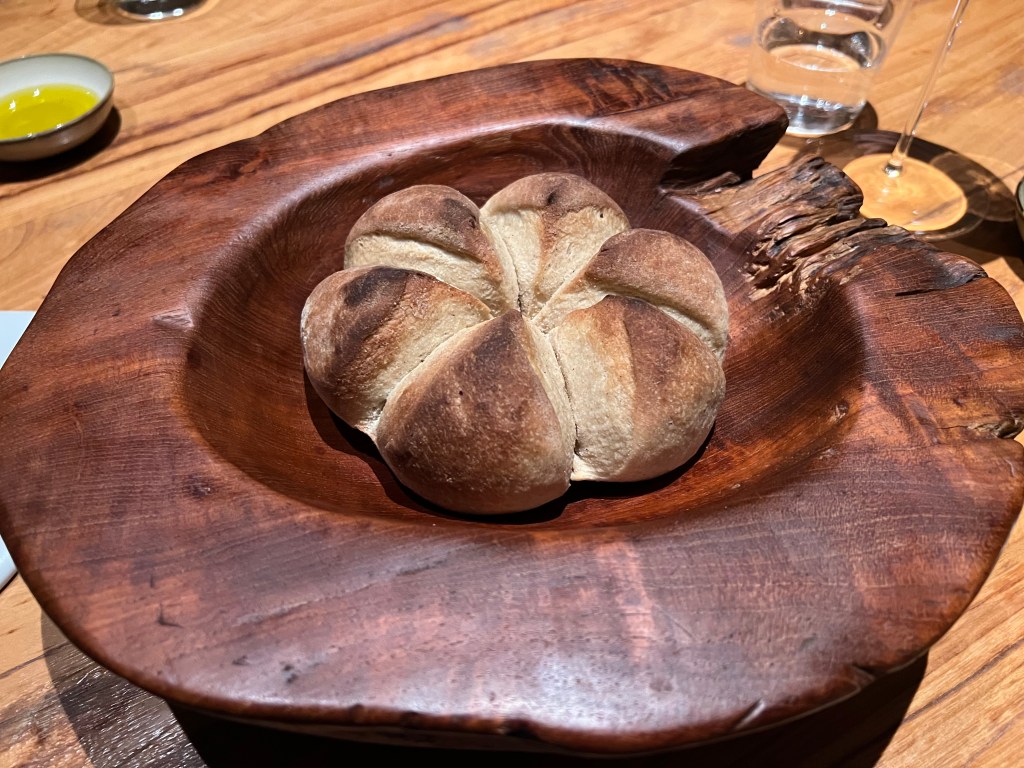
Next up was a round of bread made according to a recipe of the Chef’s grandmother. It was accompanied by olive oil flavoured with ginger and a printed copy of Pablo Neruda’s Ode to Bread
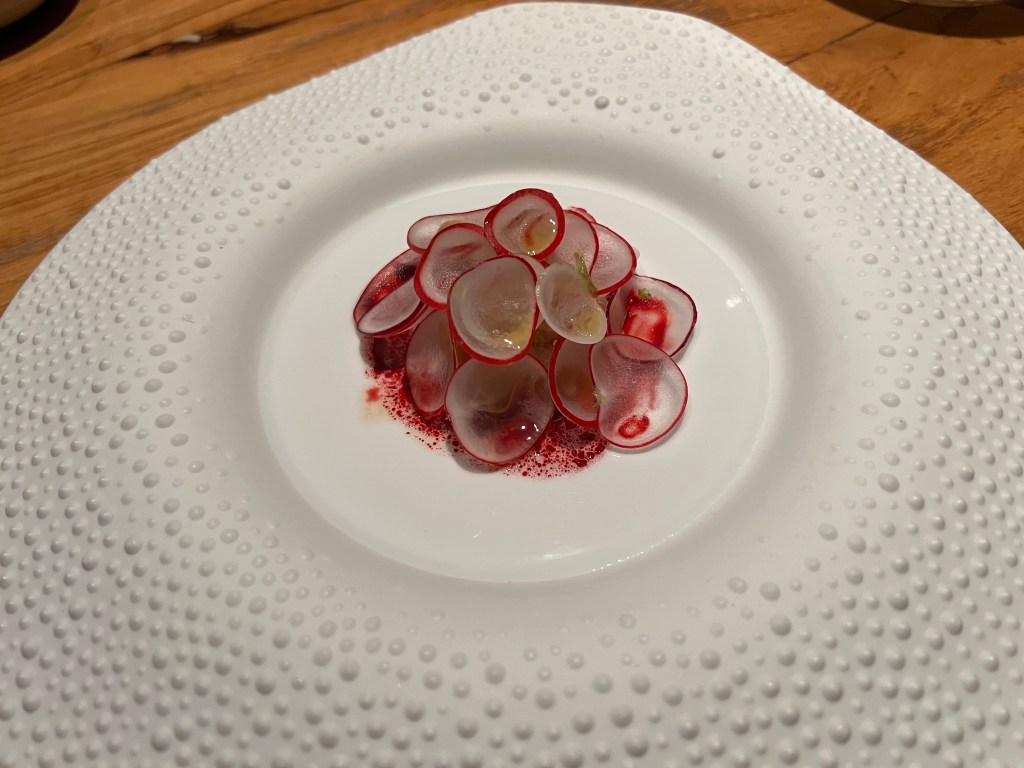
Gossamer thin slices of mild radishes served with a fish carpaccio was refreshing and a suitably light way to start the menu proper.
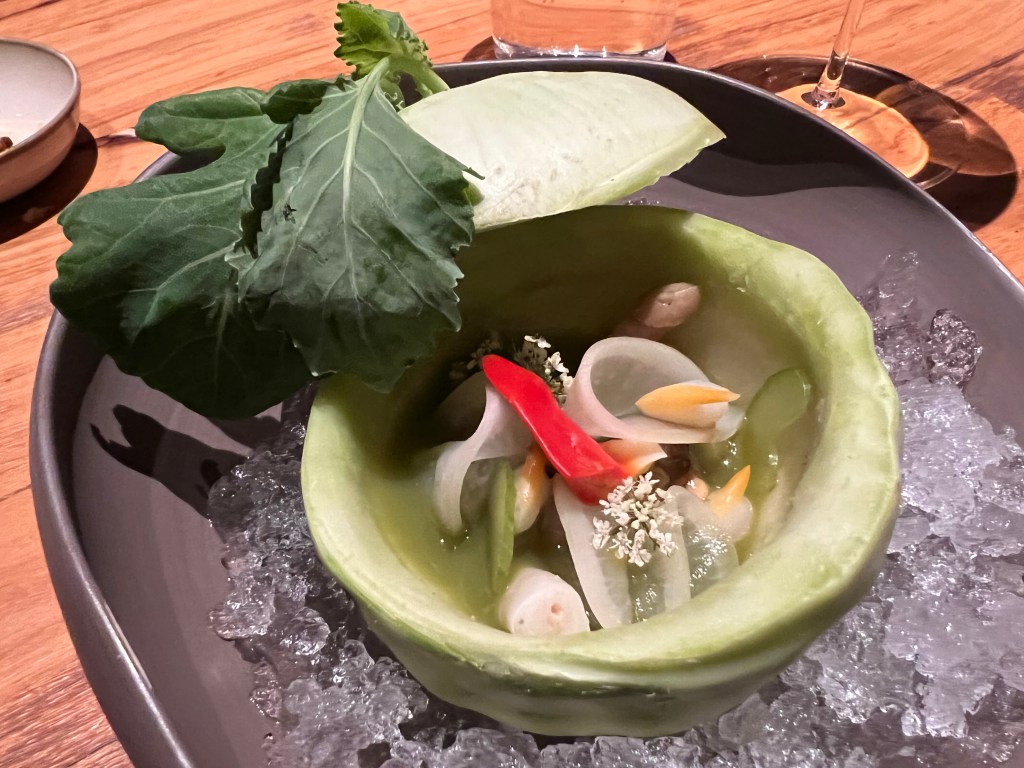
I recently had dinner with family and friends as part of wedding celebration in the UK. Some people had soup containing Kohlrabi, which the Egyptian waiter described as a ‘German spice’. Well I don’t think that’s quite correct but it is sometimes know as German Cabbage. At Mirazur it was used to contain a fragrant broth of seafood and root vegetables
A rare species of beetroot was up next, served with a cream sauce and French Caviar. The beetroot takes two years to mature and is dug up at the end of the first season to spend some time above ground before being replanted to grow a little more. This allegedly gives it a sweeter flavour without the typical earth taste of this particular root crop. Personally I like the earthiness of traditional beet but I have to say that this particular version was pretty delicious too.
The intesene jam-like flavour of sweet potato which accompanied a piece of squid was an interesting combination. My suspicions were though, that the squid was more chewy than it should have been and I think the quantity of sweet potato overwhelmed the delicacy of the squid.
Without a doubt this next plate of food was the star of the evening. It consisted of a firm and meaty slice of cep (porcini) mushroom with Jerusalem artichoke puree and white truffle from Alba. The jus was fantastically intense and packed with that illusive umami flavour. All of this was preceded by ‘ordinary bread’, as described by the waiter, and the most delicious carrot butter, presented in the form a carrot.
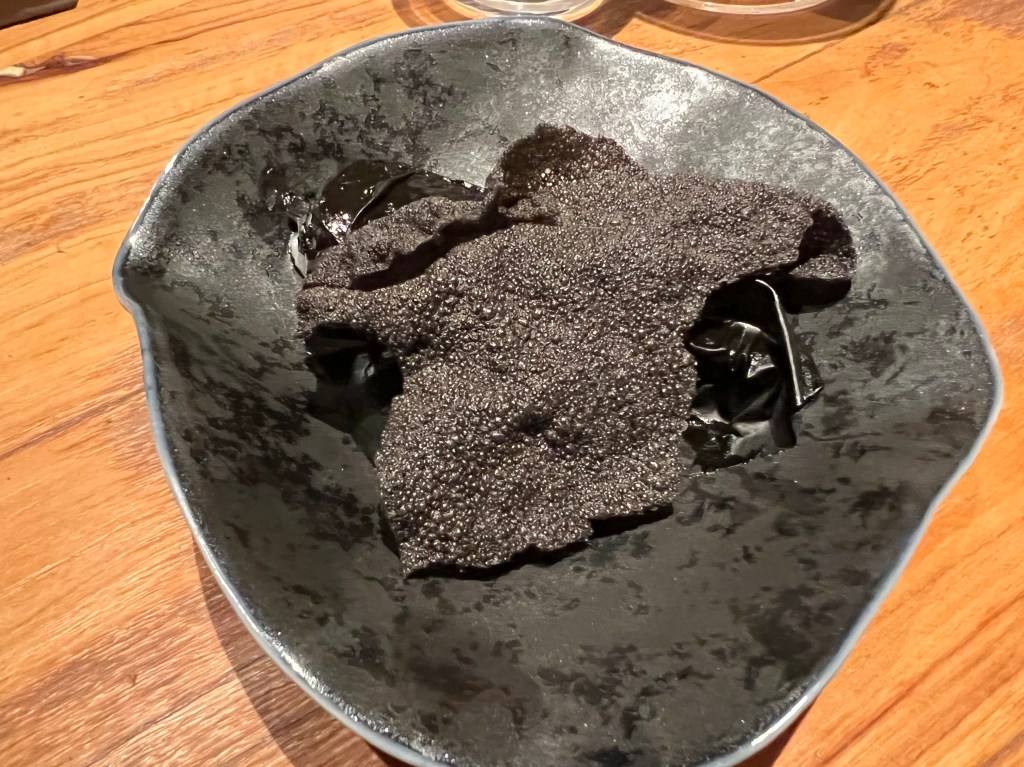
A dish, entitled, Dark Side of the Moon, came next. It was a piece of poached John Dory, covered in a squid ink sabayon and served with squid ink cracker all with a gentle background of liquorice. Dramatic to look at, there was, in my opinion, too much sabayon, which became a little cloying and the fish wasn’t quite as well cooked as it ought to have been. It was slightly tough and certainly didn’t fall apart as I pushed my fork into it. The flavours though were good.
It pains me to have to write now about the next course. This was billed as duck breast from Challons with red onion from the garden and a confit duck leg sandwich. Let’s start with the good news. The duck sandwich was succulent, full of flavour and a delight to eat. Less spectacular were the red onions, which were, how can I say it, just like eating red onions. Nothing special there. The main event, the duck breast itself, was beyond poor. Firstly all three plates of it were cold, and I mean cold, not just warm as might be expected in a restaurant rather than a farmyard kitchen. Personally I was prepared to roll with that but the texture of the duck was really awful (the result of the ghastly sous-vide method of cooking) and horror of horrors, the skin was inedible. My guess is that the skin had been coated in lovely aromatic things and then fried to give it colour and flavour before being placed in the water bath. On serving, therefore, the skin was soft and gelatinous, very difficult to cut and almost impossible to chew. We then did something I’ve never done before and which ought to be a no-no in a 3 start restaurant, we sent the duck back. The restaurant manager offered with reasonable good grace to have new portions cooked for us. They came very quickly and they were hot but the presentation of the meat and particularly the skin, was exactly the same. Indeed he told us he’d asked the chef to prepare it exactly they same way. We were told that the chef was waiting in the kitchen to know if this time it was to our liking. Conversations ensued during which it became perfectly clear that serving duck skin in the way we’d received it was entirely the point. There was, in the contention of the chef, as articulated by his manager, nothing wrong except that it wasn’t to our taste. Interesting! I’ve eaten my fair share of duck in my life in all sort of different styles of restaurants and cultures as well as at home. Crispy skin is the holy grail of duck cooking surely? Who wants to eat something with the texture of silicone sheeting?
The idea that our preferences were the problem and not the cooking quickly spread and the maitre d’ came to apologise that we hadn’t enjoyed the great duck dish, as did one of the other waiters and the chap who waved us off in the car park later. I find all of this baffling. Having googled ‘Mirazur, duck, skin’ I see that I’m not alone in my dislike of duck cooked in such a way and wonder why Chef Colagreco insists on doing it. We need a campaign to ban the cooking of meat in a water-bath. After a lot of consideration I’ve concluded it’s a waste of decent meat.
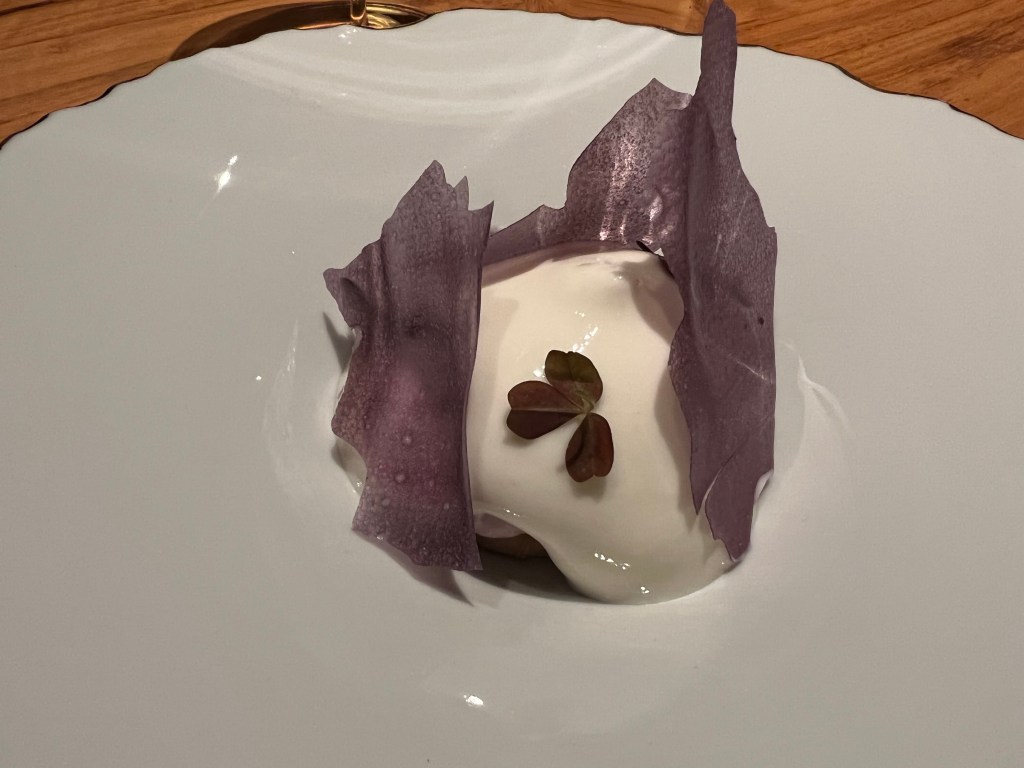
After such an experience and an already significant amount of food, the appetite disappears and so it was with a slight heavy heart that we turned to the pre-dessert of green apple granita with wasabi, yoghurt and pistacchio, which in fact turned out to be very refreshing. This was followed by a pudding of purple potato with coffee and honey. It was innovative, with the coffee flavour being dominant and just a background hint of the earthy potato taste.
Coffee and petit-fours rounded things off and while they were nice in themselves the bitter taste of the duck experience had unfortunately left us all very disappointed.
Whilst no longer the best in the world, Mirazur continues to hold the coveted 3 stars. I wonder how long that can continue.
I wouldn’t say that I’d been searching for it for the 8 years I’ve lived here, but I have been longing for it. The ‘it’ is the experience of being able to pop into a local wine producer, see where the wine is made, sample the juice and buy a few bottles to take home. This is something very easy to achieve in France but a much rarer opportunity in Italy. I’ve only done it twice before here and both were in prestigious wine producing areas (Francaicorta and Tuscany).
Lodi lies in the vast expanse of the Pianura (the plain) that covers the south of Lombardy and much of Emilia-Romagna (46,000 sq km). It is a significant feature of the geography of Northern Italy, surrounded by the Alps and the Apeninnes and drained by the mighty River Po and its tributaries. This is one of the most important agricultural areas in Europe, producing some of Italy’s best know food products.
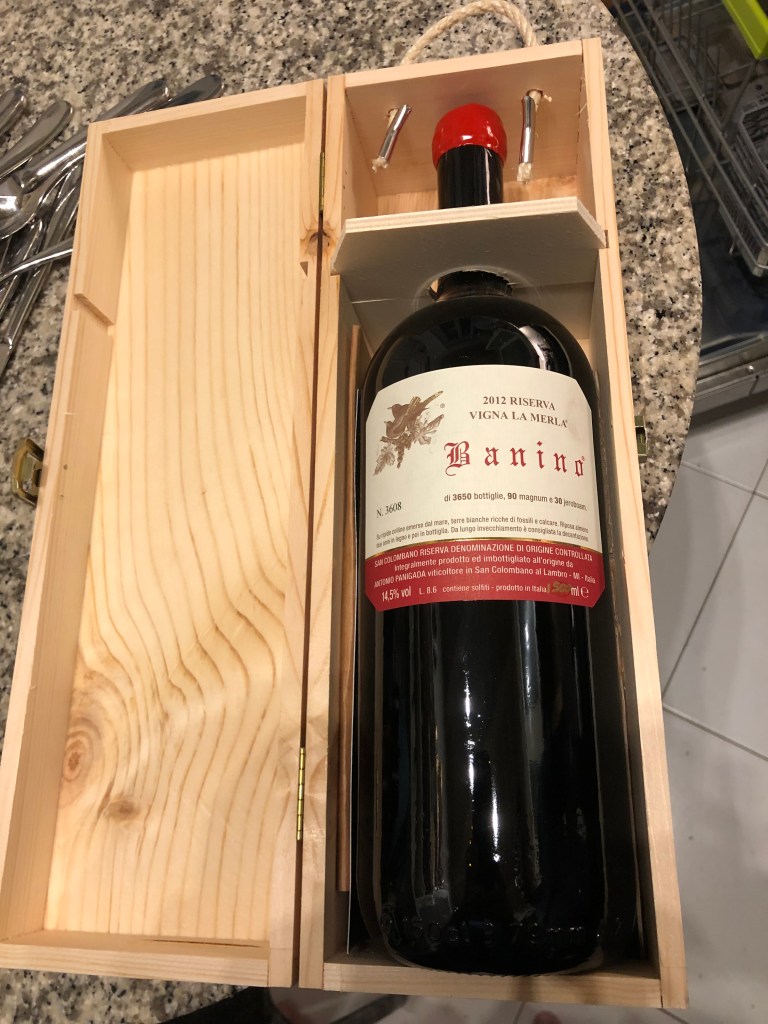
Last weekend we went for lunch to a restaurant which I’ve mentioned herebefore, and nervously chose a wine produced locally in San Colombano al Lambro (15 km from Lodi). I say nervously because the last time I’d tried wine from this area it was pretty rough to say the least. In fact what were served a Banino Rosso Vigna la Merla, 2013Riserva, which was so nice that we not only ordered a second bottle but bought a 2007 to take home – purely for research purposes of course!
Yesterday we called the producer and set off to discover more about him and his wines.
San Colombano is a small village situated between Lodi and Pavia just as the land starts to form small hills on the western edge of the pianura. These hills are the Colli Milanese and provide a lush green backdrop to the town. The town itself is named for the Irish monk St Columbanus who brought Christianity to the village and planted the first vines in the early 7th century. The citizens of the village are called banini (as in Colombanini) and the name of the wine is Banino. There are brown tourist signs in these parts that supposedly guide one along La Strada del Vino, maybe it’s time to explore more.
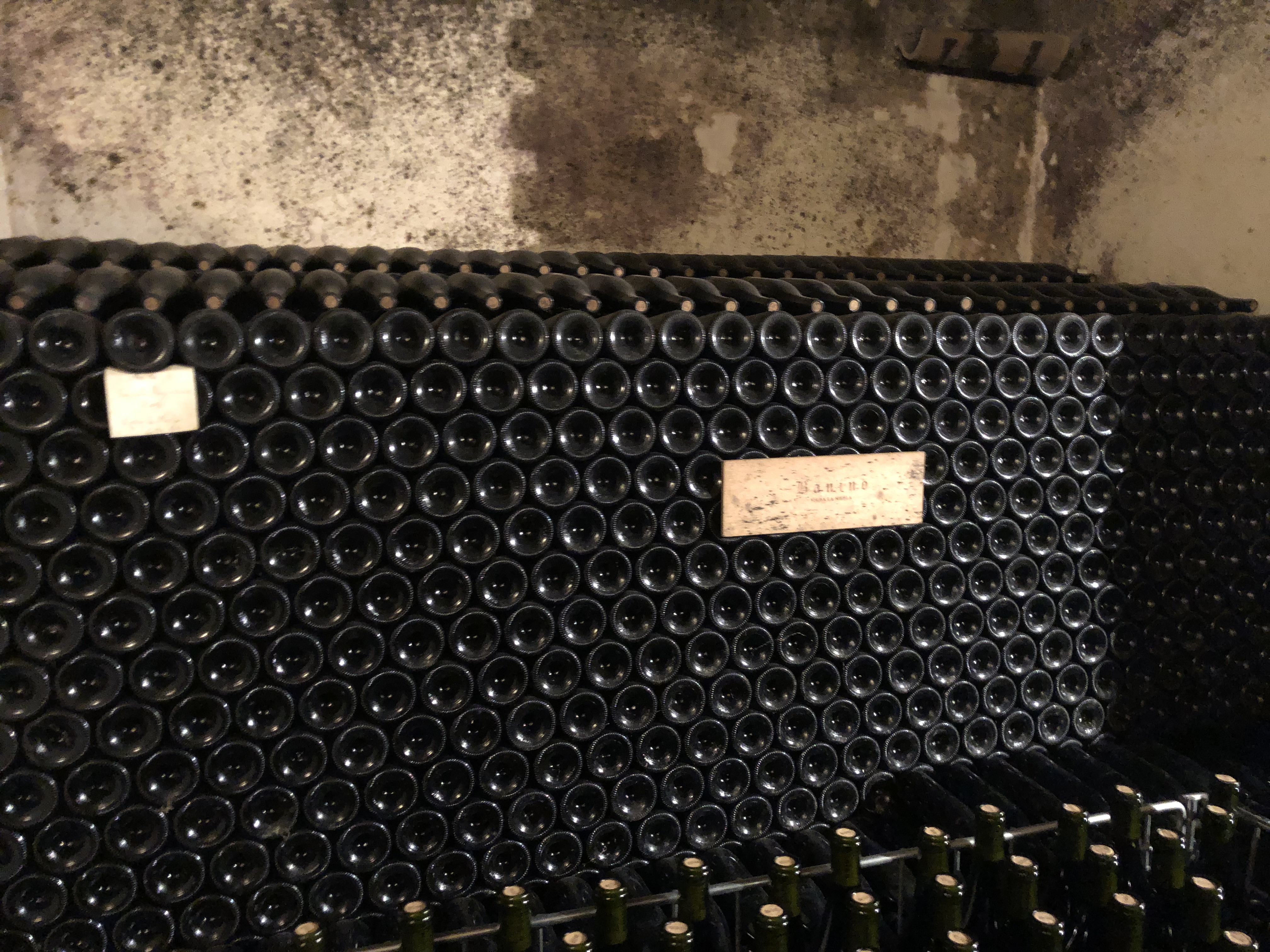
Antonio Panigada, whose family owns Banino wines, cultivates 5,000 hectares of the hillsides. The ‘terroir’ reflects the history, having been pushed from the sea in the Miocene period while sea-life fossils can be found on the tops of the hills. The vines are managed without the use of herbicides or chemical fertilisers and harvesting is done entirely by hand. The cellar is in the centre of San Colombano and everything to do with the production of the wine is carried out within its courtyard and small buildings. It’s a perfect example of how to pack things into a small space. Their publicity speaks of ‘wines that taste of wine’ and that don’t follow the fashions of the day. Bravi!
We hope to share some of tastings of the wines we bought yesterday (far too many!) in the coming weeks.
Rioja in the north of Spain is one of only two Spanish wine producing areas with the highest quality classification, (DOCa). Originally the producers were either French, who imported the Bordeaux style of wine making or locals who also aped that method.
The Marqués del Riscal opened his operation in 1858 and in common with others their style of wine has changed from that French pastiche to what we have today, which is a more modern classical style all of its own. From the 1970s, when standards were generally low and production high, Rioja has been in search of its true identity and the beginning of the 21st century saw the start of great improvements.
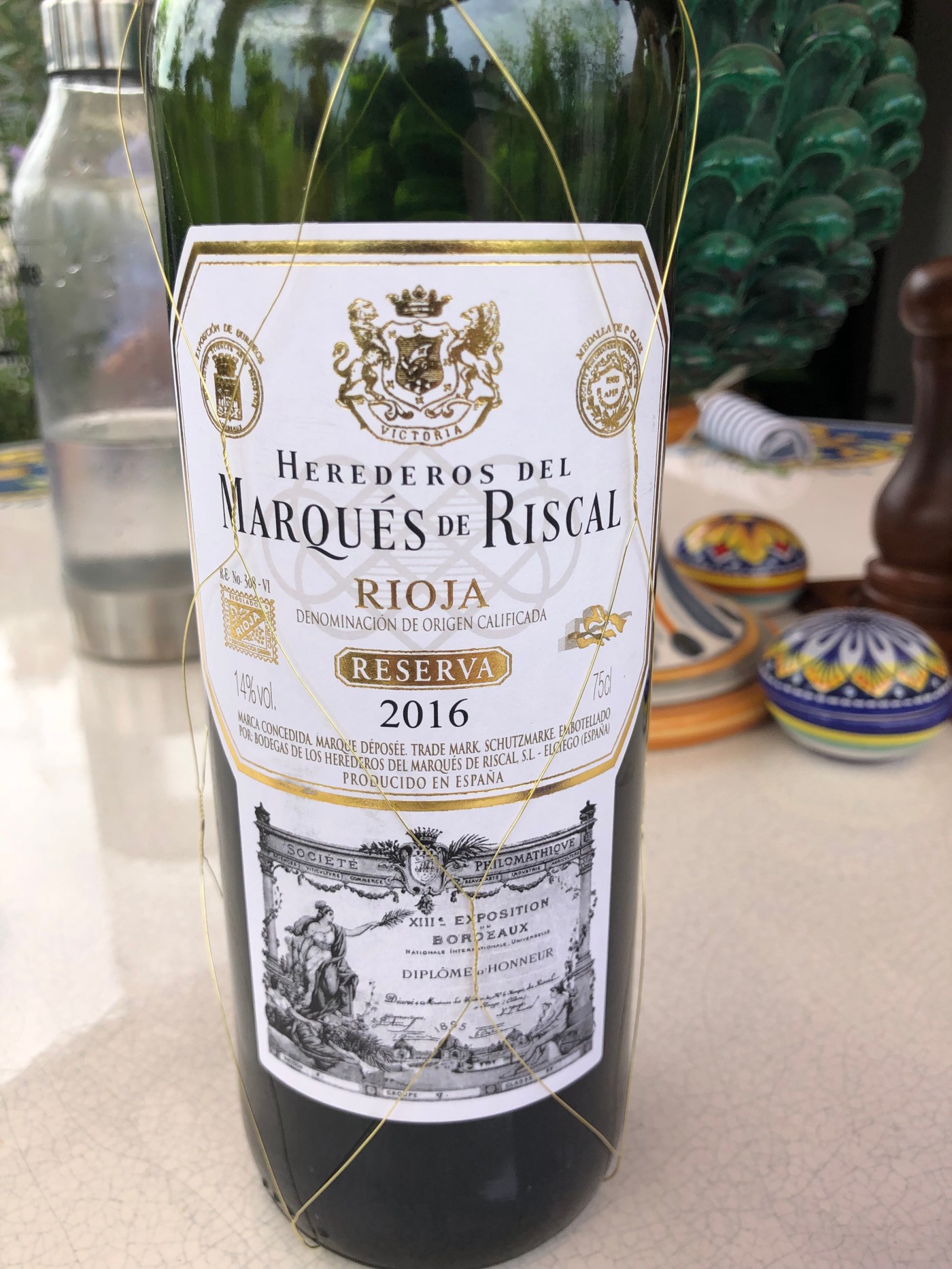
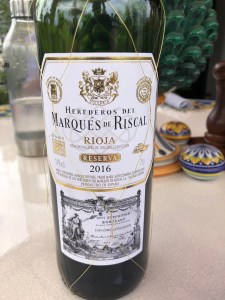
We drank a bottle of Herederos del Marques de Riscal, Rioja Reserva, 2016, the other day to accompany a very particular piece of red meat. Made from 100% Tempranillo grapes, at 14% a.b.v. it packs a punch. In colour it is very dark (think black cherries) and smelling it is like putting your nose into an oak barrel half-filled with cherries, black pepper, ripe plums and a hint of cinnamon.
On the palate, the tannins seemed well rounded and the finish is long, leaving a sensation of velvet-silk in the mouth. It was the perfect accompaniment to the steak.
This wine is readily available on the shelves of English supermarkets but as rare as hens’ teeth in this part of Italy. We picked up our bottle in a department store in Lugano, Switzerland for about 19 Swiss Francs. The internet tells me the average price is around €14.00 so at least that is the same ballpark.
Too many years ago to contemplate, a driving holiday in France was the thing to do and I always particularly enjoyed the Loire Valley with its fairy-tale Chateaux, cheese, pies (pithivier) and of course amazing wine regions.
I think the first type of white wine that I was really hooked on was Sancerre from the west side of the upper Loire and after that, its cousin Pouilly-Fumé from the other side of the river.
The Sauvignon Blanc grapes used to produce Pouilly-Fumé are grown on limestone which is something that ought to be detectable in the wine, which typically has a mineral quality to it.
Recently, with Adam’s assistance, we explored a bottle of Domaine Chatelain, Harmonie, 2018 Pouilly-Fumé bought here in Lodi. On average this wine retails for around €18.50 but given the issues referred to in a previous post, we had to pay closer to €30.00. The wine was a Gold Medal winner in the Concours Mondial des Féminalise, Paris in 2019.
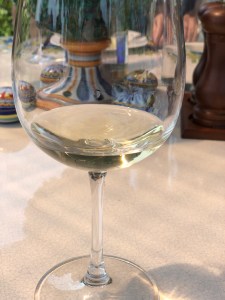
The wine had a greeny-gold colour to it, something akin to freshly cut straw, with the scent of grass and apricots , perhaps even a hint of white pepper and something flowery. There was nothing particularly to suggest the mineral notes we’d been expecting, give the terroir in which it had been grown.
It’s along time since I’d drunk any Pouilly-Fumé and I was expecting sharpness and flavours of grapefruit. Instead we experienced more of an unripe peach taste and again something flowery. The acidity was lower than anticipated (medium plus) with medium dryness and of course low tannins.
Overall the wine lacked character. It might conceivably improve in another year or so but I for one won’t be trying this one again in a hurry and especially not at that price.



























 My Kind of Food