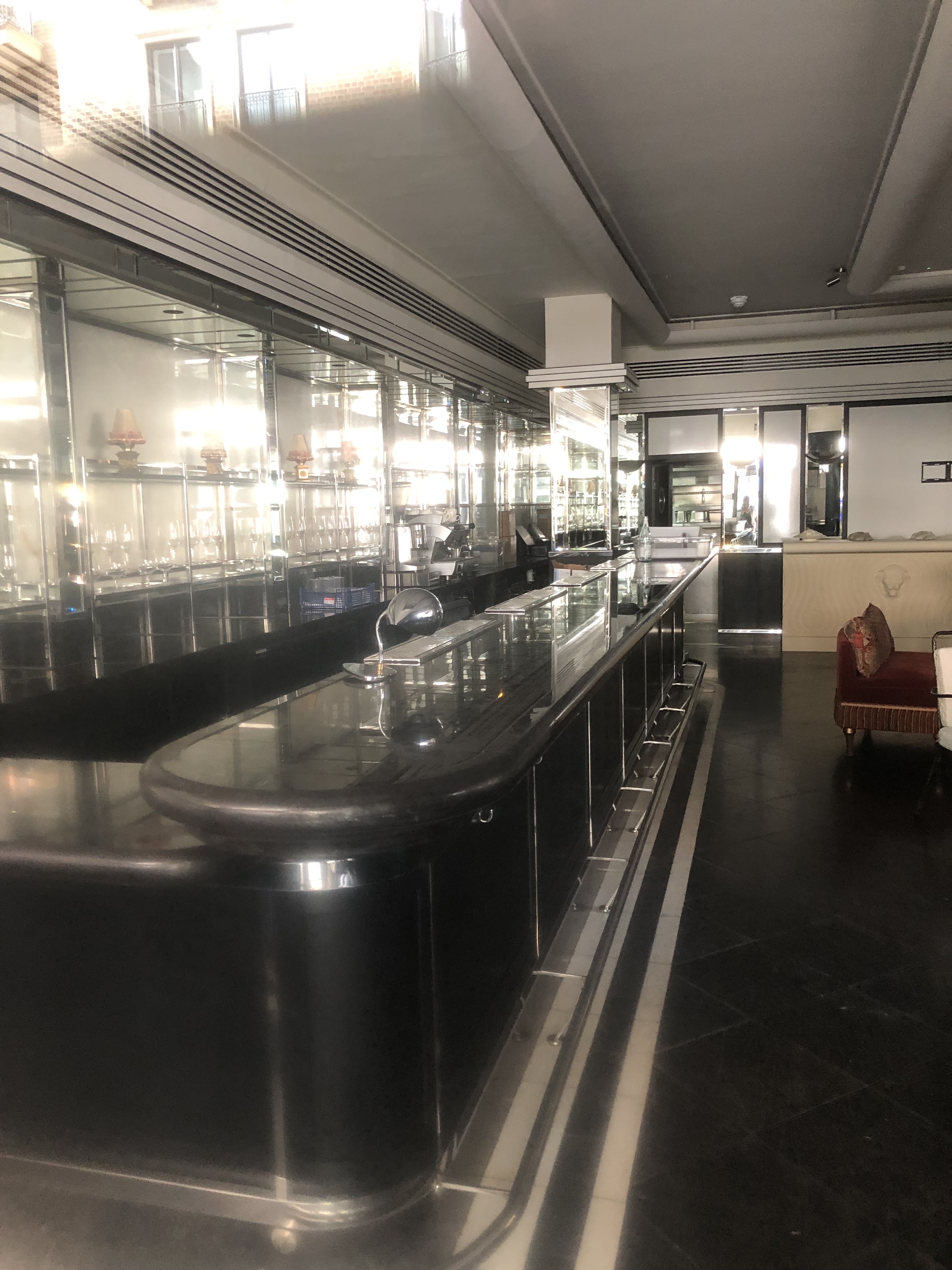
Recently, while in London, I took the opportunity to have a toot (as they say in Lancashire) at what had been Le Caprice restaurant in Arlington Street. It was a sad sight and I wish I hadn’t done it. A place that generated so many happy memories was now just a shell of what it had once been. I wrote about the demise of Caprice here, so I don’t intend to bleat on about it again now.
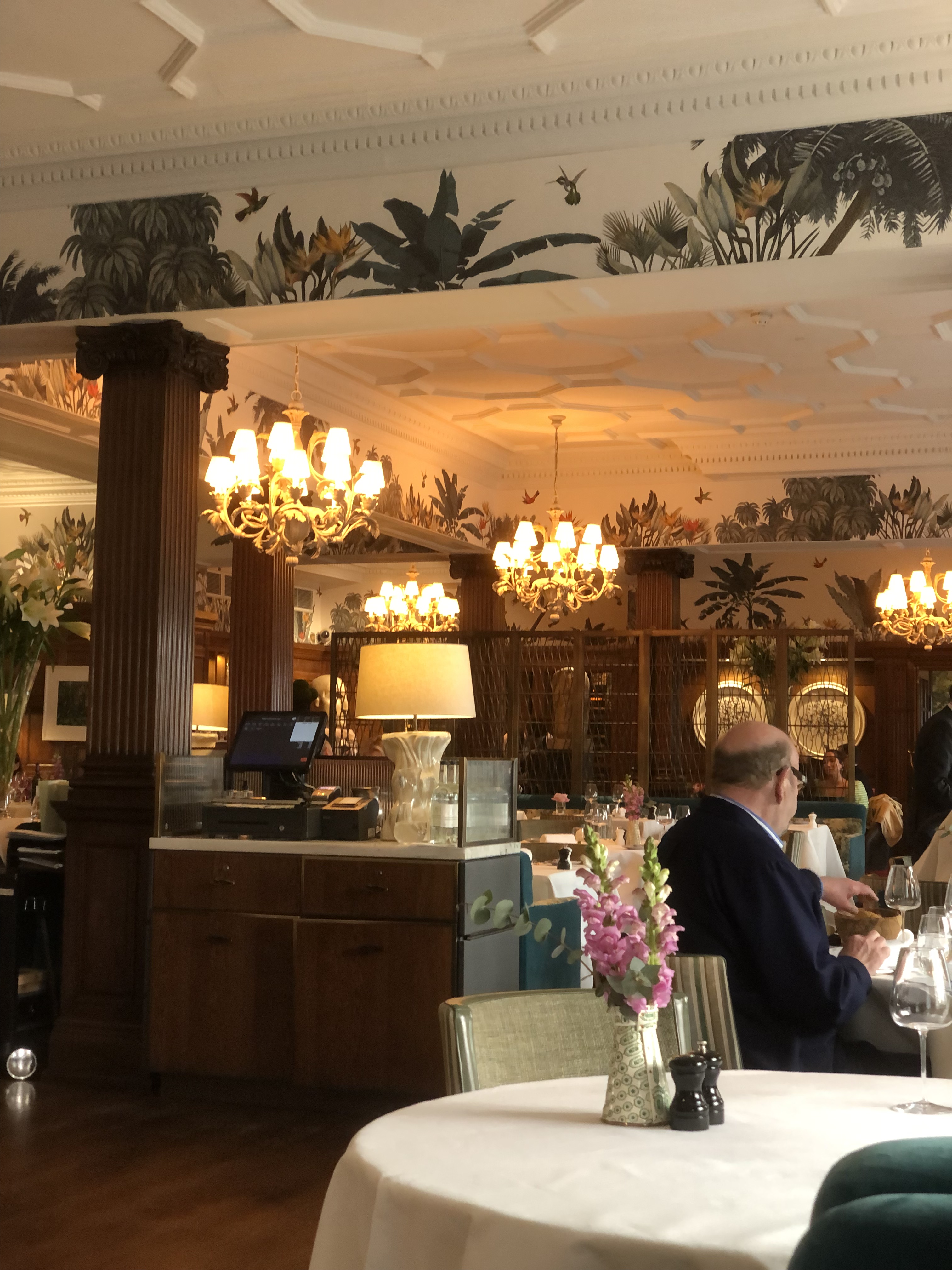
Part of the reason for being in London that day was to see what Jesus Ardono and his team were now doing for Rocco Forte, in Brown’s Hotel in Mayair. The flagship restaurant in Brown’s is Charlie’s and in appearance it’s the antithesis of Le Caprice, against which I was inevitably comparing it. Caprice was designed on a monochrome palette whereas Charlies’ is a riot of colour with decoration, in what I can only describe as ‘jungle’ style. The room is large and at first glance seems more formal. The design was the work of Olga Polizzi, daughter of the later Sir Charles Forte after whom the restaurant is named. Olga is Director of Design for Rocco Forte Hotels. Personally I find she often takes good ideas a little too far. The plates in Charlie’s seem not to show off the food to best advantage and are too busy. Give me a round white plate any day.
Immediately on arrival in the dining room there was a huge wave from Jesus from across the bar area and a very welcome surprise as Paul Stabbins, who had looked after us so well on many visits to Caprice, crept up behind us to give us a very warm welcoming hug. Immediately I felt at ease and gained certainty that the spirit of Caprice was alive and well and would soon dominate Charlie’s. With these two, front of house, I’m certain that the journey to create something special is being driven forwards with gentle determination and a sense of generous hospitality.
Jesus offered us a choice of tables, both in prime position at the end of the room. He was particularly proud of his decision to install semi-circular banquettes at some of the tabs around the perimeter of the dining room and so we chose one of those, a great spot, he said, for people watching.
The menu is fairly classic with modern twists and the kitchens are led by chef Adam Byatt (of Trinity in Clapham). I was pleased to see that some Caprice classics had made the move to Mayfair and sit alongside the carve-at-the-table roast meat trolley.
I had Omelette Arnold Bennett with English Lobster to start, followed by Chicken Kyiv the price of each one sold being donated to the British Red Cross to help Ukrainians displaced by the current Russian war of aggression. Both dishes were enjoyable and well prepared but I would have liked my Kyiv to have given up more unctuous butter when I cut into it. Next visit I’ll try the Calves Liver and Bacon which is always a good litmus test
Omelette Arnold Bennett with LobsterChicken Kyiv
The hospitality industry has taken big hit because of the Covid Pandemic with many good staff leaving the industry for more flexible and better paid jobs. Recruiting, training and retaining front of house staff, even in the best restaurants must be very challenging at the moment. Charlie’s has a little way to go to before it delivers the über efficient, yet friendly and appropriately infomal service we saw at Caprice. I’m confident that they will get there though and will certainly go again next time I’m in London to see how things are progressing. In the meantime, I wish Jesus, Paul and their team ‘in bocca al lupo”. See you soon my friends!
Hospitality is where its at. It is what I try to offer friends and visitors to my home and above all else it’s what I look for when I go to a restaurant. Food and drink may be an important part of the mix but the expectation of being in a restaurant which ticks all the boxes, goes well beyond that and it is why the ‘poshness’ factor isn’t really that much of an indicator. Plenty of simple trattorie make the hospitality grade for me and more than a few of the (supposed) best restaurants in the world fail.
For many years I’ve become increasingly frustrated as I’ve watched the big names in the restaurant sector loose focus on hospitality in favour of big business. I can think of Jamie Oliver and Antonio Carluccio. Oliver began his career in the Neal Street Restaurant, which Carluccio ran with Terence Conran, in Covent Garden, London, before moving to the River Cafe in Hammersmith. Carluccio and Oliver expanded to most of the market towns of England, whereas River Cafe is what it always has been. Of River Cafe the Red Michelin Guide says, “Little has changed at the iconic River Café since it opened thirty-five years ago: the welcome from the staff is just as cheery, the atmosphere as warm and comforting…”.
River Cafe, London
Both Oliver and Carluccio moved away from offering hospitality as their raison d’être to running businesses which expanded with off-shoots linked to their famous names to the point, in the case of Oliver, to catastrophic collapse.
Antonio Carluccio
One thinks also of the internationally famous chefs like G Ramsey, skilled cook and even more skilled multi-national business man. I don’t particularly like his food and even less so his aggressive personality but if I did, I would much prefer to go a a restaurant where I could eat food that Ramsey had been closely involved in creating – or even cooking (as was once possible)! I’ve scarcely more chance of eating food cooked by Chef Ramsey in my own apartment than I have by going to one of his very many restaurants around the world. His saving grace is that his model has produced some amazing chefs who have gone on to create their own style of hospitality without becoming mini-Ramseys themselves, chief among them, in my view, is Angela Hartnett.
I’ve written in the this blog previously that one of my personal favourite restaurants of all time, was Le Caprice, in St James’ in London. Le Caprice was first opened in 1947 by a former maitre d’ from The Ivy, Mario Gallati, then in 1981 it was given a new lease of life, when it was take over by Chris Corbin and Jeremy King (now running Brasserie Zedel and the Wolsey).
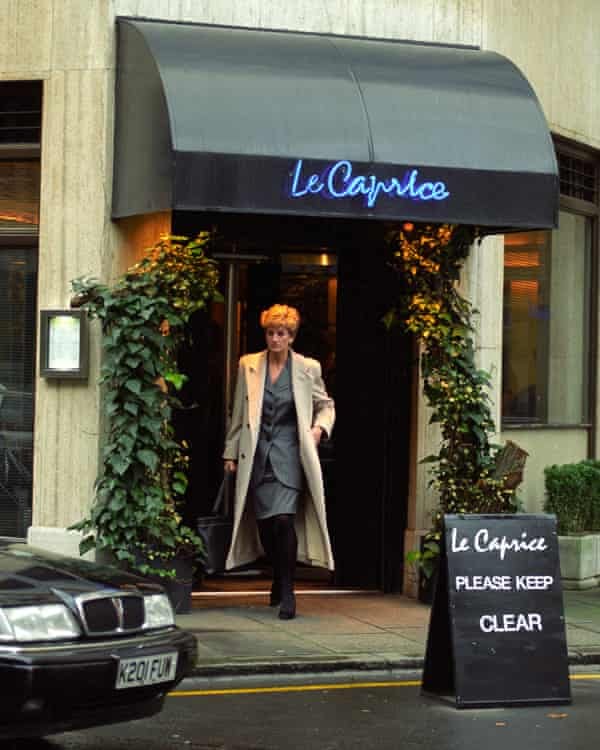
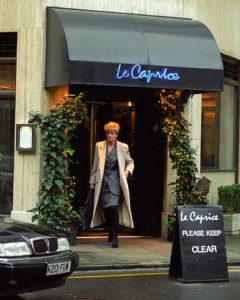
Diana, Princess of Wales leaving Le Caprice
Le Caprice was a fixture of the London dining scene throughout its history and all returning clients, whatever their level of celebrity, were welcomed by one or all of the maitres d’ like old friends. Regulars like Princess Diana, Mick Jagger and Elizabeth Taylor, sat cheek by jowl with more common-place folk, like me. As it happens I was at the next table on the day that Lord Archer (Jeffrey Archer) had his first restaurant meal there after his release from prison in 2003. On another occasion I had to facilitate a frail Earl Snowdon (former husband of the late Princess Margaret) navigate between the tightly packed tables on his way to the loo. Despite the sometimes high-end clientele, we more regular folk were always treated with the same sense of welcome and generous hospitality. This to me is a very good thing – almost priceless and very rare.
Caprice had stable mates in London; Scotts, Daphnes, The Ivy, Rivington, 34 and J Sheekey. They were different from each other but with a common stylistic feel and that essential spirit of hospitality, paired with simply good food. Then the rot set in.
I first became suspicious when I noticed that more and more people on social media were claiming to have eaten at ‘The Ivy’. Of course they didn’t mean THE Ivy in West Street, Central London but one of a number of provincial spin-offs under the auspices of The Ivy Collection. As a brand within the Caprice Holdings portfolio, it is doing well, recording a £94.8m turnover in 2020 but without a doubt this is diminishing the original Ivy name. Le Caprice and Rivingtons paid the price as both are now closed. Richard Caring, the mega-rich owner of Caprice Holdings said that Le Caprice closed in 2020 because the lease had expired (what, all of a sudden?). The abrupt closure took the world of restaurant critics by surprise as people like Tom Parker-Bowles and Jay Rainer tweeted Jesus Adorno, the face of Caprice to many, to find out what the hell was going on. The effects of Covid and lock-downs on the hospitality industry has also been cited as a reason. We have to question the lease expiry explanation when the site of the restaurant has continued to be used by Caprice Holdings as a training facility. The official line of the company is that Le Caprice will return, but at a different location; time will tell. Certainly Jesus has closed his tenure at Le Caprice which began in 1981 by moving to Browns Hotel and the Forte Group.
Why, oh why can’t local restaurants, doing sterling work, stay as they are? Has no one heard of the phrase, ‘if it ain’t broke, don’t fix it’. Of course restaurants are businesses and need to turn a profit but please, let’s keep the expansionist business advisors and venture capitalists away from the places where we love to eat and put the masters and mistresses of hospitality back in charge. At its heart a restaurant is a kitchen skilfully preparing yummy food and a dining room delivering a warm welcome and excellent service.
I’m becoming more and more keen to search out the lesser well known restaurants that are sticking to what they do best and I’ll say more about this in my next post.
Sometimes I wonder what it is that makes people want to eat out. Maybe its an inability to cook at home or at least a lack of enthusiasm for that activity which was so normal for previous generations. In the UK at least, supermarket ready meals and take aways often allow people to eat reasonably well without the effort of cooking themselves and yet more and more people these days choose to eat in pubs or restaurants on a regular basis.
Special occasions often give rise to a visit to a restaurant for many more people than choose to eat out on a regular basis and I guess in those situations they want to experience something a bit special. Others eat out, I suppose, in order to try something new, or at least different, compared to the sort of food they eat on a daily basis. By different of course, I mean ‘better’.
Is it all about the food though? Are restaurants, especially fine dining restaurants solely the canvas on which a high-end chef can display his artistic creations? If we think about any market town in the UK we can probably identify a former coaching inn where, centuries ago, travellers with their horses could stop for the night and have a decent beer and some nourishing food. In these cases the fore-runners of todays restaurants offered something much more than just grub and arguably its something more important; hospitality! Hospitality is much more than a plate of good food, it’s about a warm welcome and being made to feel a bit special.
Today’s top-drawer restaurants, in my view, are sometimes in danger of forgetting that as they rush to present the latest food trends and showcase the technical skills of the chef and his brigade. Eating out is generally expensive and I’m getting a bit fed up with paying a lot of money to be treated like a spectator at a circus. When I go to a restaurant I go to eat well, to enjoy myself with friends, to admire the skills of the chef and the waiting staff and most importantly I want to be made welcome and to feel as though I am the special one, not the staff, not the chef.
I’m more than delighted that my home region, the North-East of England, is producing some really good and interesting places to eat at every price point. I’ve written about some of them on here from fish and chip shops to Michelin starred restaurants. Recently I booked to visit a 2-starred Michelin place near to Darlington, Co Durham, called the Raby Hunt As the North East of England’s only 2 star restaurant, there is much to admire. In particular the hard work and determination of largely self-taught, former pro-golfer, James Close which has put this former gastro-pub run by his parents, firmly on the culinary map. His philosophy that chefs should ‘eat out more than they do’ is absolutely right.
The threshold to Raby Hunt
We’re told that he took his sommelier and front of house manager on an all expenses paid trip to Mirazur, ranked as no 3 in the world and where I celebrated my birthday last year. This is to be applauded and more restaurateurs would do well to emulate this behaviour. There is a similarity between the two restaurants though and I’m afraid its a mixed bag.
The food at the Raby Hunt was excellent, cleverly executed and stunningly presented (although I was left longing for just one ordinary round white pate to replace the over used raised porcelain presentation devices), the dining room is stylish and not over formal and the view of the kitchen from the car park raises expectations as you’re left wondering if they can produce truly great food from such a small space. We had fifteen tiny courses, each enigmatically named on the fixed tasting menu and the service was efficient.
My big gripe with Raby Hunt and to a slightly lesser extent with Mirazur however is one of attitude. It relates back to my opening remarks in this article. Is it just about the food or is it about hospitality? The email I received from Raby Hunt the day before our booking told me they had been tying to reach me on the telephone so that I could confirm my booking and as I’d not answered (I never received the call) they were emailing instead. The opening remarks were “We hope you are looking forward to your reservation…” When we arrived at the restaurant the greeting from the waiter was “Are you looking forward to your dinner at Raby Hunt?”. Catering, however highly rated it might be, is a service industry. Or at least that’s what I thought. Surely they meant to say ‘We are looking forward to welcoming you to the Raby Hunt for dinner tomorrow” and ‘Welcome to the Raby Hunt we hope you have a great evening”. Those two things really put me in a bad mood.
On the whole though I’m happy that my home County has such an interesting restaurant. I hope it will become more customer focussed as time goes by. Chef’s dislike of Trip Advisor is indicative of someone who has a firm idea of what it is he wants to create and that his customers should fit in with that, rather than being critical on the grounds of personal taste (likes and dislikes). It’s the Gordon Ramsey approach and it worked for him but I still think the attitude of Raby Hunt needs to be more welcoming and less superior. If it were I’d go back!
I’ve written elsewhere on this blog that Le Caprice restaurant in London is on my list of top favourites and I was really pleased to be able to visit for the first time in 2 years the other Sunday for lunch (or brunch as they call it). I was passing through London on my way to Cambridge and then the North East of England.
I’ve eaten at Le Caprice many times, too many times perhaps in relation to my income and I hope to do so many times again. It is one of the very few places where repeat visits do not disappoint.
The original Le Caprice was opened in the West End of London in 1947 by Mario Gallati, who had opened The Ivy some 30 years previously. The Ivy, in ‘Theatre Land’ is the haunt of actors playing in the West End theatres and their celebrity friends. It’s sister restaurant Le Caprice is also described by some a celebrity restaurant, and its not uncommon to recognise a face or two from stage or screen; it is however much more than that. It’s a ‘home from home’, generally devoid of tourists and where regular customers are remembered and welcomed as old friends.
The current incarnation of the restaurant began in 1981 when it was bought by restaurateurs Chris Corbin and Jeremy King who relaunched it and it was following that that its fame spread. It is now owned by Caprice Holdings Ltd who have a portfolio of great London restaurants, including The Ivy, 34, and Scott’s.
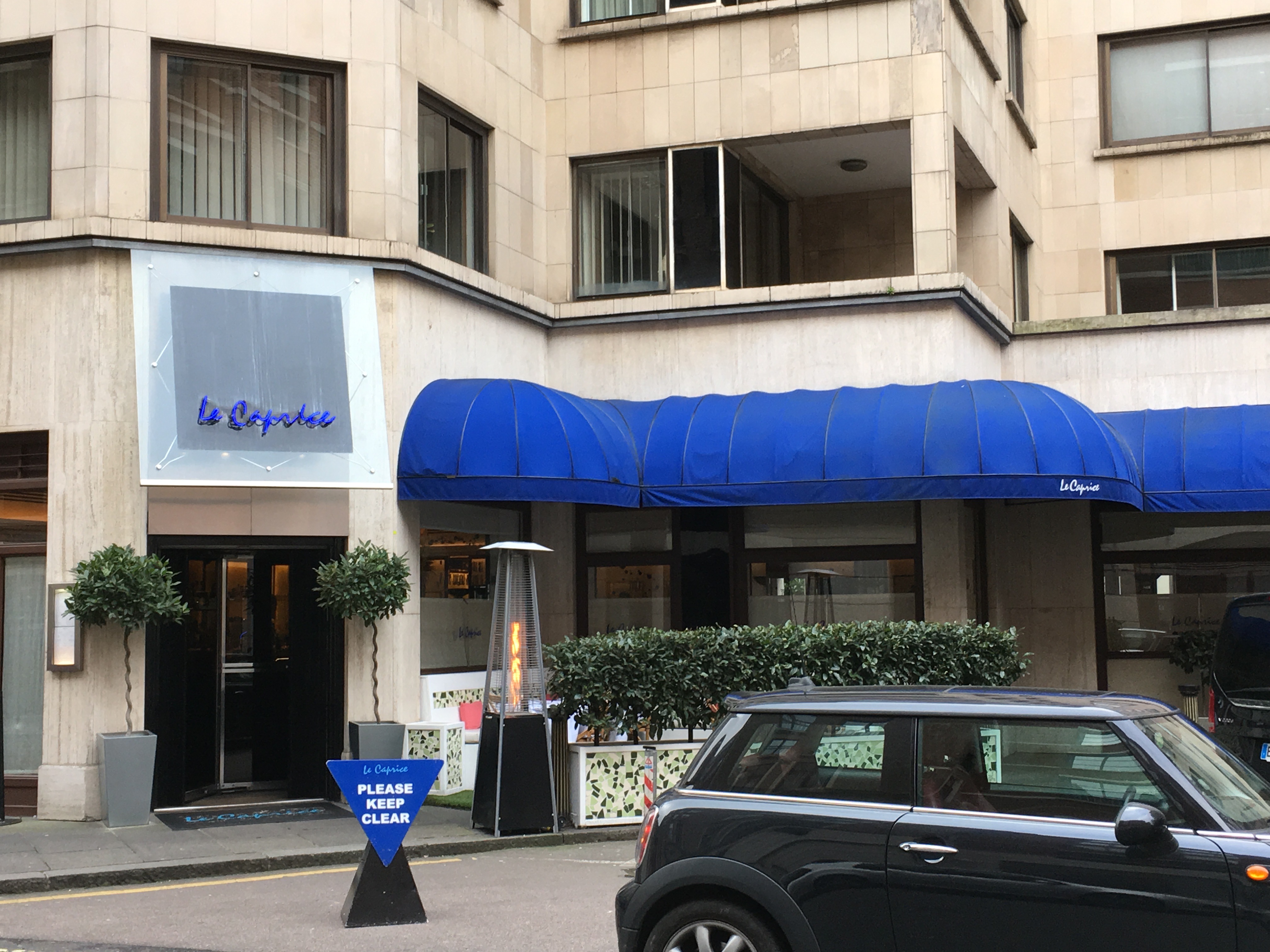
Tucked away at the end of a cul-de-sac behind the famous Ritz Hotel, it attracts little or no passing trade. It survives, thrives, on its reputation for high quality, simple food expertly prepared and served in its clean-lined, black and white-themed dining room, reminiscent of something in downtown New York.
The Director is the equally famous, Jesus Adorno, who began his career as a waiter. Jesus has immense charm and when he’s on duty greats every familiar face with sincerity, seemingly as pleased to see an EFL Teacher as a famous actor or an Earl.
Nothing much changes at Le Caprice, yet everything seems fresh. Sure there are occasional minor changes to the decor yet the strong black and white theme with chrome highlights remains, as do the David Bailey black and white photographs which adorn the walls. The menu changes with the seasons, but imperceptibly so. Even after a gap of two years or more the menu to me was discernibly the same and yet updated. There are no radical changes which seemingly respond only to the current foodie fashions, whatever they may be.
Le Caprice makes the best Bloody Mary in the world, in my view. I usually precede a meal there with one, especially if it is Sunday Brunch. Imagine how disappointed I was, when, a few years ago, they made some small changes to how it was prepared and served. Recognising my disapproval at the time, they have, on almost every visit since, remembered my ‘special needs’ and prepared the cocktail accordingly. Now that’s personalised service!
And so to the food. Having been given one of the two best tables (the benefit of being ‘known’) it was a joy to browse the Brunch Menu which ranges from dishes at the breakfast end of things, such as eggs, bacon, smoked salmon etc to a Sunday Roast with Yorkshire Puddings.
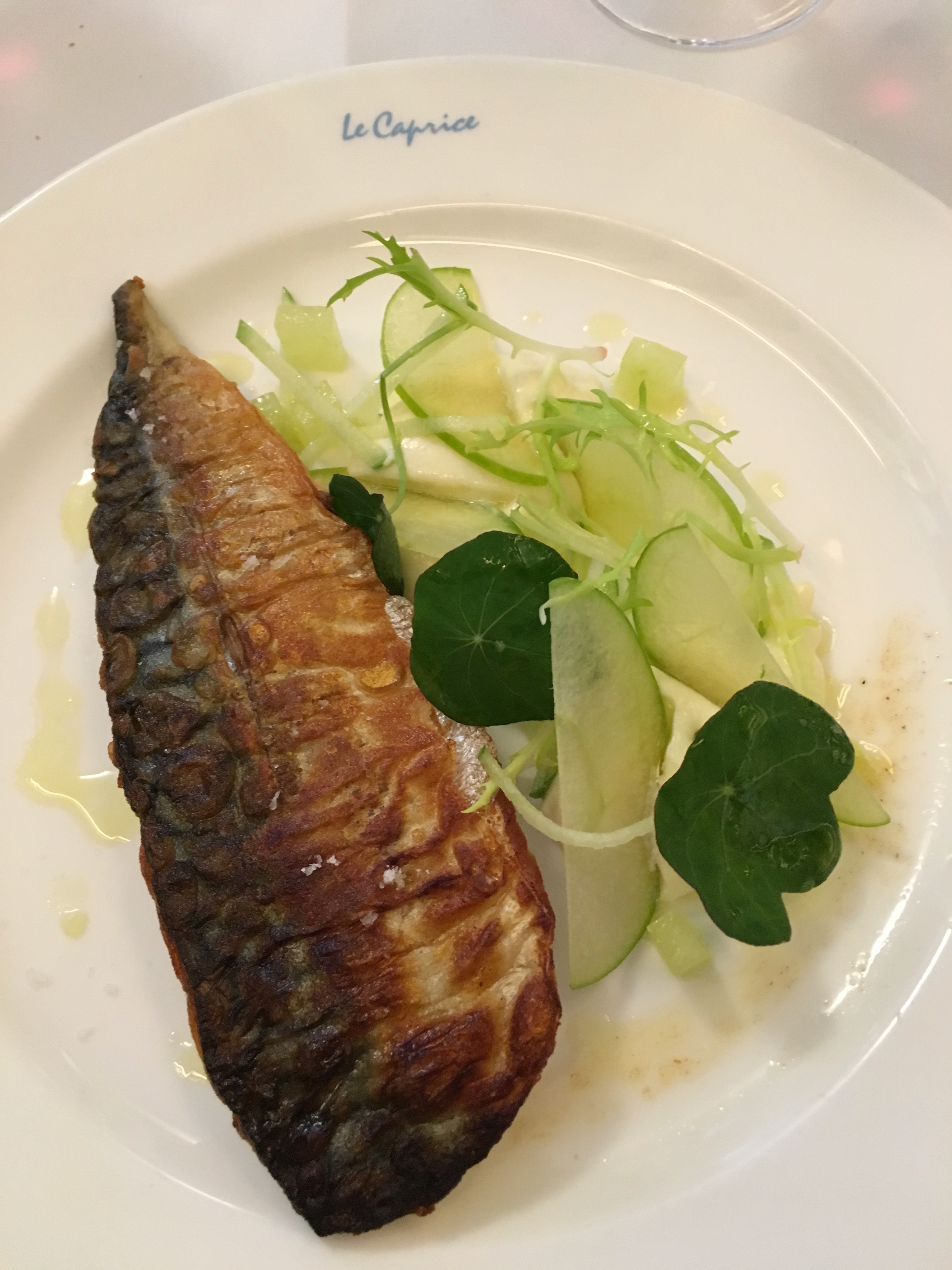
I chose Mackerel and Green Apple Salad for a starter, which was served with horseradish mousse and lovely peppery nasturtium leaves. It was presented in an ‘ok’ sort of way – nothing flash to look at and without the over the top, technical flourishes of some places but what an amazing taste! This is the essence of Le Caprice. Taste is king. The crispy skin on the fish gave way to moist, succulent flesh with a flavour that was so incredibly fresh. There was an appropriate amount of background heat and creaminess from the horseradish, cleanly cut-through by the sharpness of the green apple slices. How I wish I could cook like that!
Next up was Slow Roast Suckling Pig which was accompanied by winter vegetable hash and more apples, this time caramelised. I hesitated about ordering a second dish with apples but I adore suckling pig so much that I couldn’t resist. The vegetable hash was a bit like bubble and squeak and packed with earthy flavours, the apples firm and sweet and the pork spectacularly juicy. Maybe I was a bit sad that the skin wasn’t as crispy as it could’ve been but it didn’t stop me being tempted to lick the plate clean.
I love chocolates but I rarely order chocolate puddings. On this occasion through I was tempted enough to order Four Chocolate Fondant with Toffee Popcorn. If I’m honest I don’t think I’ve eaten a Chocolate Fondant before so fed up am I of seeing them on TV cooking competitions. This was a revelation.
Rich, warm, soft (with a suitably crunchy top) and yet not overly heavy (truly). Yum! Yum! Yum!
My only thought now is of when I can return to this most special of places.
The 26th of December, Santo Stefano, is known in England as Boxing Day which was traditionally the day on which servants and tradespeople were given their Christmas-box (a Christmas gift) or the day on which alms were given to the poor. These days its the first day of the ‘January’ sales and a lot of people take to the shops to bag themselves a bargain.
Bubble & Squeak
As far as food goes maybe its a good day to eat up meat left over from Christmas lunch (cold-cuts) with bubble and squeak (fried leftover vegetables) and chutney. English friends may well have eaten turkey yesterday or maybe goose, supplemented with boiled, baked or roasted ham. Roast beef is another popular alternative for those who find turkey a bit dry as it can be. This is the time of the year when the British home-cook can produce a vast array of delicious home cooked food.
The less well-travelled of my Italian friends here think that the British live on Fish and Chips and see it as our national dish (whereas in fact it is curry!).
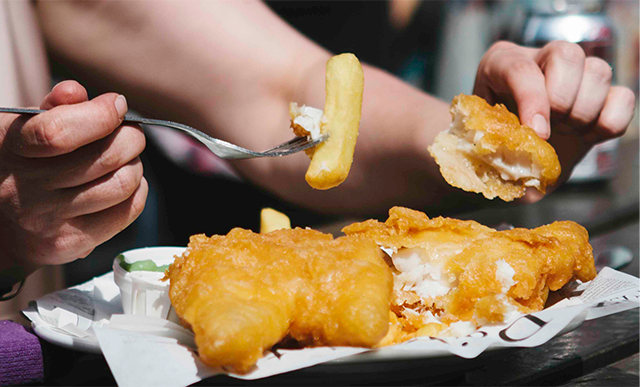
Last week when I was visiting family in the North-East of England I availed myself of that great national treasure, fish & chips. Its available in almost every town and village in the country in places run by native Britons, Chinese, Indians and even Italians (especially in Wales and Glasgow) and whilst the concept is pretty fixed, the quality can vary. There are national competitions to find the best fish and chip shops (chippies) and one, whose origins are in Yorkshire, has even become a national brand with franchises in airports and service stations.
I found a local chippy very close to the hotel where I was staying, in a former mining village called Blackhall on the Durham coast. It’s called Riley’s and I had the most delicious fish and chips I’ve tasted in a very long time. I asked for it ‘open” that is served to take away, on a bed of paper (when I was a child it would have been yesterday’s newspaper). In that way it’s possible to eat it immediately, sitting on a park bench or by the sea or in my case sitting in the car. I’d given the whole thing a generous sprinkling of salt and doused it in malt vinegar. The batter surrounding the cod was crisp and golden, the fish soft and moist and the chips fluffy on the inside and crisp on the outside. Perfect!
Anyone reading this blog who thinks that my kind of food is only-high end and expensive should think again. There is nothing better on this side of heaven than really good fish & chips. Maybe I should open a fish and chip shop in Italy?
There follows a guest post by my friend Alex Lane – he’s Welsh (Taffy), as you might guess from the article and I’m happy that I once taught him to enjoy rabbit kidneys.
It is often erroneously said that Britain has no national dish or that all the food we eat is brown. I think that it is rather damning and unfair to say so, as there are some wonderful regional dishes which deserve to be mentioned.
Welsh Rarebit (or Rabbit)
For the purposes of this wander through some of my favourite eats I am going to confine myself to the food of what could more strictly called my Motherland of Wales (the women are strong minded and usually the boss there).
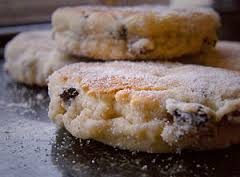
Welsh Cakes
There are many dishes that could be considered welsh because of their ingredients or because of historic connections. I am thinking here of Welsh cakes, Bara brith, Caerphili Cheese, Glamorgan Sausages, Welsh Rabbit (Rarebit) and so on.
Three Dishes stand out as icons of y bwyd cymru (the food of Wales). Cawl, Cockles and Laverbread.
CAWL
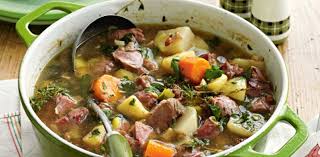
Every culture has a variation of this hearty winter dish. But what makes this very welsh is the Lamb or Mutton that is used in its preparation. Receipts for Cawl stretch back as far as the 14th Century. It consists of Lamb (welsh of course) or mutton cooked with leeks, carrots, turnips or more likely sweed, and potato, all cut into similar sizes and slowly simmered in water. At the end it is thickened with either oatmeal or flour.
There are some suggestions that it was eaten in two courses, the Stock first and then the meat and vegetables, but I have never experienced it this way, just eating it as it is with large chunks of Bread and Butter. Of course it is better eaten the second or even third day.
“Cawl cennin”, or leek cawl, can be made without meat but using meat stock. In some areas this is often served with bread and cheese.
Welsh Cawl
LAVERBREAD
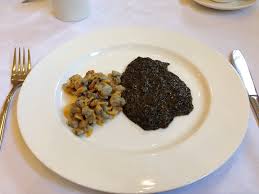
Laverbread or bara lawr is an important traditional food. A national delicacy made from seaweed, it is washed and then cooked to a soft greenish black paste. Made from laver, one of the most nutritious varieties of seaweed, laverbread is full of health benefits. Rich in minerals and vitamins, full of protein and low in calories, this is a real superfood. A rare plant source of vitamin B12, it is also full of iron and iodine.
It is especially found in South Wales around the Swansea and Gower peninsula area. Traditionally eaten as a breakfast dish eaten with fatty bacon and cooked in the Bacon fat, and often eaten with fried eggs and Cockles. Having said all this it is a very acquired taste!
Laverbread and Cockles
COCKLES
On the northern coast of the Gower peninsula in South Wales, you will find the coastal village of Penclawdd. In this area of rugged beauty, you can stand at the shoreline and feel the ancients calling as strongly as the pull of the unpredictable tides. not so very long ago, you would have seen the cockle-women of Penclawdd bent to their arduous task. As the ebbing tide retreated they would populate these sands, scraping away at the sand to expose the burrowing molluscs they would work at gathering the cockles until the tide decided to turn. The waters in these parts show no mercy and the exhausted women needed their wits about them should the tide begin to advance.
Cockles as I have said formed part of a traditional welsh breakfast. One of my earliest memories of eating cockles is in Swansea market in the pram eating a ¼ of a gill with pepper and vinegar – bliss.
Many welsh restaurants will serve cockles and bacon with a salad garnish and brown bread and butter as a starter, again a very good way to serve them.
Since the 1970s, the number of restaurants and gastropubs in Wales has increased significantly there are currently seven Michelin starred restaurants located in the country.
Melton Mowbray, is a small town in rural Leicestershire, UK and is the centre of the production of Stilton Cheese. Whey as a bi-product of cheese production is beloved by pigs and so the area also became renowned for raising pigs and creating pork meat products.
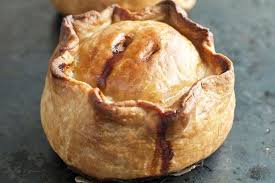
The king of these is the famous Melton Mowbray pork pie. It was originally created in the 1700s as a convenient portable food for those involved in fox-hunting which was a popular sport in the area. The popularity of the pie spread as a result of visitors to the area who came to follow the hunt.
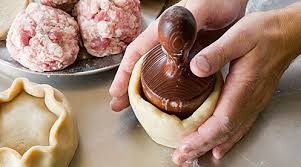
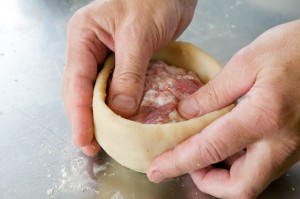
Hand raising a pieThe pie developed from being baked in a clay pot covered with a pastry lid, to what it is today; a portion of chopped fresh pork meat, seasoned with salt and pepper and cooked inside a ‘hand raised’ hot water crust pastry case. It has a particular pot-belly shape which is created as the pie cooks and the pastry case takes on that distinctive shape.
Similar pies from other areas have straight sides because they are cooked in containers rather than freestanding. Another hallmark of the authentic Melton Mowbray pie is the colour of the cooked meat, which should be grey not pink. Pink meat indicates that the pie is made from cured meat rather than fresh. The pie should also contain a decent amount of clear jelly which is created when stock, made from bones and poured into the pie after cooking, cools and coagulates.
It is that unique combination of well seasoned meat, a pot-belly shape, unctuous jelly and crispy pastry that is the sign of a good pork pie from Melton Mowbray. These days, mini versions are very popular as snacks and picnic food. Whatever there size, they are undoubtedly one of my favourite English foods.
During my recent stay in the North-East of England, I went, with members of my family, to a 1 Star Restaurant in Newcastle. In fact we went to only Michelin Starred restaurant in the city.
I’ve eaten Kenny Atkinson’s food three times now; firstly at Seaham Hall, many years ago where he gained a star, and later at Rockcliffe Hall; both in County Durham.
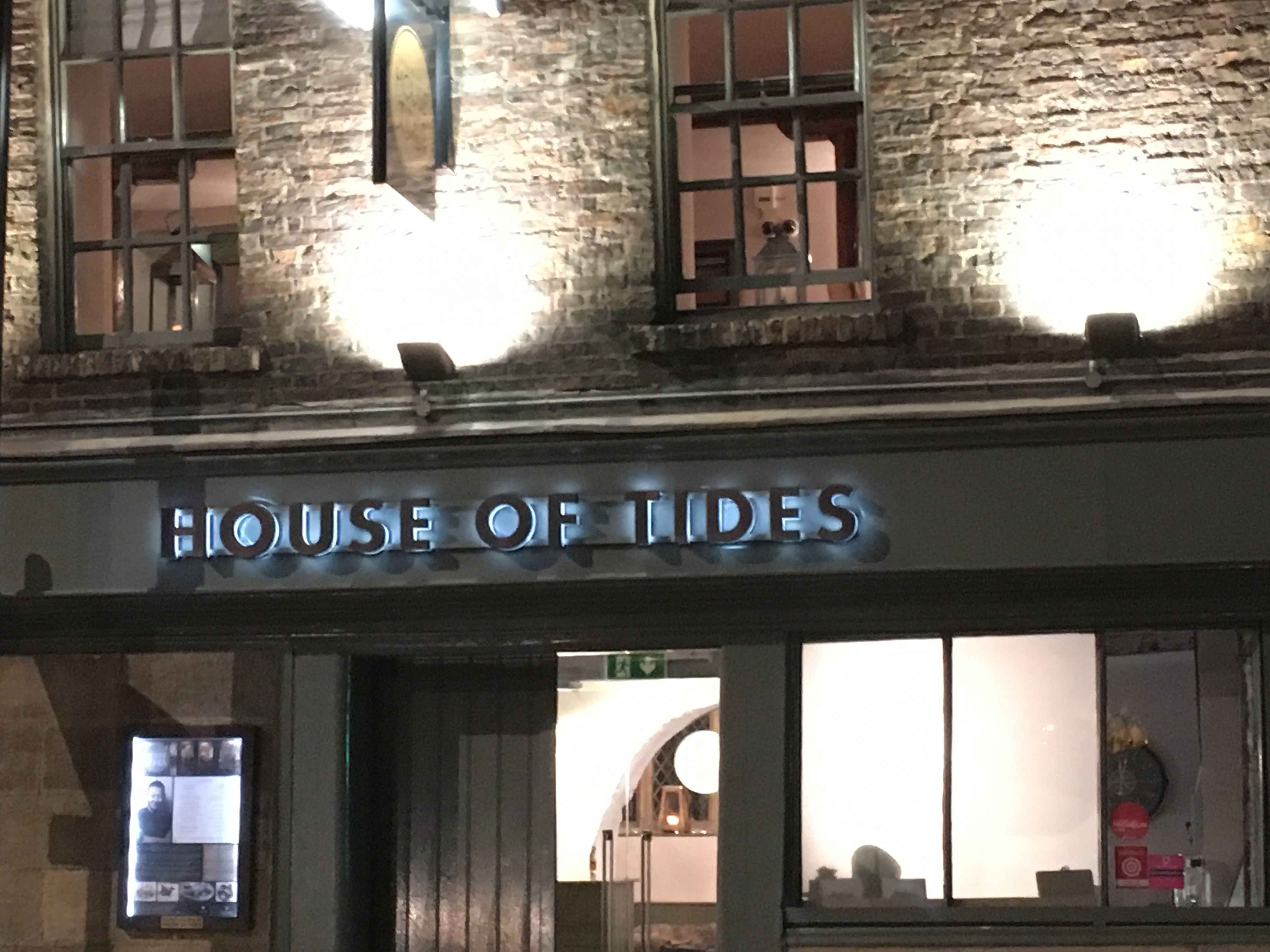
House of Tides is his own place and first gained a star in 2015 and subsequently retained it for 2016 and most recently for 2017. The restaurant itself is close to the iconic Tyne Bridge and the funky swing bridge. It’s housed in a former 16th Century merchant’s house which has been converted into what his publicity calls ‘a casual and informal space’. The ground floor is in what I would call, industrial chic style, complete with rustic tables and chairs; some of the tables were even a bit sticky in the olde-worlde end of the street pub way! It’s in this area that pre-dinner drinks are served – I had a negroni – and the menu is presented for consideration. Alongside the drinks we were given a serving board of three bite sized gougeres (savoury choux buns). The gougeres were piped full of unctuous cream cheese with onion chutney and truffle. I’m a bit funny about truffle, sometimes I like it and sometimes I don’t, so in this case I was content that I couldn’t detect its unique taste at all.
The menu choice, headed, ‘Autumn 2016’, was between a Dinner Tasting and a Vegetarian Tasting. Interesting to note that the vegetarian option followed the non-veggie one as closely as possible without upsetting the sensibilities of non-carnivores (of which there were none on our table). The gougeres formed the first item on the menu – so far so good!
We were taken upstairs and found our wine and water choices already on the edge of table. Adam our waiter for the evening was introduced to us and proved to be an excellent guide to what we were eating.
It’s worth mentioning here, that, in order to reinforce the casual style the staff wear black jeans and either black or white open-necked shirts. Customers too were in smart-casual mode, with only one tie seen in the whole place. To my mind this is a good thing.
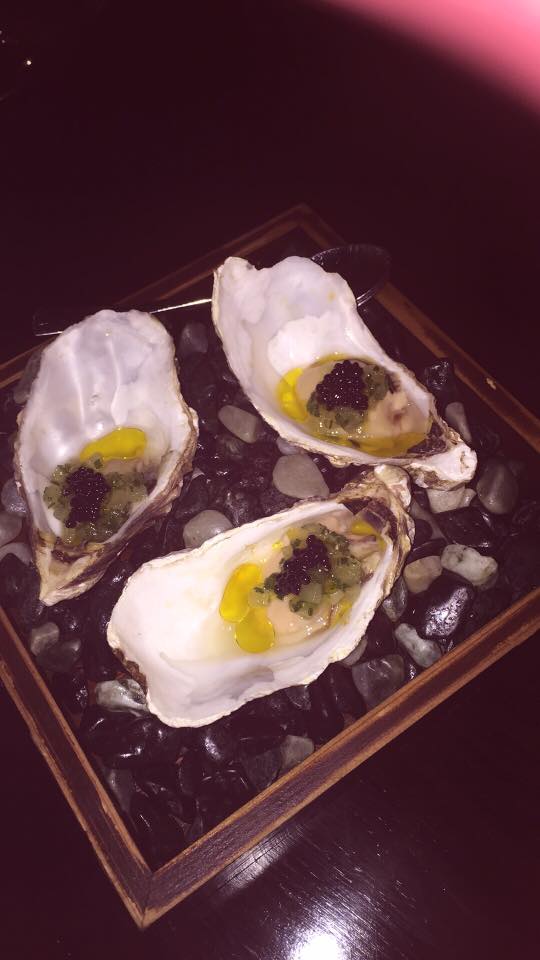
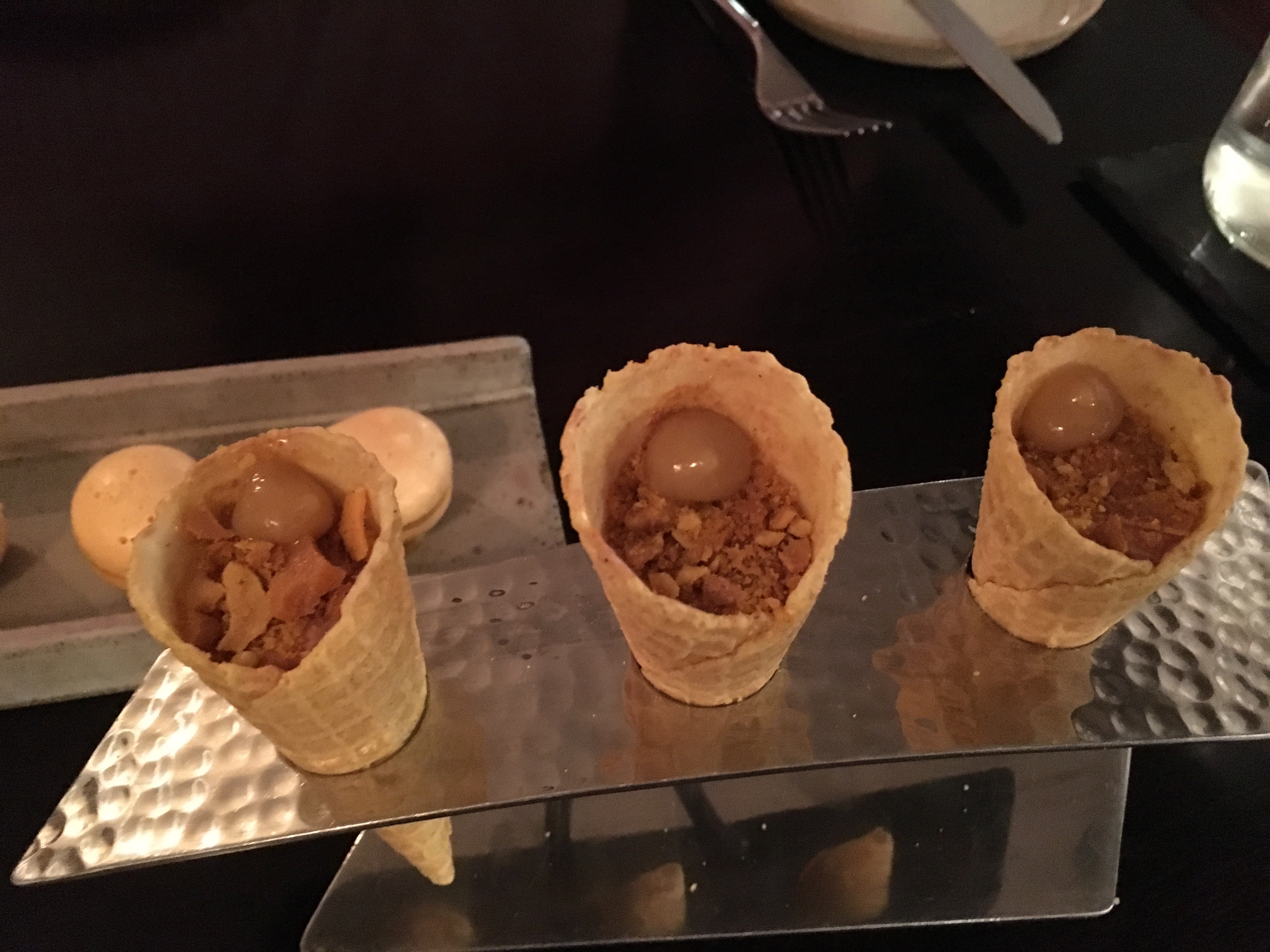
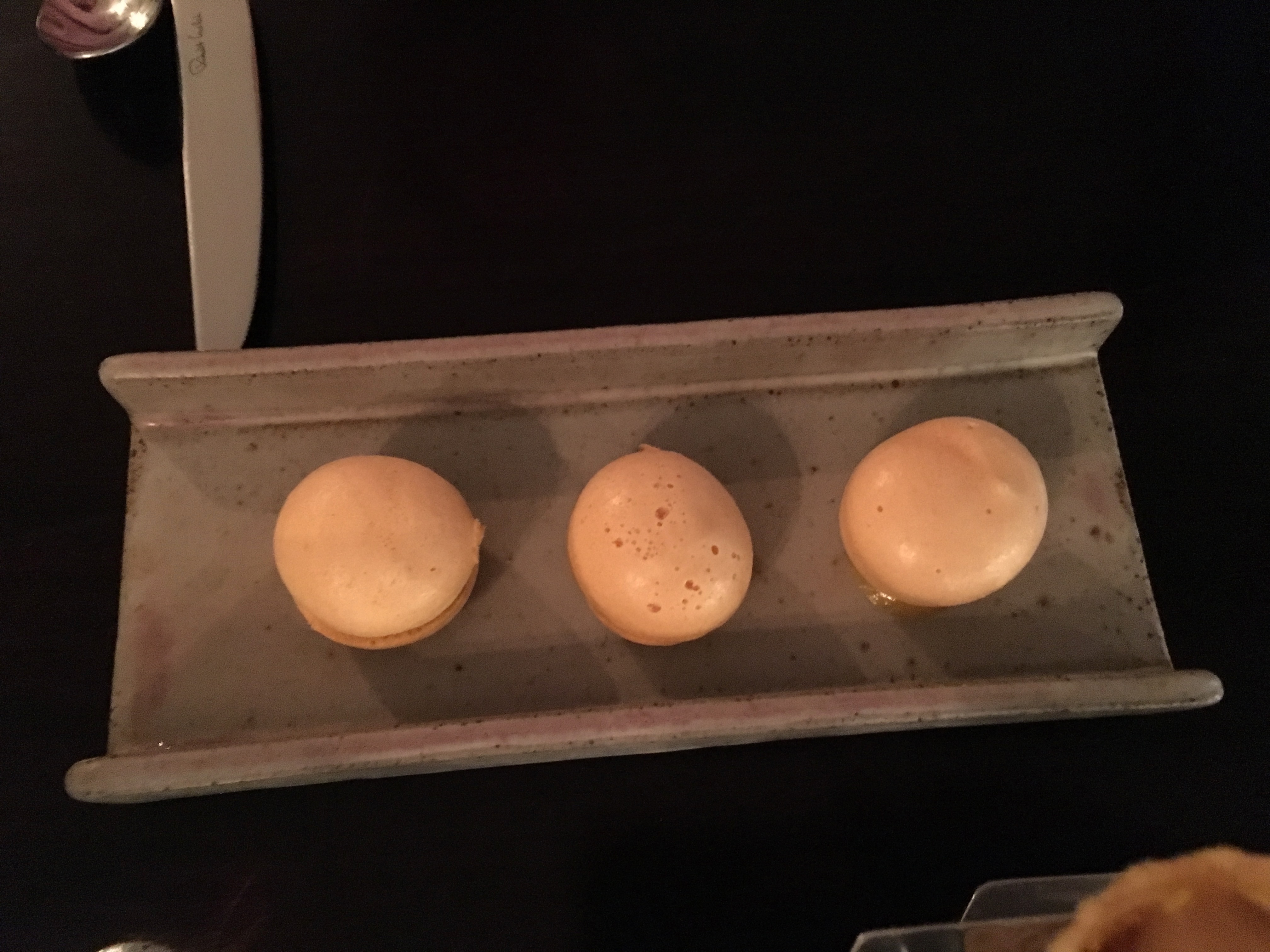
The first course served at the table came in three parts, all put in the centre (three of each). The first I tried was a small ice-cream cone containing liver parfait and sultanas, with a lovely mild curry flavour; the second a tiny macaron, described on the menu as, Carrot meringue, carrot curd, fennel pollen; the third a fresh oyster from the Holy Island of Lindisfarne with cucumber, ginger and ‘caviar’. All were lovely and exceptionally fresh tasting but I discovered for myself, that the order in which you eat them is important. I really wish I’d started with the oyster (the mildest of the three elements), then the parfait, finishing with the macaron. The macaron was such a dominant flavour it really obscured the oyster which followed. I’d happily eat a whole pile of them though. Adam received the feedback with a level of interest that makes the diners feel that they are not just passive consumers of what is laid before them but maybe co-creators of a culianry experience. So perhaps, in future it wouldn’t do any harm to recommend an eating order for this trio of goodies.
Lindisfarne Oysters
Chicken liver parfait
Carrot meringue, carrot curd, fennel pollen
What ever it is that puts food in the one, two or three Michelin star bracket, those little meringues had it. Intense!
Bread and butter (fermented rye bread and Grant Harrington’s cultured butter) were served alongside a little pot of Butternut Squash with smoked bacon and truffle. Again intensity of flavour was the overwhelming impression of this velvety, creamy soup the bacon bits offering just a touch of bite for contrast.
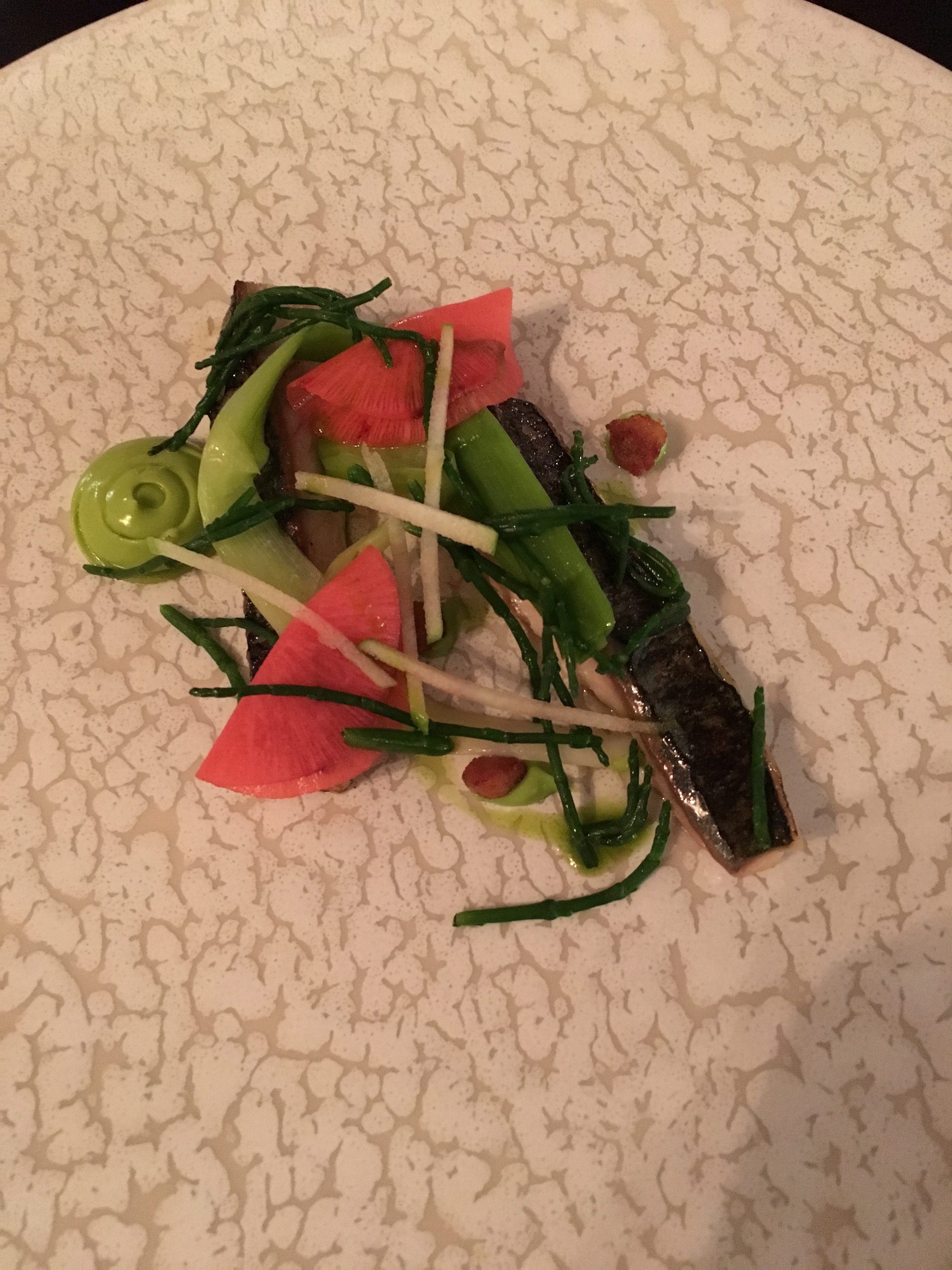
Mackerel is a simple yet lovely fish, especially when served with something a little sour to cut through the oiliness of the fish itself. In this case the menu promised, Mackerel, artichoke, blackberry. Ok, so a tart blackberry should be a good foil to the oily mackerel but I was half way through before I realised there was nothing resembling a blackberry on my plate. Adam, who hadn’t served this course to us, explained that there had been a menu substitution consequently we had mackerel, apple and pickled radish before us. The pickled radish might’ve offered that sourness I was looking for but sadly, in reality, it didn’t. The tiny pieces of fish though were very yummy.
Mackerel
A little bit here about the service. I can’t abide an overly obsequious waiting style. It makes me feel guilty about the fact that someone is waiting on me. It’s opposite vice, indifference to the needs or wants of the diner, is equally abhorrent. The staff at House of Tides get it right in my view. They are attentive (wine glass always unobtrusively topped up), interested to know how we found the food and (apparently) keen to receive constructive criticism. ‘Our’ Adam in particular was invisible until we needed him, then unfailingly polite and scrupulously professional. He deserves to go far in his career.
Back to the food! Next up was the first of two meat courses; in this case, Venison tartare, beetroot, blueberries and kale. It was a suitably tiny portion, presented in a ‘pile’ on a dark plate. I was intrigued. Two flavours dominated – blueberry and deep fried kale. The kale was reminiscent of that so-called ‘seaweed’ you get from Chinese take-aways, which is deep fried shredded cabbage sprinkled with powdered scallops. I love it. For the life of me though, once I’d put that morsel of flavour into my mouth and a blueberry, I couldn’t distinguish the taste of the venison at all, nor indeed of the beetroot, which in my view should have provided an earthy flavour. I’m not sure what the solution to this is, but I hope my feedback makes them think again about this particular combination.
Venison tartare
The lamb dish, which followed, did not have the same issues at all. The testimony to how much I loved this dish is that I didn’t stop eating it long enough to take a photograph! The menus told us it would be, Lamb, broccoli, tomato, radish, and so it was, but that’s only the start!!! The lamb was rump, tongue and sweetbreads. The rump was beautifully cooked, a vibrant reddish-pink colour and very flavoursome, however, the offal stole the day. Last time I had (veal) sweetbreads I really didn’t enjoy them and although I love eating cold pressed ox and pork tongue I’d never before eaten lamb tongue. The sweetbreads were crispy on the outside and tender on the inside, with just enough firmness to allow you to bite into it before it started to dissolve. As for the tongue, the tip of the tongue apparently, I have never eaten anything before that tasted so much of lamb. When can I eat these lovely things again?
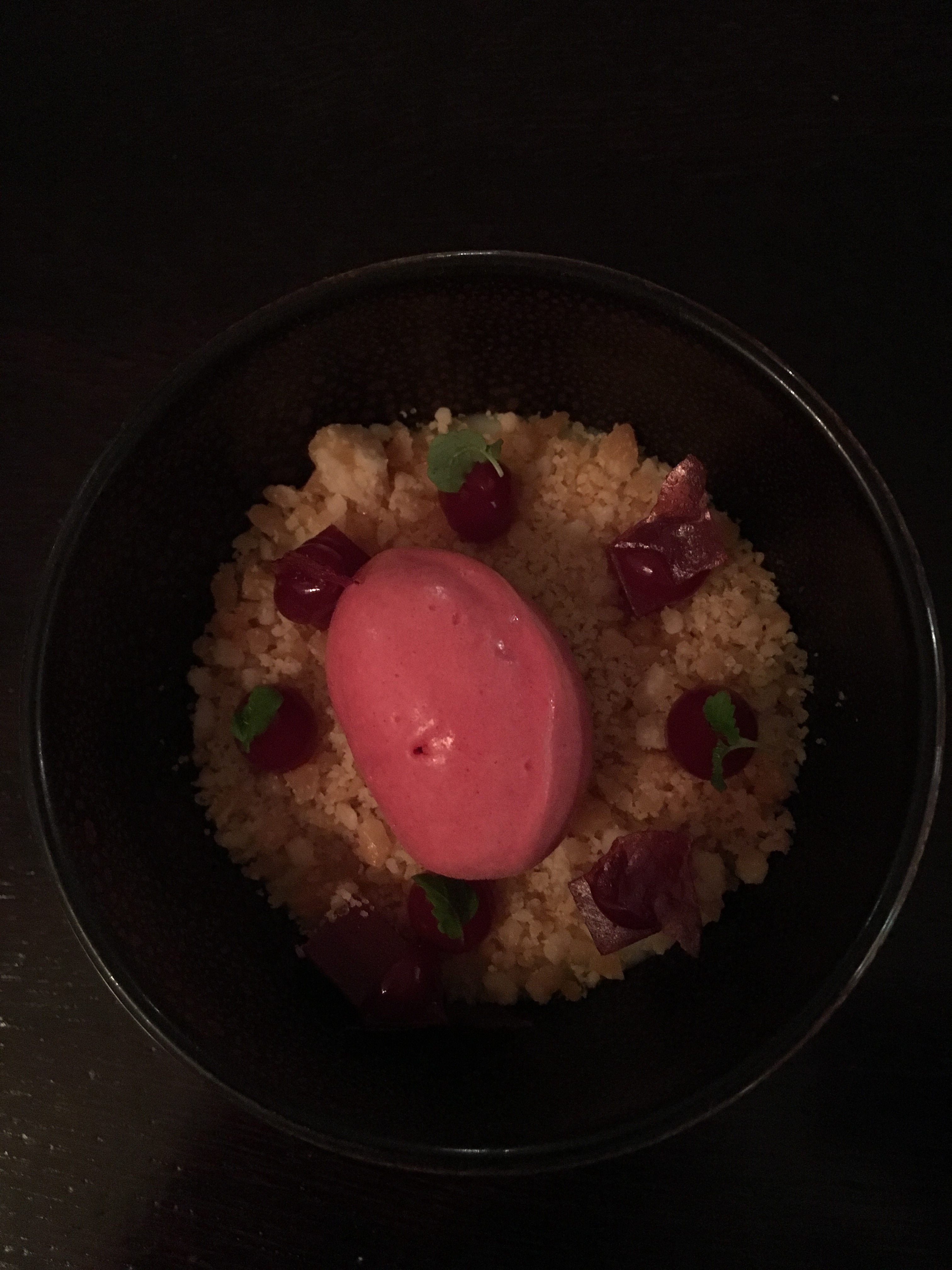
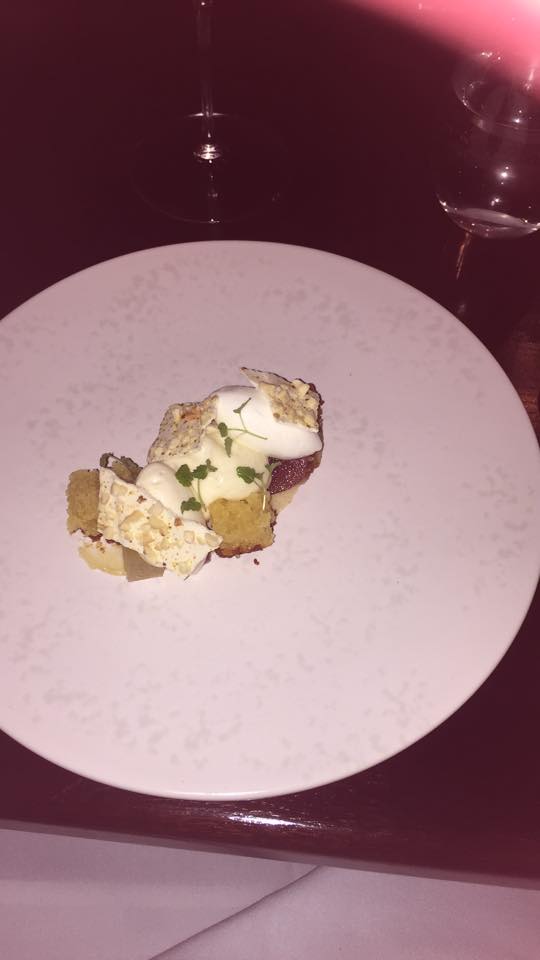
And so to the puddings. We next tucked into, Raspberry, lemon, pine nuts, which was in fact a light, sharp and delicious lemon posset with a pine nut crumble and raspberry sorbet on top. Heaven! The Pear, almond, ginger second pudding was equally delicious and light but by now the over-enthusiastic heating in the dining room was making us tired and longing for some cool, fresh air
Raspberry, lemon, pine nuts
Pear, almond, ginger
So how to sum up? Not everything was spectacular about House of Tides but on the whole it was a good and enjoyable experience, with some exceptional high points. The macarons, lamb offal and the posset were to die for. The atmosphere was suitably relaxed (if a tad warm) and with great service from Adam. I was less enthusiastic about the venison dish and would’ve preferred the version of the mackerel that was on the menu. The restaurant’s focus on locally sourced and fresh procure though will mean that sometimes there needs to be last minute menu changes.
Kenny Atkinson, the Chef-patron, wasn’t working the evening I was there so I’m guessing that Danny Parker, Head Chef, was driving. Thanks to him and his brigade for some lovely food. I’d need a more frequently changing menu to entice me back next time I’m in the area though and as a returning customer I would probably prefer to have an al a carte option to sit alongside the tasting menu.
Kippers (smoked herrings) are becoming more popular again these days. I’ve loved them since I was a child when we used to have them ‘boil in a bag’. They would come in a vacuum sealed packet with a pat of butter inside and then simply be warmed through by placing them unopened in a pan of boiling water for a short while. Gastrophiles call this sous-vide cooking these days!
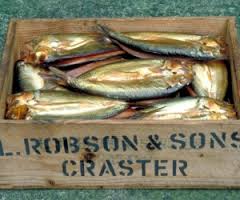
There’s not much doubt that the ‘kippering’ of herrings was born on the Northumberland coast, either in the fishing village of Seahouses or Craster, not withstanding the fact that similar products can be found across the North Sea in the Scandinavian countries and also in Eastern Europe. Craster Kippers though are special and have been described as the best available – and not just by me! The family firm L Robson & Sons, in Craster, makes Kippers from North Sea Herrings (‘silver darlings’ as they are affectionately known), as they have done for over 130 years. The fish, only the plumpest, are split, soaked in brine for a while and then smoked for 16 hours over smouldering oak and whitewood.
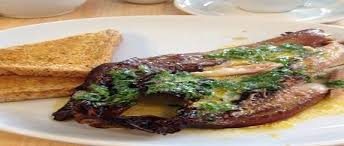
Grilled Kippers
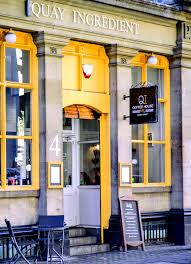
When I was in Newcastle, UK, recently I went for breakfast to a quirky little cafe in the shadow of the Tyne Bridge, called Quay Ingredient (lovely pun!). It had been recommended to me as serving the best breakfasts in Newcastle, so I thought I had to give it a go.
It’s a tiny place and was quite busy but I managed to get a table. The breakfast menu offered a range of different options, from Full English, through various egg based dishes and pancakes, to cereal and toast. My eyes were immediately caught by ‘Grilled Craster Kipper with Lemon Parsley’ so I ordered it with a cup of black coffee, which was much needed after a heavy and late night!
The kippers have to be the best I have ever eaten. They were plump and juicy and drowning in lemon and parsley butter and served with generously buttered slices of toast. The taste was an exquisite mix of smoke, salt, pepper and lemon! The lemon juice was sharp but not bitter and cut-through the gorgeous salty butter perfectly. This made me realise just how special Craster Kippers are and also made me appreciate how they can be jazzed up with nothing more than a few simple accompaniments. Perfect, or ottimo! as we might say here in Italy!











 It is often erroneously said that Britain has no national dish or that all the food we eat is brown. I think that it is rather damning and unfair to say so, as there are some wonderful regional dishes which deserve to be mentioned.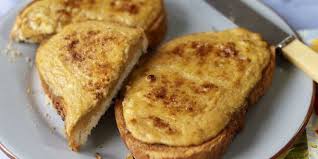

 My Kind of Food