Melton Mowbray, is a small town in rural Leicestershire, UK and is the centre of the production of Stilton Cheese. Whey as a bi-product of cheese production is beloved by pigs and so the area also became renowned for raising pigs and creating pork meat products.
The king of these is the famous Melton Mowbray pork pie. It was originally created in the 1700s as a convenient portable food for those involved in fox-hunting which was a popular sport in the area. The popularity of the pie spread as a result of visitors to the area who came to follow the hunt.
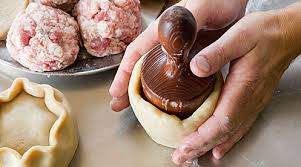
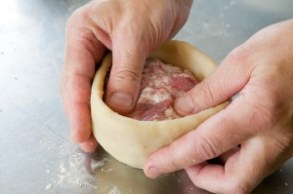
Hand raising a pieThe pie developed from being baked in a clay pot covered with a pastry lid, to what it is today; a portion of chopped fresh pork meat, seasoned with salt and pepper and cooked inside a ‘hand raised’ hot water crust pastry case. It has a particular pot-belly shape which is created as the pie cooks and the pastry case takes on that distinctive shape.
Similar pies from other areas have straight sides because they are cooked in containers rather than freestanding. Another hallmark of the authentic Melton Mowbray pie is the colour of the cooked meat, which should be grey not pink. Pink meat indicates that the pie is made from cured meat rather than fresh. The pie should also contain a decent amount of clear jelly which is created when stock, made from bones and poured into the pie after cooking, cools and coagulates.
It is that unique combination of well seasoned meat, a pot-belly shape, unctuous jelly and crispy pastry that is the sign of a good pork pie from Melton Mowbray. These days, mini versions are very popular as snacks and picnic food. Whatever there size, they are undoubtedly one of my favourite English foods.
Memories of Sunday lunch, when I was a child living in the North-east of England, include large plates piled high with roasted meat, potatoes (maybe even two types), two or three other vegetables and Yorkshire puddings all moistened with rich dark gravy. I enjoyed it a lot but as I’ve grown older, even though my stomach has grown bigger, my preference these days is for more proportionate plates of food. Don’t get me wrong I can still work my way through a large portion of stew and dumplings, sausages and mash or very large fish and chips! But, not every day.
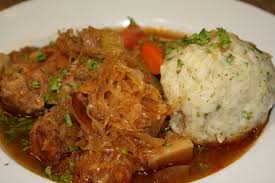
The problem with the food on my recent trip to Bavaria was two-fold. On the one hand the portions were generally enormous and on the other, eating out each evening, it was almost impossible to find a satisfactory lighter dish to break up the monotony of a very large pieces of meat accompanied by two very large bread dumplings, a pile of boiled potatoes and a mountain of sauerkraut.
I couldn’t fault the hospitality in the restaurants I used in Garmisch-Partenkirchen and Munich and the warm feel of them was comforting in a deeply homely way, but after the first meal I really felt as though I was set-up for the next 48 hours – sleep in this state came easily, followed soon afterwards by indigestion!
Some relative respite was found by substituting sausage and chips for meat, dumplings and potatoes. I recall one particular dish in Munich which consisted of a range of different sausages, (including bratwurst, blutwurst and bockwurst) each of which was delicious (and frankly a meal in itself). I didn’t get to try the (in)famous Currywurst, which I believe to be a German sausage smothered in a tomato and curry sauce – next time.
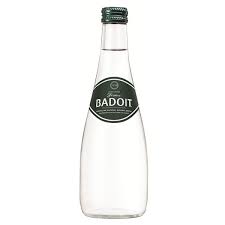
To be fair, I know little of the cuisine of the rest of Germany, except for having once eaten at a restaurant in Berlin (Margaux) where one tiny element of dish has remained in my memory for what must be at least 10 years. It was the intense salty taste of a small cube of jelly made from Badoit mineral water – the antithesis of the Bavarian carb overload.
I took no pictures of the food in Bavaria as I was too occupied with the herculean task of trying to clear my plate but trying to find some examples of these gargantuan dishes on -line as I write this is proving difficult Maybe the German tourist authorities have edited all of the images to make the portion sizes seem smaller and more elegant.
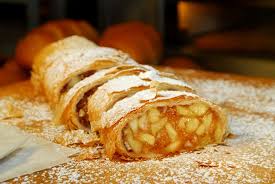
The Apple Strudel of course was delightful but was impossible for me to eat at the end of a large meal – better with a mug of hot chocolate for a mid morning snack!
…well not when it comes to ‘my kind of food’, it’s not!
There’s been a bit of a hiatus in posting on the blog because I’ve been away, initially for a few lovely relaxing days in Bavaria and then two days in Tuscany. Travelling is usually a fantastic opportunity to experience good food in great locations but alas that wasn’t the case in Germany and when I’ve had a chance to work out why that might be the case, I will share my reflections here.
On the other hand, Tuscany never disappoints. Yesterday, three of us had Sunday lunch in a restaurant, called Ristorante Da Nilo in Cetona, south of Siena.
In fact we had meant not to eat there, having consulted TripAdvisor first and found a smattering of negative reviews that had been apparently rudely countered by the owner/chef, including the remark, ‘you don’t give sugar to donkeys’. Confusion in organising the reservation, however, meant that we in fact booked into Da Nilo rather than the alternative we’d chosen in the same town.
Once before, I chose to eat in restaurant that had poor reviews because the chef had answered them with supreme confidence in the quality of his own products and style of cooking and in that case I was not disappointed. I have to say that was also true in this case too.
It was a cosy dining room, perhaps with more a provincial French feel to it than Italian and despite the initial welcome being less than enthusiastic, the vibe was good.
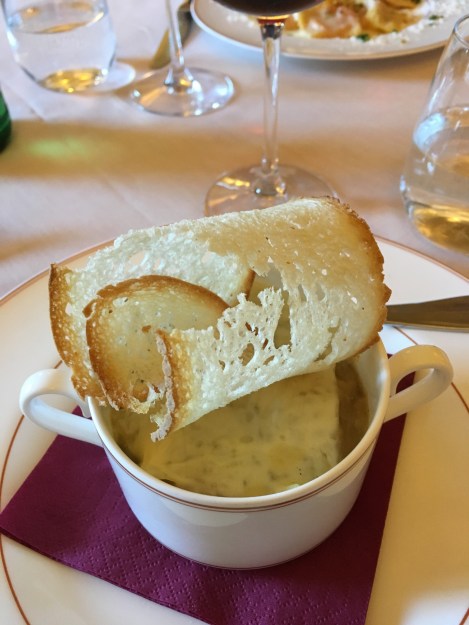
I choose the onion soup to start, which was deliciously sweet from the beautifully cooked white onions topped with a piece of fontina cheese, a semi-soft cow’s milk cheese from the Val d’Aosta, and a very fine bread crisp. It wasn’t a runny onion soup, like the French do, but really thick with very little liquid discernible at all and could easily have been eaten with a fork instead of a spoon.
Next up was Nodino di maialino al forno con arance caramellate e cuori di finocchi. This was a nice chunk of suckling pig with the subtle taste of caramelised oranges in the ‘gravy’ and a tiny portion of fennel and orange salad on the side. The salad was so small I wondered if it was really necessary, but in fact it added so much to the dish in terms of contrast to the meat, that without it, the whole dish wouldn’t have been half so nice. The meat was perfectly cooked, soft and juicy with a lovely crisp, salty crust. I’d gladly eat this dish again.
I’d say, if you’re in the area, this place is worth seeking out, despite some of the TripAdvisor comments. As for Bavarian food, more later…..
They say, if you ask any Italian to name the best chef in the world, the answer from everyone will be the same, “mama”. Home cooking is held in very high esteem here, its the pinnacle of culinary experiences.
There must be a reason why, in a country with some of the best ingredients in world and a population that lives and breathers food, there are relatively few so-called top class restaurants. If you look in the Michelin guide (2016), there are only eight three star restaurants listed in the whole nation. Of those only one is in the capital and none are in Milan, the business heart of Italy, where many of the richest Italians have homes.
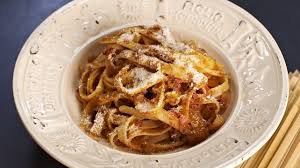
I recently watched a documentary about the chef, Massimo Bottura, who owns Osteria Francescana in Modena (named this year as the best restaurant in the world in the San Pellegrino awards). The programme showed that his early days in the restaurant were very much touch and go as Italians, perhaps especially the Modenese, were not that interested in eating what chefs today refer to as ‘elevated’ food. Fine dining and Italian food were not natural bed-fellows. If the inhabitants of my adopted homeland can’t eat Mamma’s food they seem to prefer eat at a local trattoria rather than a posh restaurant. Tagliatelle al ragu depends on the quality of the pasta and the flavour of the rich sauce rather than on how it was re-intrepreted by the chef and refined beyond all recognition.
Don’t get me wrong, I once had the pleasure of eating at Osteria Francescana and I loved it. What Bottura does with local food is very exciting to me – but I’m not Italian. My immersion into the culture of Northern Italy occasionally requires me to stop and take stock of things like, why there are so few posh eateries.
I also frequently wonder why there are some many Asian restaurants, usually serving a fusion of Chinese and Japanese dishes. There are three or four even in our little city of Lodi and two of them I know quite well. I ate the other evening in Kokoro, which has recently changed its menu to focus more on Japanese rather than Chinese dishes. I know very little about Japanese food but I really enjoyed what I had. They’ve really managed to pack flavour into their food and combine a whole range of textures into every mouthful. It’s clean tasting food and as different from Italian as you could imagine.
The restaurant was full, even on a Wednesday, and not only full, but full of Italians. These were people choosing to eat Asian cuisine, in a relatively smart restaurant, certainly ‘posher’ looking than most local Italian places. You’d never see the same people in an equally smart Italian restaurant, even if you could find one. It’s been suggested to me that the locals prefer mama’s cooking and when that’s not available they’ll go the trattoria. When they want something a bit different they eat Asian food or McDonalds; all of this in preference to Italian fine dining. Only in Italy!
First, a confession. When I received an initial email from Aldi’s PR people, telling me that they were launching a new British cheese range, my first thought was along the lines of ‘Euw…
During my recent stay in the North-East of England, I went, with members of my family, to a 1 Star Restaurant in Newcastle. In fact we went to only Michelin Starred restaurant in the city.
I’ve eaten Kenny Atkinson’s food three times now; firstly at Seaham Hall, many years ago where he gained a star, and later at Rockcliffe Hall; both in County Durham.
House of Tides is his own place and first gained a star in 2015 and subsequently retained it for 2016 and most recently for 2017. The restaurant itself is close to the iconic Tyne Bridge and the funky swing bridge. It’s housed in a former 16th Century merchant’s house which has been converted into what his publicity calls ‘a casual and informal space’. The ground floor is in what I would call, industrial chic style, complete with rustic tables and chairs; some of the tables were even a bit sticky in the olde-worlde end of the street pub way! It’s in this area that pre-dinner drinks are served – I had a negroni – and the menu is presented for consideration. Alongside the drinks we were given a serving board of three bite sized gougeres (savoury choux buns). The gougeres were piped full of unctuous cream cheese with onion chutney and truffle. I’m a bit funny about truffle, sometimes I like it and sometimes I don’t, so in this case I was content that I couldn’t detect its unique taste at all.
The menu choice, headed, ‘Autumn 2016’, was between a Dinner Tasting and a Vegetarian Tasting. Interesting to note that the vegetarian option followed the non-veggie one as closely as possible without upsetting the sensibilities of non-carnivores (of which there were none on our table). The gougeres formed the first item on the menu – so far so good!
We were taken upstairs and found our wine and water choices already on the edge of table. Adam our waiter for the evening was introduced to us and proved to be an excellent guide to what we were eating.
It’s worth mentioning here, that, in order to reinforce the casual style the staff wear black jeans and either black or white open-necked shirts. Customers too were in smart-casual mode, with only one tie seen in the whole place. To my mind this is a good thing.
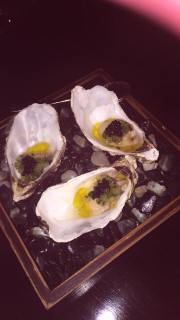
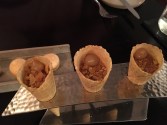
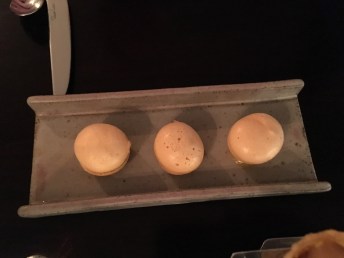
The first course served at the table came in three parts, all put in the centre (three of each). The first I tried was a small ice-cream cone containing liver parfait and sultanas, with a lovely mild curry flavour; the second a tiny macaron, described on the menu as, Carrot meringue, carrot curd, fennel pollen; the third a fresh oyster from the Holy Island of Lindisfarne with cucumber, ginger and ‘caviar’. All were lovely and exceptionally fresh tasting but I discovered for myself, that the order in which you eat them is important. I really wish I’d started with the oyster (the mildest of the three elements), then the parfait, finishing with the macaron. The macaron was such a dominant flavour it really obscured the oyster which followed. I’d happily eat a whole pile of them though. Adam received the feedback with a level of interest that makes the diners feel that they are not just passive consumers of what is laid before them but maybe co-creators of a culianry experience. So perhaps, in future it wouldn’t do any harm to recommend an eating order for this trio of goodies.
What ever it is that puts food in the one, two or three Michelin star bracket, those little meringues had it. Intense!
Bread and butter (fermented rye bread and Grant Harrington’s cultured butter) were served alongside a little pot of Butternut Squash with smoked bacon and truffle. Again intensity of flavour was the overwhelming impression of this velvety, creamy soup the bacon bits offering just a touch of bite for contrast.
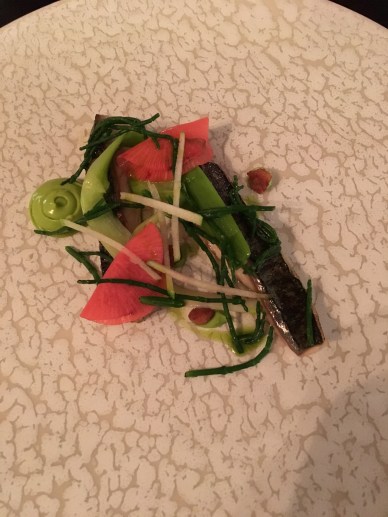
Mackerel is a simple yet lovely fish, especially when served with something a little sour to cut through the oiliness of the fish itself. In this case the menu promised, Mackerel, artichoke, blackberry. Ok, so a tart blackberry should be a good foil to the oily mackerel but I was half way through before I realised there was nothing resembling a blackberry on my plate. Adam, who hadn’t served this course to us, explained that there had been a menu substitution consequently we had mackerel, apple and pickled radish before us. The pickled radish might’ve offered that sourness I was looking for but sadly, in reality, it didn’t. The tiny pieces of fish though were very yummy.
Mackerel
A little bit here about the service. I can’t abide an overly obsequious waiting style. It makes me feel guilty about the fact that someone is waiting on me. It’s opposite vice, indifference to the needs or wants of the diner, is equally abhorrent. The staff at House of Tides get it right in my view. They are attentive (wine glass always unobtrusively topped up), interested to know how we found the food and (apparently) keen to receive constructive criticism. ‘Our’ Adam in particular was invisible until we needed him, then unfailingly polite and scrupulously professional. He deserves to go far in his career.
Back to the food! Next up was the first of two meat courses; in this case, Venison tartare, beetroot, blueberries and kale. It was a suitably tiny portion, presented in a ‘pile’ on a dark plate. I was intrigued. Two flavours dominated – blueberry and deep fried kale. The kale was reminiscent of that so-called ‘seaweed’ you get from Chinese take-aways, which is deep fried shredded cabbage sprinkled with powdered scallops. I love it. For the life of me though, once I’d put that morsel of flavour into my mouth and a blueberry, I couldn’t distinguish the taste of the venison at all, nor indeed of the beetroot, which in my view should have provided an earthy flavour. I’m not sure what the solution to this is, but I hope my feedback makes them think again about this particular combination.
Venison tartare
The lamb dish, which followed, did not have the same issues at all. The testimony to how much I loved this dish is that I didn’t stop eating it long enough to take a photograph! The menus told us it would be, Lamb, broccoli, tomato, radish, and so it was, but that’s only the start!!! The lamb was rump, tongue and sweetbreads. The rump was beautifully cooked, a vibrant reddish-pink colour and very flavoursome, however, the offal stole the day. Last time I had (veal) sweetbreads I really didn’t enjoy them and although I love eating cold pressed ox and pork tongue I’d never before eaten lamb tongue. The sweetbreads were crispy on the outside and tender on the inside, with just enough firmness to allow you to bite into it before it started to dissolve. As for the tongue, the tip of the tongue apparently, I have never eaten anything before that tasted so much of lamb. When can I eat these lovely things again?
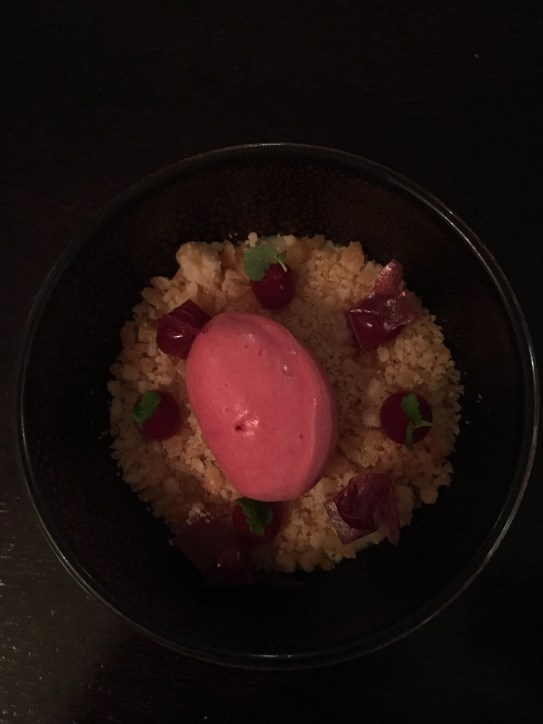
And so to the puddings. We next tucked into, Raspberry, lemon, pine nuts, which was in fact a light, sharp and delicious lemon posset with a pine nut crumble and raspberry sorbet on top. Heaven! The Pear, almond, ginger second pudding was equally delicious and light but by now the over-enthusiastic heating in the dining room was making us tired and longing for some cool, fresh air
Raspberry, lemon, pine nutsPear, almond, ginger
So how to sum up? Not everything was spectacular about House of Tides but on the whole it was a good and enjoyable experience, with some exceptional high points. The macarons, lamb offal and the posset were to die for. The atmosphere was suitably relaxed (if a tad warm) and with great service from Adam. I was less enthusiastic about the venison dish and would’ve preferred the version of the mackerel that was on the menu. The restaurant’s focus on locally sourced and fresh procure though will mean that sometimes there needs to be last minute menu changes.
Kenny Atkinson, the Chef-patron, wasn’t working the evening I was there so I’m guessing that Danny Parker, Head Chef, was driving. Thanks to him and his brigade for some lovely food. I’d need a more frequently changing menu to entice me back next time I’m in the area though and as a returning customer I would probably prefer to have an al a carte option to sit alongside the tasting menu.
Almost all Italians are interested in, and passionate about, food. A typical conversation amongst friends travelling to work together on the train might start about the weather, politics or the economy, with a consequent set of frowns developing on the faces of the interlocutors. Then all at once someone mentions a particular dish they’d recently eaten and smiles return, the volume increases excitedly and everyone is at ease, the problems of the world forgotten for a while.
I’m fortunate to have got to know a range of people who travel around Italy for work, often staying over night and therefore needing to eat in out-of-the-way restaurants. One of these friends is especially good for instant recommendations. When we last saw each other last Friday I asked him if he knew anywhere to eat that would show-case local food, well prepared, and located midway between Lodi and Bologna. That would place it in the Emilia-Romagna region, somewhere near to Parma. It was to be the venue of my meeting up with some friends from the UK who are currently taking a break in Bologna and it’s about an hour’s drive for each of us.
As quick as a flash Massimo named a restaurant and sent me a link on What’sApp. There was no need to ask detailed questions, I trusted his judgement completely after he’d told me where to eat during the Bra (in Piedmonte) international cheese festival last year. More about the cheese festival on another occasion.
The restaurant, Ristorante Romani, is in a tiny Borgo (hamlet) to north of the city of Parma. The only difficulty of the evening was trying to find the way into the restaurant. Having parked in the car park at the back of the building we headed for the nearest door and discovered first the kitchen, then the staff rest area and finally the loos but no restaurant. None of the back-room staff seemed at all bothered by us wandering round in circles but eventually we found an external staircase which took us to a very rustic dining room, entirely empty except for gli amici Inglesi who were patiently waiting at a table.
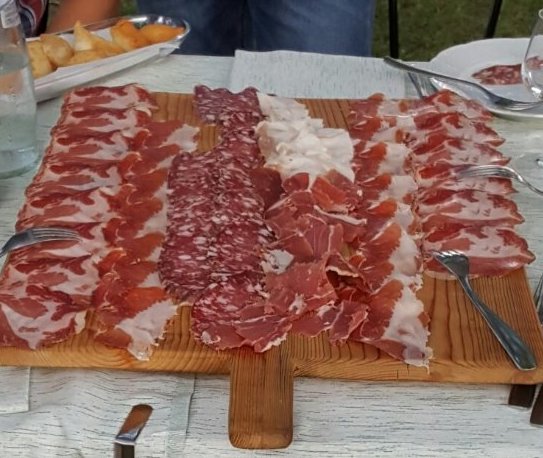
Not being able to decide what to choose from the menu isn’t really a problem in Italy as its often possible to have a little bit of this and a little bit of that and eat ‘family style’ with everyone sharing. We decided to put off deciding what to order for the pasta and main courses by sharing an enormous platter of cured meats and a plate of the hugest chunks of parmigiana reggiano. On the side we also had two great piles of the gnoccho fritto that I wrote about here.
Affittato Misto – ours was even bigger!For the primo (pasta course) we also decided to share, three different ravioli dishes between four of us. If I say they were nothing out of the ordinary, please understand that they were very good but also quite filling. Filling enough, in fact that the plan to have secondi (main courses) was abandoned altogether. The menus offered a number of main course options based around beef, horse and veal belly. I don’t usually eat horse meat so I would’ve probably opted for the veal but I reluctantly gave in to peer pressure and made do with a soft, yielding pannacotta for pudding, which, along with tiramisu, is one of the staples of any Italian menu, anywhere.
I should imagine this is a lovely place to eat in the summer, with tables set in the courtyard but in any case I’d be happy to go back and eat my way through the rest of the menu. It’s not the sort of place you would ordinarily find yourself driving past but would be perfect for anyone driving down the Via Emilia or staying in Parma.
Sometimes Italian friends react with surprise when I tell them there are some great cheeses originating in the UK. FromageHomage is all about that!
I can recall the first Christmas party here when I served the King of British Cheese, Stilton. I think there are still people who don’t believe it was English. What a pity my Stilton Spoon seems to have been lost in the move. Maybe Santa Claus/San Nicola/Santa Lucia/Befana will bring me one…












 My Kind of Food