Hospitality is where its at. It is what I try to offer friends and visitors to my home and above all else it’s what I look for when I go to a restaurant. Food and drink may be an important part of the mix but the expectation of being in a restaurant which ticks all the boxes, goes well beyond that and it is why the ‘poshness’ factor isn’t really that much of an indicator. Plenty of simple trattorie make the hospitality grade for me and more than a few of the (supposed) best restaurants in the world fail.
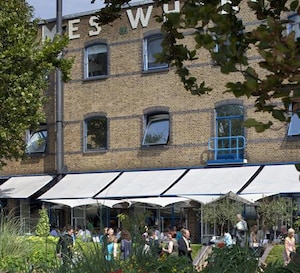
For many years I’ve become increasingly frustrated as I’ve watched the big names in the restaurant sector loose focus on hospitality in favour of big business. I can think of Jamie Oliver and Antonio Carluccio. Oliver began his career in the Neal Street Restaurant, which Carluccio ran with Terence Conran, in Covent Garden, London, before moving to the River Cafe in Hammersmith. Carluccio and Oliver expanded to most of the market towns of England, whereas River Cafe is what it always has been. Of River Cafe the Red Michelin Guide says, “Little has changed at the iconic River Café since it opened thirty-five years ago: the welcome from the staff is just as cheery, the atmosphere as warm and comforting…”.
Both Oliver and Carluccio moved away from offering hospitality as their raison d’être to running businesses which expanded with off-shoots linked to their famous names to the point, in the case of Oliver, to catastrophic collapse.

One thinks also of the internationally famous chefs like G Ramsey, skilled cook and even more skilled multi-national business man. I don’t particularly like his food and even less so his aggressive personality but if I did, I would much prefer to go a a restaurant where I could eat food that Ramsey had been closely involved in creating – or even cooking (as was once possible)! I’ve scarcely more chance of eating food cooked by Chef Ramsey in my own apartment than I have by going to one of his very many restaurants around the world. His saving grace is that his model has produced some amazing chefs who have gone on to create their own style of hospitality without becoming mini-Ramseys themselves, chief among them, in my view, is Angela Hartnett.
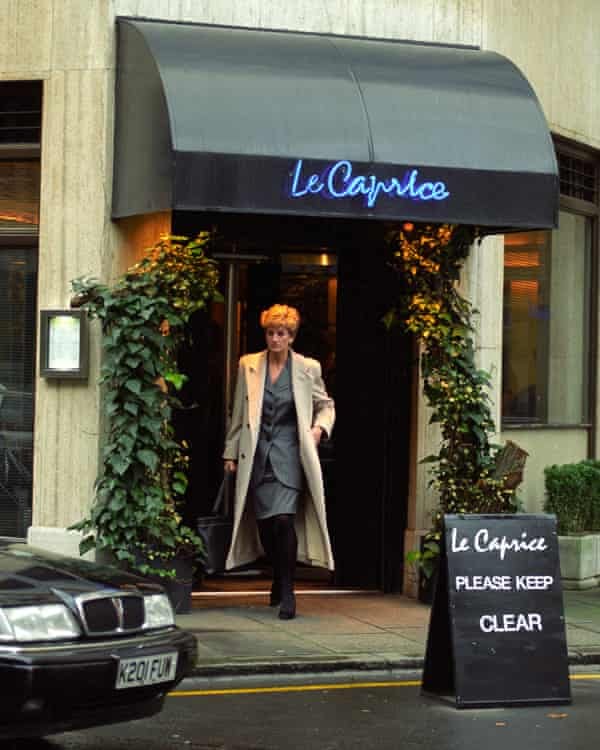
I’ve written in the this blog previously that one of my personal favourite restaurants of all time, was Le Caprice, in St James’ in London. Le Caprice was first opened in 1947 by a former maitre d’ from The Ivy, Mario Gallati, then in 1981 it was given a new lease of life, when it was take over by Chris Corbin and Jeremy King (now running Brasserie Zedel and the Wolsey).
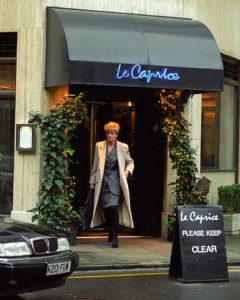
Le Caprice was a fixture of the London dining scene throughout its history and all returning clients, whatever their level of celebrity, were welcomed by one or all of the maitres d’ like old friends. Regulars like Princess Diana, Mick Jagger and Elizabeth Taylor, sat cheek by jowl with more common-place folk, like me. As it happens I was at the next table on the day that Lord Archer (Jeffrey Archer) had his first restaurant meal there after his release from prison in 2003. On another occasion I had to facilitate a frail Earl Snowdon (former husband of the late Princess Margaret) navigate between the tightly packed tables on his way to the loo. Despite the sometimes high-end clientele, we more regular folk were always treated with the same sense of welcome and generous hospitality. This to me is a very good thing – almost priceless and very rare.
Caprice had stable mates in London; Scotts, Daphnes, The Ivy, Rivington, 34 and J Sheekey. They were different from each other but with a common stylistic feel and that essential spirit of hospitality, paired with simply good food. Then the rot set in.
I first became suspicious when I noticed that more and more people on social media were claiming to have eaten at ‘The Ivy’. Of course they didn’t mean THE Ivy in West Street, Central London but one of a number of provincial spin-offs under the auspices of The Ivy Collection. As a brand within the Caprice Holdings portfolio, it is doing well, recording a £94.8m turnover in 2020 but without a doubt this is diminishing the original Ivy name. Le Caprice and Rivingtons paid the price as both are now closed. Richard Caring, the mega-rich owner of Caprice Holdings said that Le Caprice closed in 2020 because the lease had expired (what, all of a sudden?). The abrupt closure took the world of restaurant critics by surprise as people like Tom Parker-Bowles and Jay Rainer tweeted Jesus Adorno, the face of Caprice to many, to find out what the hell was going on. The effects of Covid and lock-downs on the hospitality industry has also been cited as a reason. We have to question the lease expiry explanation when the site of the restaurant has continued to be used by Caprice Holdings as a training facility. The official line of the company is that Le Caprice will return, but at a different location; time will tell. Certainly Jesus has closed his tenure at Le Caprice which began in 1981 by moving to Browns Hotel and the Forte Group.
Why, oh why can’t local restaurants, doing sterling work, stay as they are? Has no one heard of the phrase, ‘if it ain’t broke, don’t fix it’. Of course restaurants are businesses and need to turn a profit but please, let’s keep the expansionist business advisors and venture capitalists away from the places where we love to eat and put the masters and mistresses of hospitality back in charge. At its heart a restaurant is a kitchen skilfully preparing yummy food and a dining room delivering a warm welcome and excellent service.
I’m becoming more and more keen to search out the lesser well known restaurants that are sticking to what they do best and I’ll say more about this in my next post.
 My Kind of Food