Search

My Kind of Food

Sharing stories about the kind of food I like to eat

Tag

food

Franceschetta58

I’ve been fortunate enough to have eaten in Modena’s world class Osteria Francescana twice. On the second occasion, despite it already being fully booked, Chef Massimo Bottura kindly allocated us a table in recognition of the fact that one of the guests had recently undergone a long period of hospitilisation and this would be one of his first meals out after discharge, to celebrate my birthday.

Massimo Bottura and guests at Osteria Francescano

Osteria Francescana, however worderful it is, isn’t however the sort of place normal mortals can aford to eat on a regular basis. Fortunately it’s philosophy of using and promoting local products, a high level of precision and skill in cooking and above all, great hospitality, has been replicated in Franceschetta58, its stablemate in the same city of Modena, in the Italian food capital region of Emilia-Romagna.

Chef Vincenzi

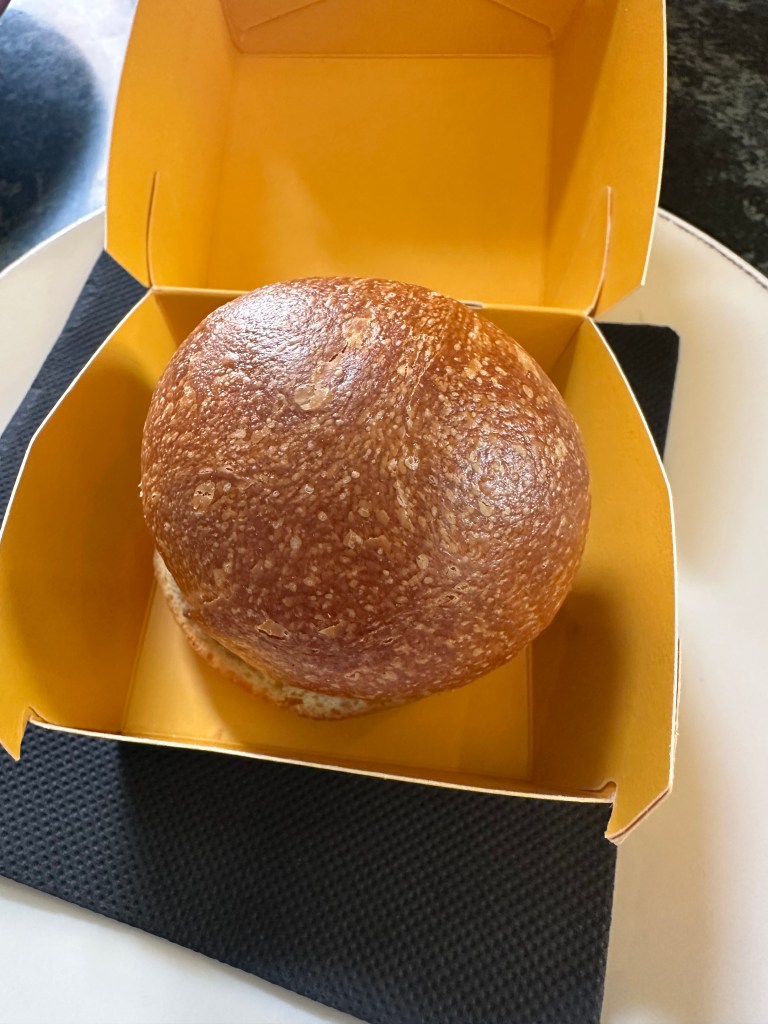
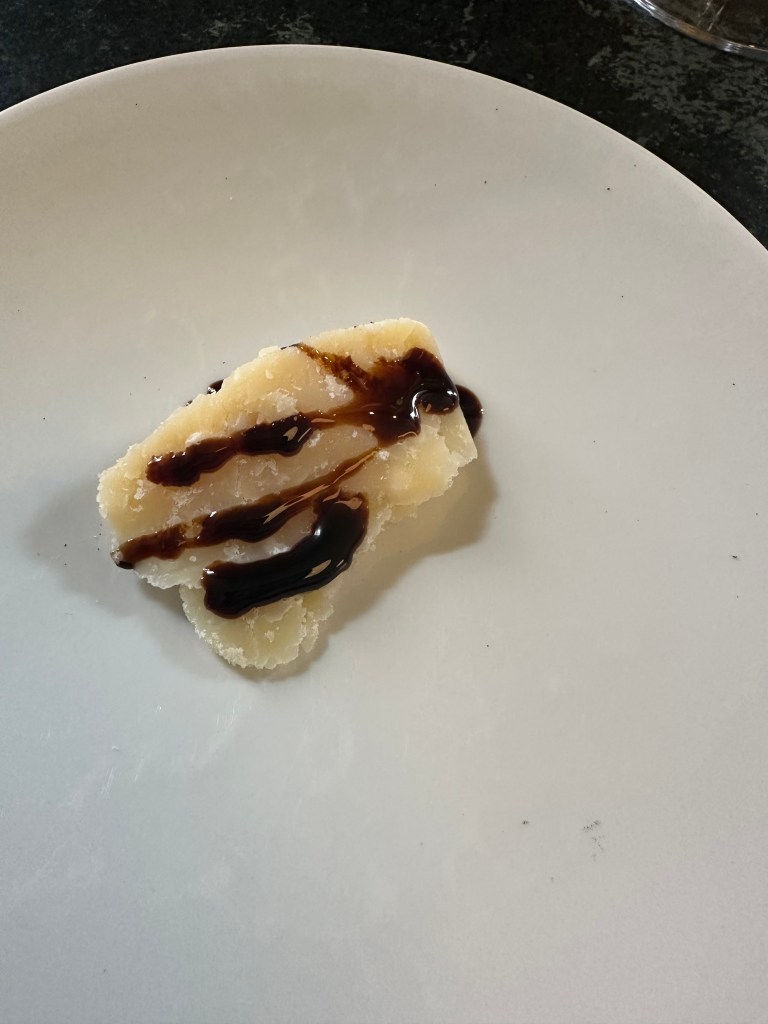
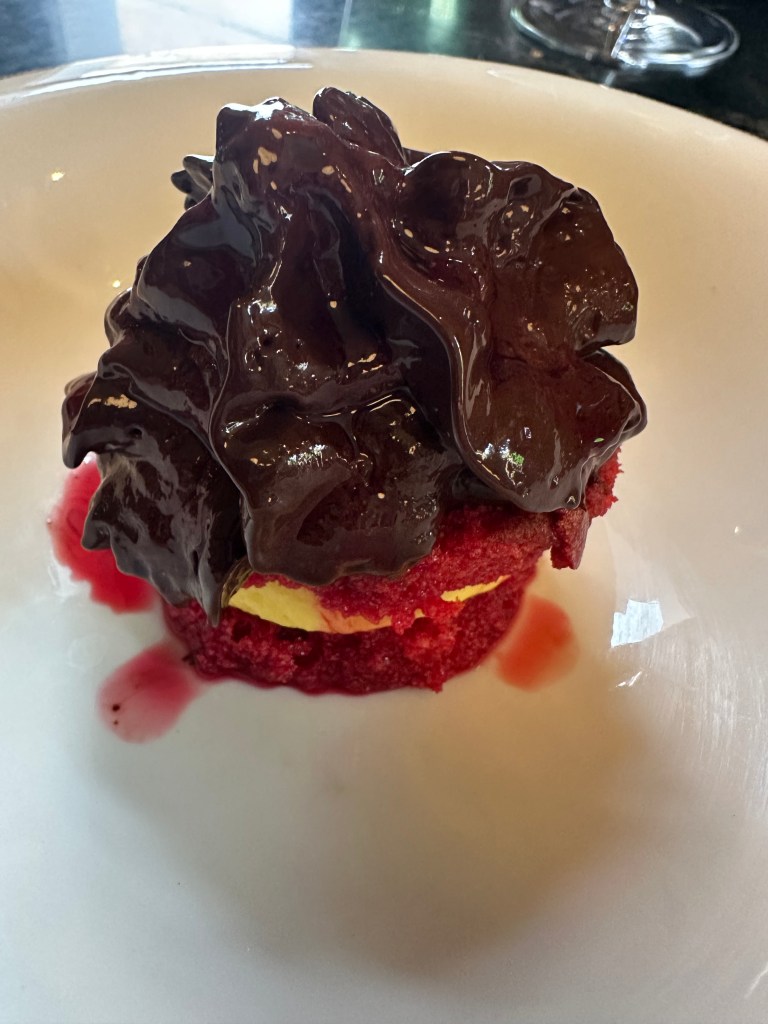
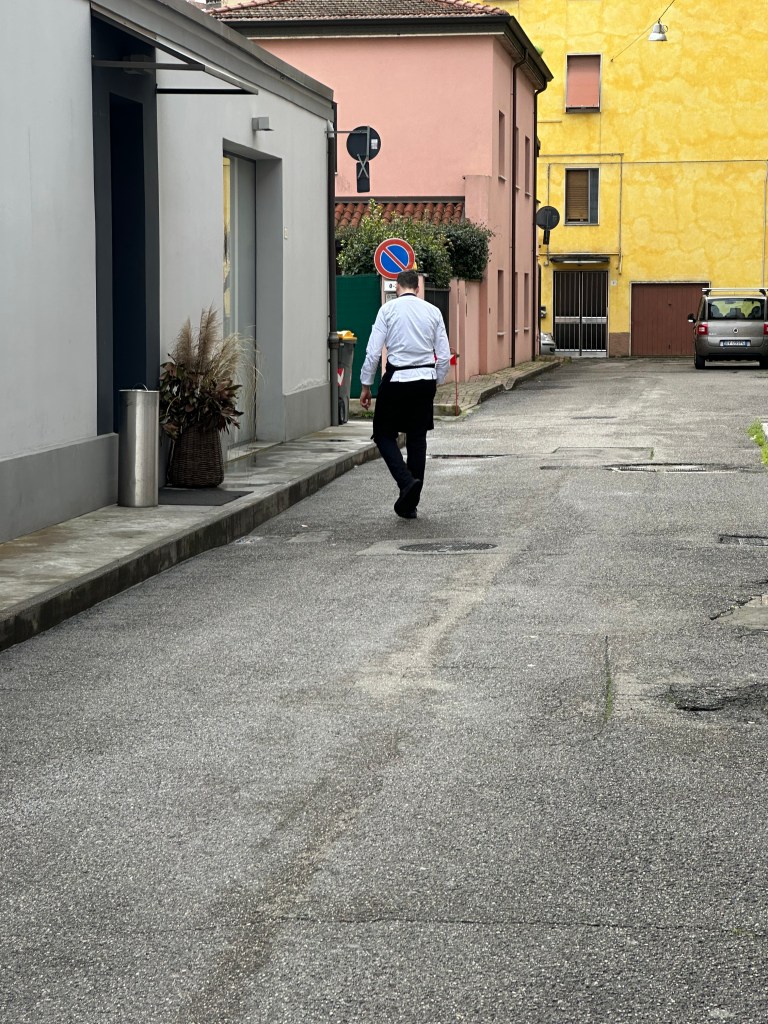
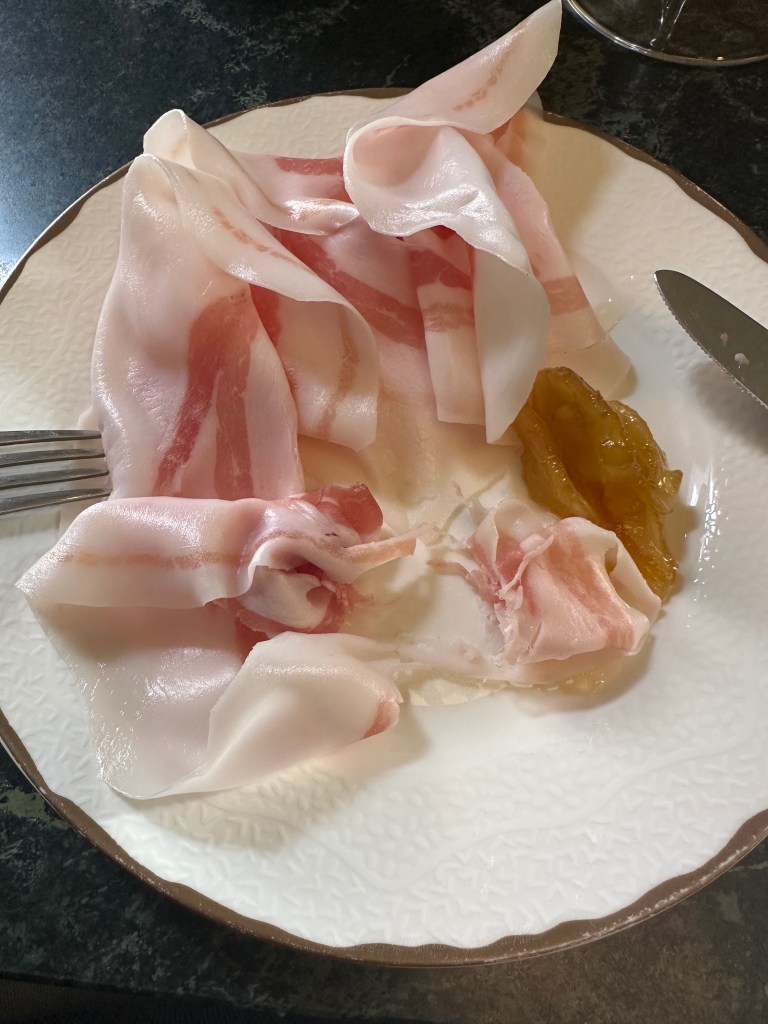
Franceschetta58 is located in a side street otuside of the city centre and could easily be missed. It’s so small that the kitchen is split between the main restaurant bulding and space on the other side of the road. Young Chef Francesco Vincenzi was trained by Bottura at Osteria Francescana and prepares two tasting menus, one of their own classic dishes and a more seasonal one as well as fairly extensive à la carte. We chose the smaller seasonal tasting menu and all of the plates were packed with flavour, the only exception, in my view, being the so-called Zuppa Inglese pudding course, which I found to be fairly bland and as much unlike a trifle as you could imagine. That said the experience taken as a whole was superb. I’ll be back and might even take the nephew! 🤩

Bottura is undoubtedly worth a bob or two judging by the car he comes to work in but as well as his cooking he is also renowened for his efforts in the realm of social enterprise. The tortellini dish pictured above, which was exqusite by the way, exemplifies his charitable works. That dish is by ‘Tortellante” which is a social enterprise in Modena founded by Bottura as part of his not-for-profit organisation, Food for Soul as way to help youg adults with autism to gain independence through developing skills in making traditional hand-rolled tortellini. The trainees are paired with local rezdore, who are expert pasta makers willing to pass down their skill sot a new generation.
Republika ng Pilipinas

I’ve recently returned from a holiday in the Philippines and what an amazing journey through a beautiful country it was.

In meeting in Manila with a Filipino friend who lives and works in the UK, I rather arrogantly offered my view of what I expected Filipino food to be like having prevously tasted hardly any of it! I opined that, as in the British Isles we have Scouse, Lancashire Hot Pot, Irish Stew and Casseroles various, they are all at the end of the day variations on a pot of meat and veg. and Filipino food would be similar; lots of differently named dishes, all looking remarkably the same and served, of course, with steamed rice.

How wrong I was!

During almost three weeks of traveling around I tasted a wide range of dishes and all in all experienced a cuisine that I’m very close to classifying as the best I’ve so-far discovered.

The cuisine of these 7,600 plus islands is the fruit of many different cultures, ranging from the indigenous roots of the islands, through Spanish, Malay, Chinese and of course the USA as well as what I might call the pan-Asian/Indochine style.

Regionality is a key component of Filippino food. When I told a Pinoy friend that I was going to visit Mabalacat, in the province of Pampanga, he immediately referenced the fact that Pampanga is famed for the dish Sisig.

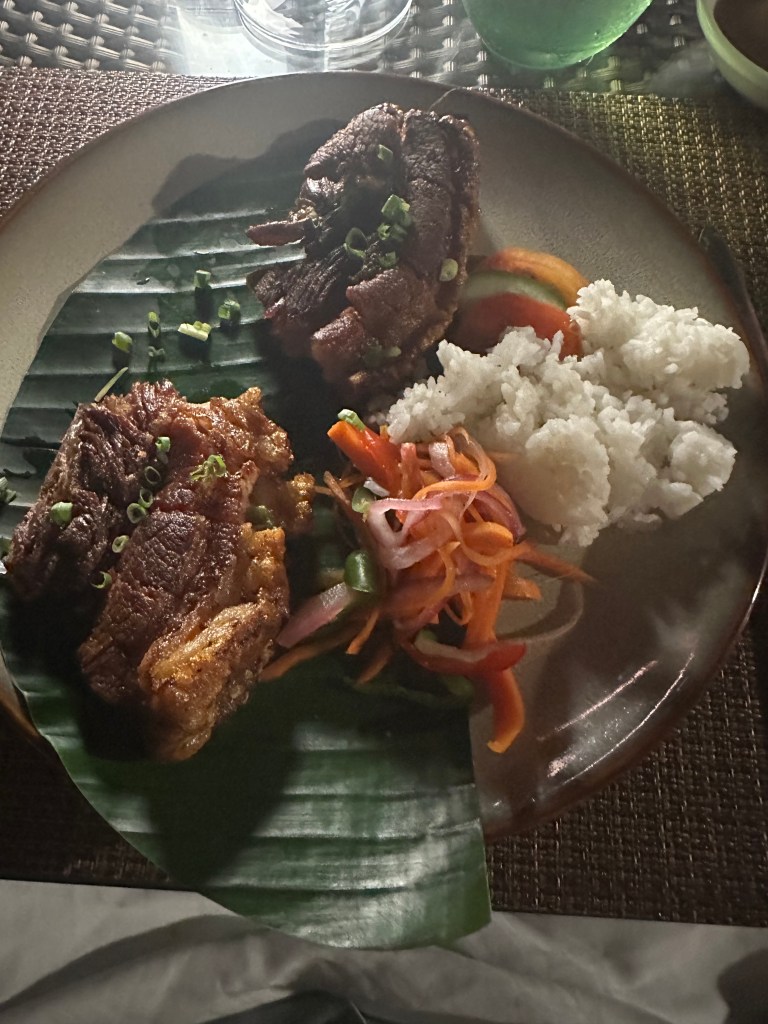
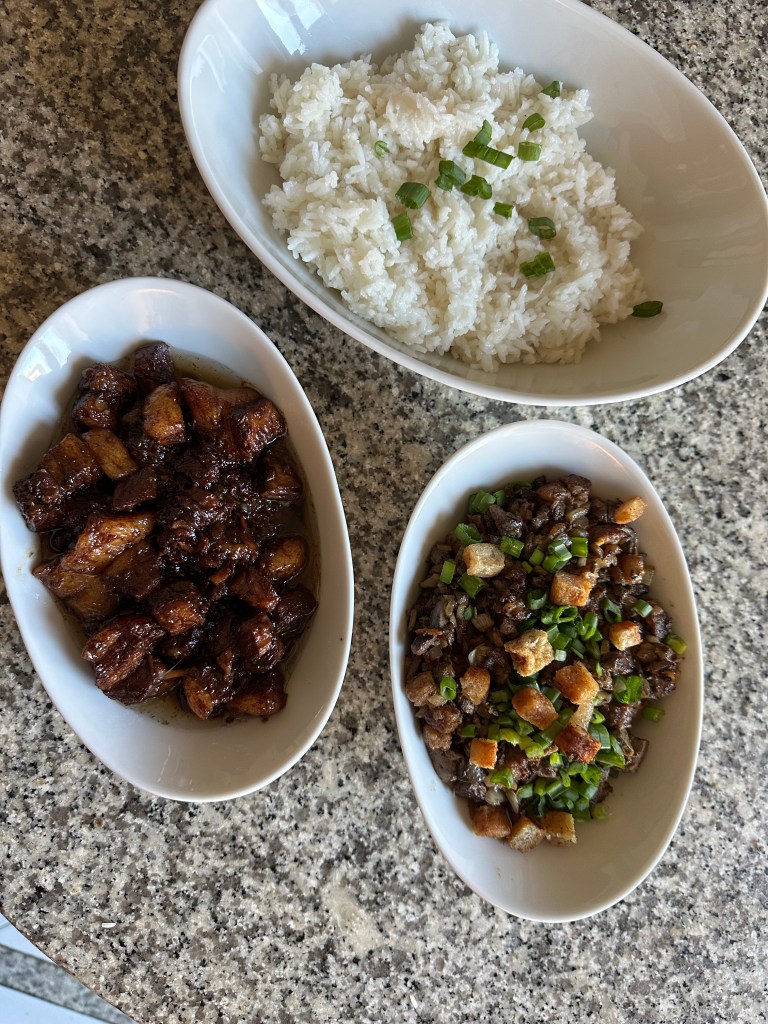
Sisig is served hot and sizzling, usually on a cast iron skillet and is made from belly pork, pigs ears and pork jowl and livers, finished with freshly squeezed Calamansi, the tiny and ubiquitos Filipino Lime.

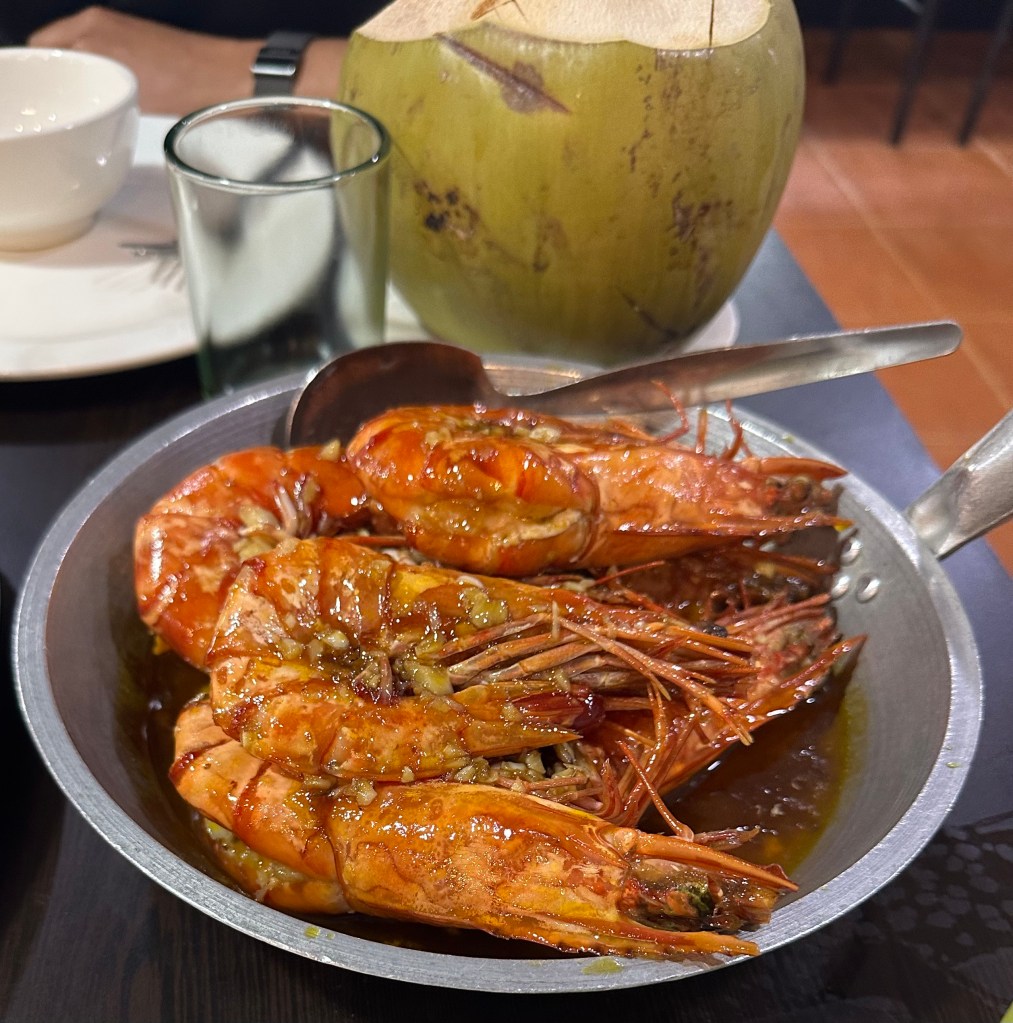
In many other dishes I tried, the protein, (pork, chicken, prawns of beef) is marinated in a variety of lovely things like soy sauce, vinegar and small amounts of chilli. This is adobo.

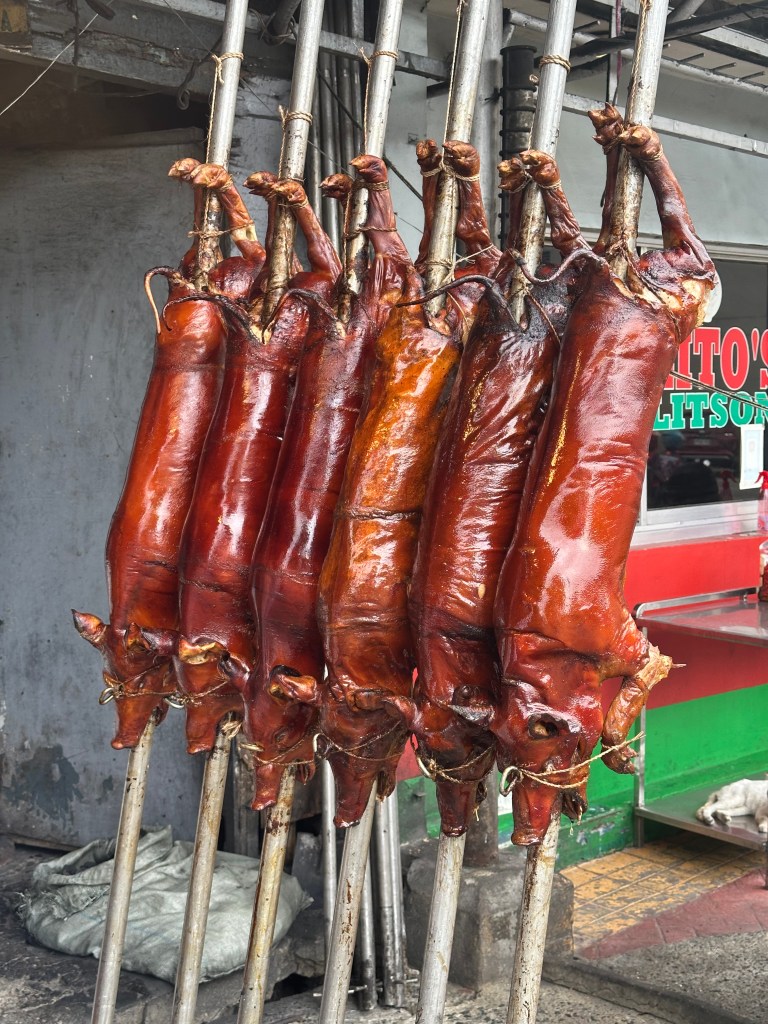
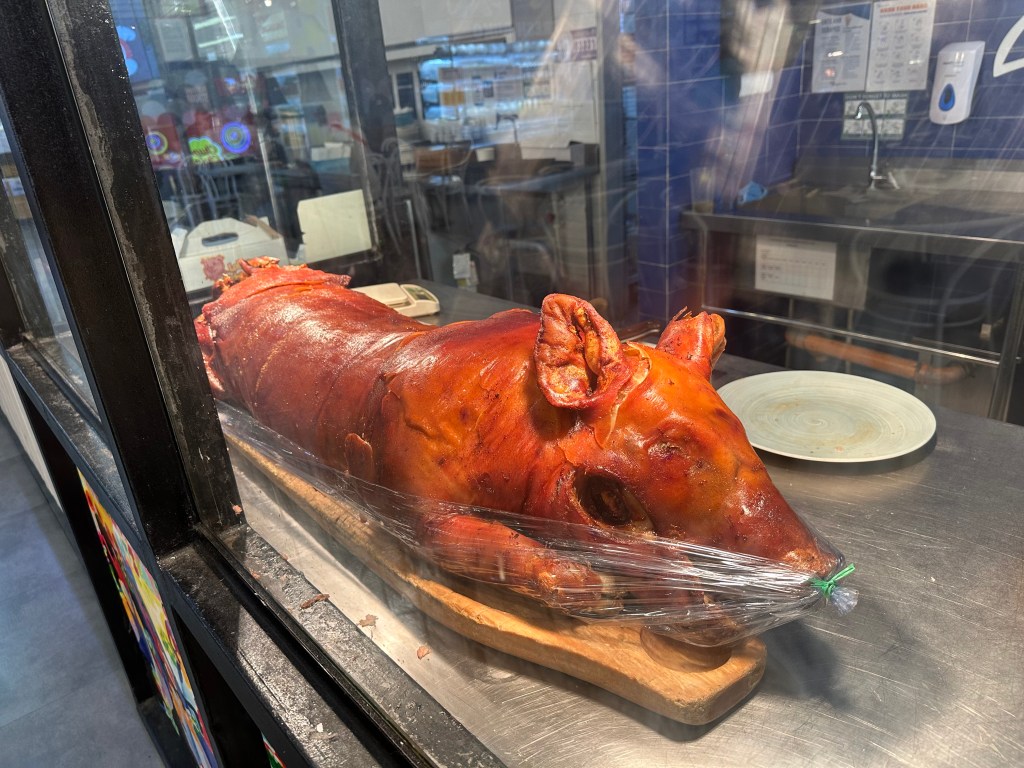
Lechon is roast whole pig, most typically suckling pig and in Cebu which is famous for it, it might be flavoured with lemongrass, herbs and spices. Lechon was one of the small number Pinoy dishes I had tried in London before making the trip, where it was served in a much less rustic way to satisfy the restaurant critics desire for symmetry and precision.

Of course there are more challenging things to eat while in the Philippines. I (quite easily) resisted tht invitation to try Balut for example. Balut is a fertilised egg (duck egg typically) where the growing chick inside has been allowed to develop to up to three weeks gestation before the egg is steamed and the whole thing eaten from the shell with salt and vinegar. It’s not for me. Neither was I willing to try Soup Number 5, famed for its aphrodisiac properties and made from the testes and penis of bulls. I might’ve given it a go, if I hadn’t first googled it and seen an image of a very large phallus floating in a bowl of dark broth. It is a comfort to me that some of my Filipino friends don’t eat these dishes either; I’m in good company.

When I travel and taste new dishes I am often inspired to cook something similar at home. I usually do this without following a recipe closely and adopt a free-style approach. When I tried this with Filipino food it didn’t quite work for me, so I’ve been trying to prepare dishes by closely following the recipes and disvovered that the deliciousness of what I tasted there can be repalcated at home. House guests who come to visit this year know what to expect!

Blog at WordPress.com.

Up ↑