The Hans Cristian Andersen fairy tale, The Ugly Duckling, recounts the story of a sad and unloved water bird, living in a family of ducks and ducklings. The protagonist is ashamed that he isn’t like the other ducklings who in turn, consider him to be ugly. The happy ending is when, in the company of a flock of swans, seeing his own reflection in the water, he realises that the ugly duckling is nothing of the sort but is, in fact, a very fine swan.
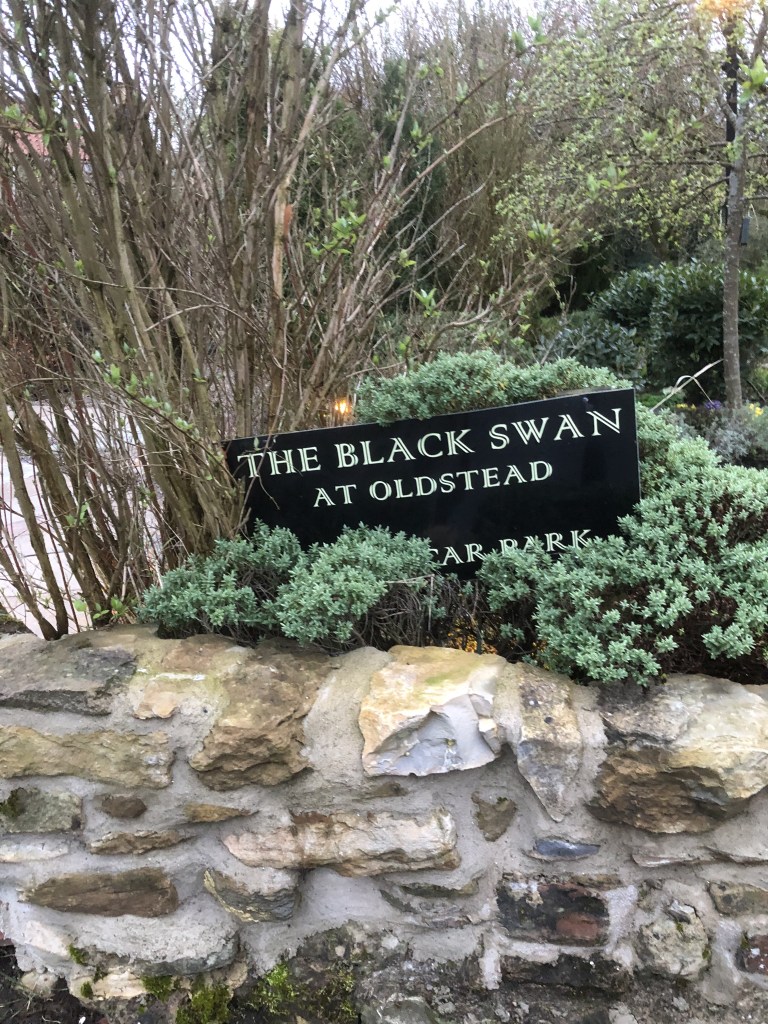
In the North Yorkshire Moors National Park, between Thirsk and Helmsley, there is The Black Swan at Oldstead, owned by locals, the Banks family, whose son Tommy heads up the kitchen. Previously an unsuccessful pub, adjacent to their family farm, Ann and Tom Banks bought it in 2006 and started the business with their two sons, James and Tommy. None of them had any experience of the catering industry and Tommy was only 17 years old, two years younger than his brother. Tommy got ill soon afterwards and was unable to work for more than a year. While he was laid up he read a lot of cookery books and watched food programmes on TV.
When the global financial crisis hit in 2008, it impacted negatively on the Black Swan and the family made the crucial decision to stop trying to run a nice country pub and instead turn it into a destination restaurant. Things sort of ticked over and they kept making small incremental improvements until in 2011, under the then Head Chef, Adam Jackson, they won a Michelin star. In 2013, Jackson moved on, leaving Tommy, who had been working under him, to step into his shoes, at the age of 24. With a lot of hard work they retained the star, making Tommy the youngest starred chef at the time. This attracted a lot of welcome media attention and critical acclaim but Tommy was unsatisfied and wanted to make the Back Swan’s menu more original and less a re-working of what he’d discovered by reading cookery books. As the Banks’s were farmers, the obvious thing to do was to focus on that as the inspiration for the restaurant.
The decision was made to build the menu primarily around what could be grown in the two-acre plot behind the restaurant and what could be foraged. With Tommy focussing on the kitchens, James refined the front of house service, mum Ann developed the accommodation side and dad Tom threw himself into the garden. By 2016, despite working exceptionally hard the family still didn’t feel they had arrived at a point of balance and weren’t making much money. Tommy’s appearance as a competitor on the BBC’s Great British Menu changed all of that. Winning the competition for two years in a row gave him the opportunity to showcase his cooking at a national level. Its also how I came to know about the Black Swan.
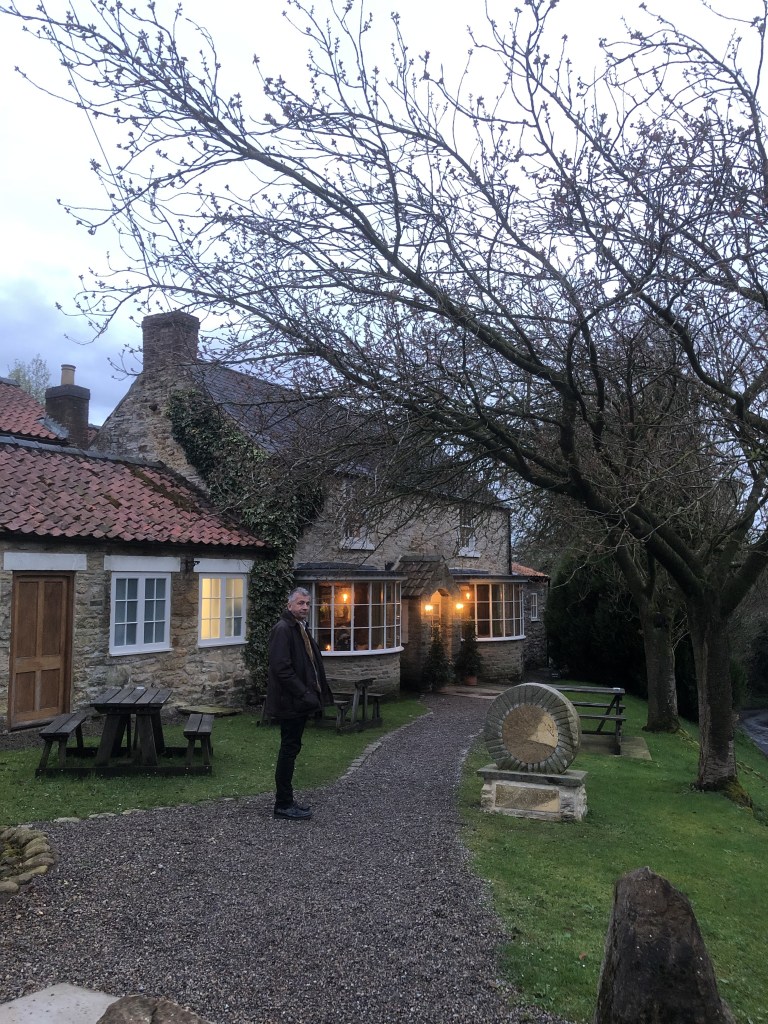
Arriving at the Black Swan on a snowy evening in March 2022 was like arriving at a rather well-to-do country pub. The bar-top, a nice big slab of oak is by famed Yorkshire woodworker Robert Thomson, universally known as the mouseman, from nearby Kilburn. A welcome warming fire was blazing in the grate and it all felt very homely. The welcome was as warm as the fire and we chose pre-dinner drinks from an innovative cocktail menu.


Tommy’s menu follows a deep-seated philosophy about using seasonal ingredients. He does so though in a way which is very different to the current trend, amongst some chefs, of only using what can be harvested freshly, today. The ingredient list majors on things they grow on the farm or can source relatively locally. Exmoor Oscietra caviar was an example of something which had travelled from further afield within the UK from farm to plate, truffles from Alba were another with a few airmiles attached. Most other things though were very local. The point is they weren’t all in season right now, because Tommy and his team preserve excess produce throughout the year and use them in a preserved state when they’re out of season. The walls of the restaurant are lined with pickling jars full of things that will be used in the kitchen. It’s a fascinating, deeply traditional way to cook and is exactly what previous generations did. I loved this aspect of eating at the Black Swan. A tasting menu is offered and we dined on seaweed, Lobster (making an appearance twice on the menu) landed at nearby Whitby, halibut and clams, chicken, pork , rhubarb, bee pollen, nasturtiums, sea buckthorn and Jerusalem artichokes (fresh from the garden). Everything was packed with flavour, delightful to look at and light on the palate.
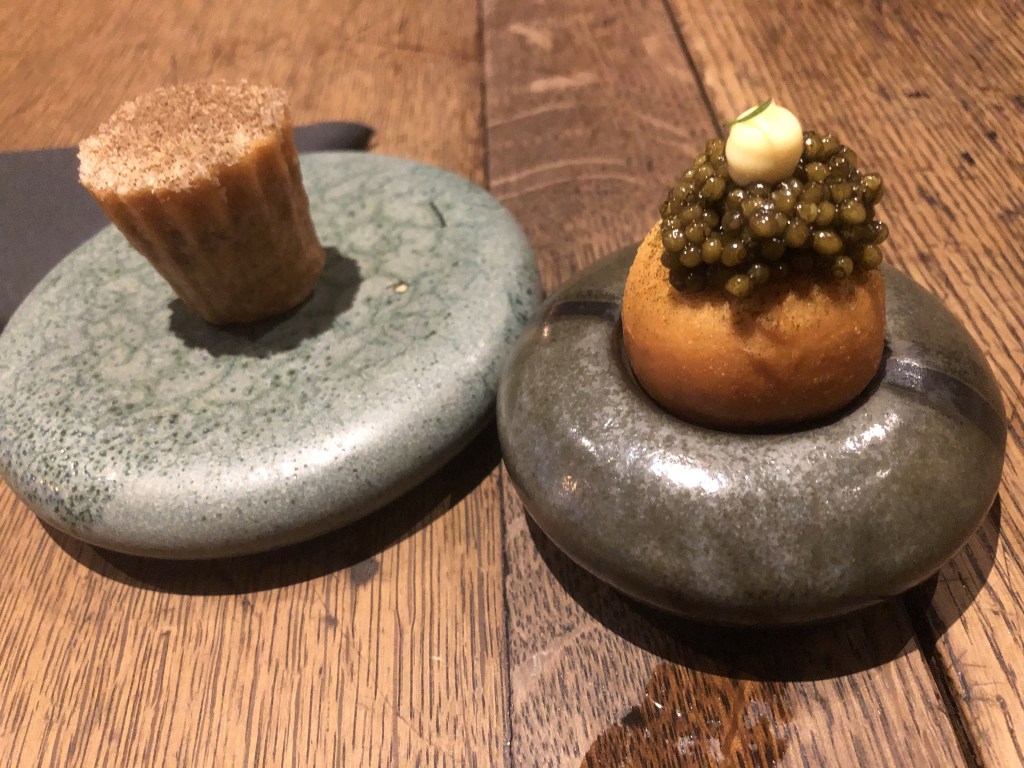


To my embarrassment I mostly forgot to take photographs of the food. This only happens to me when I am so very wrapped up in the experience of eating and enjoying hospitality that nothing else seems to matter at that moment.
An interesting and very welcome tradition is for the chefs to serve a course in turn to each table. This enables them to experience first hand the customer reaction to what they are being served and of course the customer has a real-time encounter with the person who prepared the dish. It’s much more acceptable than the chef doing a sort of lap of honour towards the end of the evening or, worse, as I’ve seen in some places the chef coming out of the kitchen only to speak to her or his friends, ignoring everyone else!
Tommy Banks himself served one of the courses and by coincidence when he arrived, unseen, at our table we were comparing the Black Swan (very favourably) with Mirazur in the South of France (until recently best restaurant in the world). Tommy genuinely seemed pleased to hear these remarks and responded with “I’ll take that”. And it was no empty complement, I genuinely enjoyed the experience at the Black Swan much more than either of my two visits to Mirazur, where I’ve vowed never to return. The Back Swan however has gone right to the top of my list of restaurants to re-visit, hopefully many times. It is quite simply, a very fine swan indeed!

 My Kind of Food