Search

My Kind of Food

Sharing stories about the kind of food I like to eat

Category

Uncategorized

Random eats

In the modern idiom, I often take pictures of the food I’m eating so I thought I’d share a few recent one’s here.

The first is of probably the best Rhubarb Crumble I’ve tasted, served with custard and prepared by Nadine Horton, an English Classic. Italians don’t make puds like this!

Next up is Steak and Ale Pie and chips in a traditional English Pub, in Cambridgeshire

And finally for today, smoked tofu and carpaccio of duck breast eaten in Koblenz, Germany


On a whim!

I’ve written elsewhere on this blog that Le Caprice restaurant in London is on my list of top favourites and I was really pleased to be able to visit for the first time in 2 years the other Sunday for lunch (or brunch as they call it).  I was passing through London on my way to Cambridge and then the North East of England.

I’ve eaten at Le Caprice many times, too many times perhaps in relation to my income and I hope to do so many times again.  It is one of the very few places where repeat visits do not disappoint.IMG_1387.jpg

The original Le Caprice was opened in the West End of London in 1947 by Mario Gallati, who had opened The Ivy some 30 years previously.  The Ivy, in ‘Theatre Land’ is the haunt of actors playing in the West End theatres and their celebrity friends.  It’s sister restaurant Le Caprice is also described by some a celebrity restaurant, and its not uncommon to recognise a face or two from stage or screen; it is however much more than that.  It’s a ‘home from home’, generally devoid of tourists and where regular customers are remembered and welcomed as old friends.

The current incarnation of the restaurant began in 1981 when it was bought by restaurateurs Chris Corbin and Jeremy King who relaunched it and it was following that that its fame spread.  It is now owned by Caprice Holdings Ltd who have a portfolio of great London restaurants, including The Ivy, 34, and Scott’s.

Tucked away at the end of a cul-de-sac behind the famous Ritz Hotel, it attracts little or no passing trade.  It survives, thrives, on its reputation for high quality, simple food expertly prepared and served in its clean-lined, black and white-themed dining room, reminiscent of something in downtown New York.

Unknown.jpeg

The Director is the equally famous, Jesus Adorno, who began his career as a waiter. Jesus has immense charm and when he’s on duty greats every familiar face with sincerity, seemingly as pleased to see an EFL Teacher as a famous actor or an Earl.

Nothing much changes at Le Caprice, yet everything seems fresh.  Sure there are occasional minor changes to the decor yet the strong black and white theme with chrome highlights remains, as do the David Bailey black and white photographs which adorn the walls.  The menu changes with the seasons, but imperceptibly so.  Even after a gap of two years or more the menu to me was discernibly the same and yet updated.  There are no radical changes which seemingly respond only to the current foodie fashions, whatever they may be.

Le Caprice makes the best Bloody Mary in the world, in my view. I usually precede a meal there with one, especially if it is Sunday Brunch.  Imagine how disappointed I was, when, a few years ago, they made some small changes to how it was prepared and served.  Recognising my disapproval at the time, they have, on almost every visit since, remembered my ‘special needs’ and prepared the cocktail accordingly.  Now that’s personalised service!

And so to the food.  Having been given one of the two best tables (the benefit of being ‘known’) it was a joy to browse the Brunch Menu which ranges from dishes at the breakfast end of things, such as eggs, bacon, smoked salmon etc to a Sunday Roast with Yorkshire Puddings.

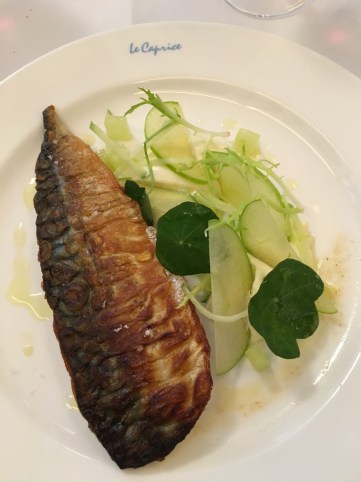
I chose Mackerel and Green Apple Salad for a starter, which was served with horseradish mousse and lovely peppery nasturtium leaves.  It was presented in an ‘ok’ sort of way – nothing flash to look at and without the over the top, technical flourishes of some places but what an amazing taste!  This is the essence of Le Caprice.  Taste is king.  The crispy skin on the fish gave way to moist, succulent flesh with a flavour that was so incredibly fresh.  There was an appropriate amount of background heat and creaminess  from the horseradish, cleanly cut-through by the sharpness of the green apple slices.  How I wish I could cook like that!IMG_1380.jpg

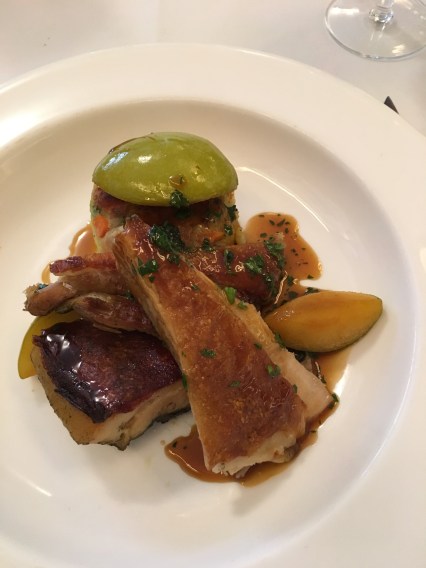
Next up was Slow Roast Suckling Pig which was accompanied by winter vegetable hash and more apples, this time caramelised.  I hesitated about ordering a second dish with apples but I adore suckling pig so much that I couldn’t resist. The vegetable hash was a bit like bubble and squeak and packed with earthy flavours, the apples firm and sweet and the pork spectacularly juicy.  Maybe I was a bit sad that the skin wasn’t as crispy as it could’ve been but it didn’t stop me being tempted to lick the plate clean.

IMG_1381.jpg

I love chocolates but I rarely order chocolate puddings.  On this occasion through I was tempted enough to order Four Chocolate Fondant with Toffee Popcorn.  If I’m honest I don’t think I’ve eaten a Chocolate Fondant before so fed up am I of seeing them on TV cooking competitions.  This was a revelation.

Rich, warm, soft (with a suitably crunchy top) and yet not overly heavy (truly). Yum! Yum! Yum!

My only thought now is of when I can return to this most special of places.

Missing in action!

It’s been a while since I last blogged and in fact this is my first post of 2017 which seems already to be flying past incredibly quickly.

Now, dear reader, I wouldn’t want you to worry that in the intervening weeks since my last post, I haven’t been eating; it’s just that largely I’ve gone on eating the same things and there hasn’t been much to write about.  I hope as the weather starts to improve here in Lombardia to get out and about a bit more.  I’ve also got a trip to the UK coming up next week and a really special treat for lunch next Sunday.

In the meantime here are a few pictures of one or two things I’ve managed to force down in recent weeks.


IMG_1260.jpg
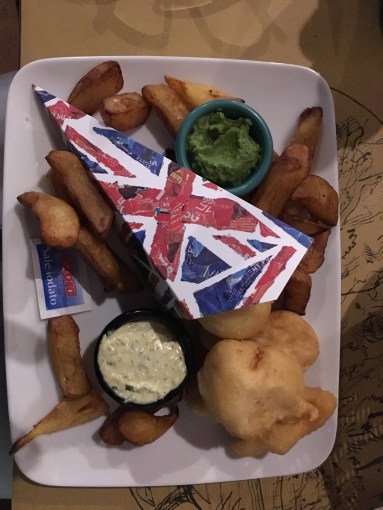
English style Fish & Chips and a Pint of Theakston’s Old Peculiar English ale served at     Al Faro ‘pub’ in Lodi.

IMG_1259.jpg

IMG_1221.jpg
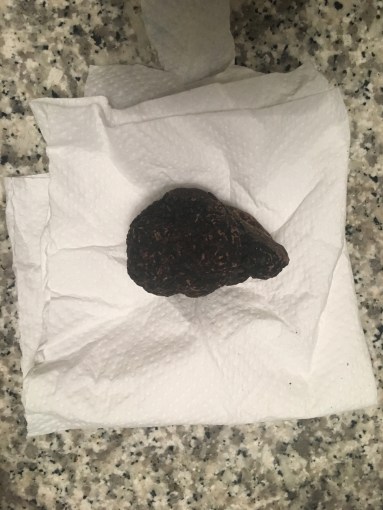
A gorgeous black winter truffle bought at a truffle fair in Grazzano Visconti in Emilia-Romagna


IMG_1209.jpg
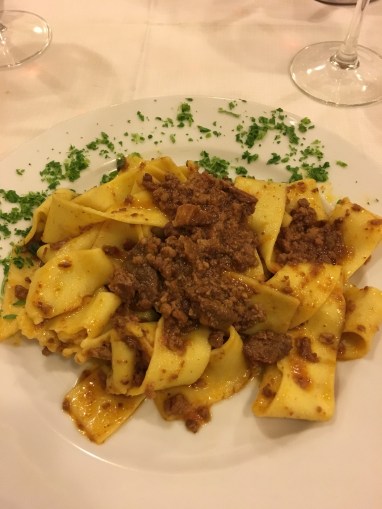
Fettucine al ragu di cinghiale (Wild-Boar) in Pitigliano in Tuscany
IMG_1112.jpg
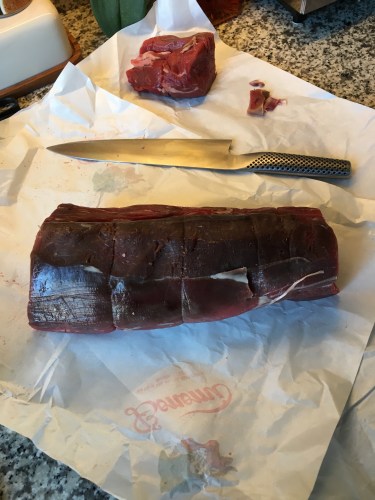
A piece of beef fillet which miraculously turned into that classic English dish, Beef Wellington
IMG_1314.jpg
Lasagna in Locanda Tonnarello, Rome
IMG_1350.JPG
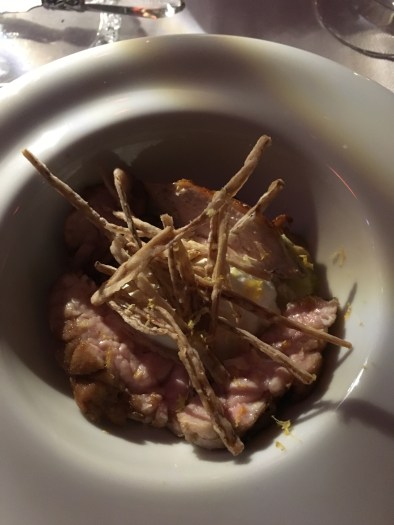
The nicest veal sweetbreads (animelle) I’ve ever eaten, served with crispy cardoon, potato and a perfectly poached egg.  This was my starter at dinner, the other evening, in the 4B restaurant of the Milan hotel Bianca Maria Palace about which I hope to write more in the near future.


On the Second Day of Christmas…..

The 26th of December, Santo Stefano, is known in England as Boxing Day which was traditionally the day on which servants and tradespeople were given their Christmas-box (a Christmas gift) or the day on which alms were given to the poor.  These days its the first day of the ‘January’ sales and a lot of people take to the shops to bag themselves a bargain.

images.jpeg
Bubble & Squeak

As far as food goes maybe its a good day to eat up meat left over from Christmas lunch (cold-cuts) with bubble and squeak (fried leftover vegetables) and chutney.  English friends may well have eaten turkey yesterday or maybe goose, supplemented with boiled, baked or roasted ham.  Roast beef is another popular alternative for those who find turkey a bit dry as it can be.  This is the time of the year when the British home-cook can produce a vast array of delicious home cooked food.

The less well-travelled of my Italian friends here think that the British live on Fish and Chips and see it as our national dish (whereas in fact it is curry!).

Last week when I was visiting family in the North-East of England I availed myself of that great national treasure, fish & chips.  Its available in almost every town and village in the country in places run by native Britons, Chinese, Indians and even Italians (especially in Wales and Glasgow) and whilst the concept is pretty fixed, the quality can vary.  There are national competitions to find the best fish and chip shops (chippies) and one, whose origins are in Yorkshire, has even become a national brand with franchises in airports and service stations.

I found a local chippy very close to the hotel where I was staying, in a former mining village called Blackhall on the Durham coast.  It’s called Riley’s and I had the most delicious fish and chips I’ve tasted in a very long time.  I asked for it ‘open” that is served to take away, on a bed of paper (when I was a child it would have been yesterday’s newspaper).  In that way it’s possible to eat it immediately, sitting on a park bench or by the sea or in my case sitting in the car.  I’d given the whole thing a generous sprinkling of salt and doused it in malt vinegar.  The batter surrounding the cod was crisp and golden, the fish soft and moist and the chips fluffy on the inside and crisp on the outside.  Perfect!

about-image.jpg

Anyone reading this blog who thinks that my kind of food is only-high end and expensive should think again.  There is nothing better on this side of heaven than really good fish & chips.  Maybe I should open a fish and chip shop in Italy?

Montecarlo or Bust? Eggsactly!

I was staying in Menton, just across the border into France the other day and the hotel offered nothing more than the usual rubbish on its buffet so decided to drive the couple of kilometres into Montecarlo in search of something to start the day.

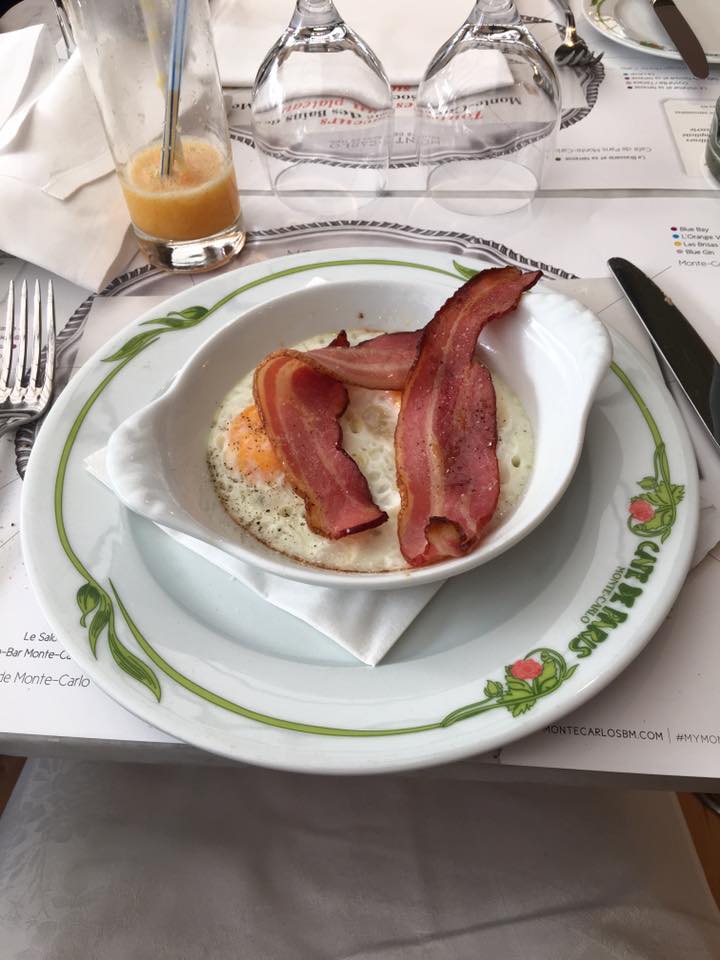
Right next to the famous casino we found a ‘brasserie’ that was serving breakfast dishes, the Cafe de Paris it was called.  There were three of us and two of us had fresh orange juice (which was very very good), a different combination of two of us also had what turned out to be tiny cups of ‘American’ coffee and all three of us ordered bacon and eggs.

15337455_1345619755482180_7309910979247781247_n.jpgThe eggs, two of them, came in a shallow dish fresh from the oven with two pieces of bacon on top.  The egg yolks were just about soft on arrival but the dishes were so hot that by the time a knife was inserted they had become completely solid.  For two of us the underside of the eggs were also burned.  Given the price, which was very high – it being Monaco – this was a travesty.  They were ghastly!

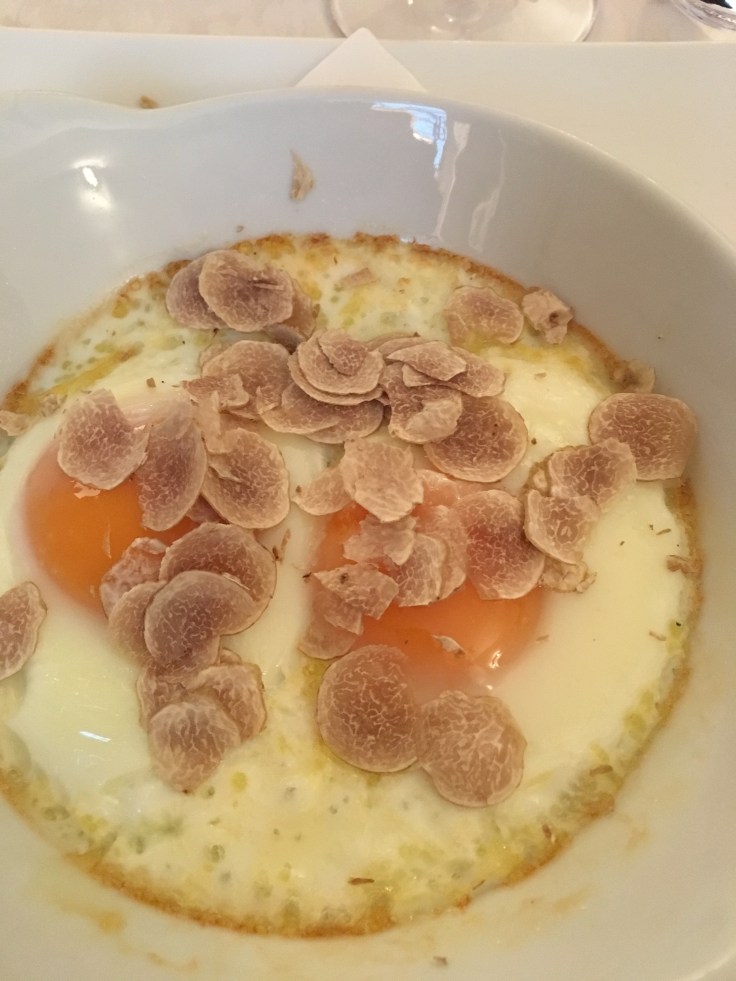
By contrast the previous day we had enjoyed eggs with fresh white truffles from Alba shaved on top.  Eggs are such a simple dish and can be delicious or awful!

IMG_0921.jpg


On the Gulf Coast

The Ligurian town of Ventimiglia is situated on the coast of the Gulf of Genoa just about 4 miles before the French border.

I ate recently in a restaurant on the seafront, called, Marco Polo.  It was an alpine chalet style building  decorated with a maritime theme with a terrace overlooking the sea which would be perfect for summer eating.

The Michelin guide 2017 gives it a good rating (The Michelin Plate) and overall my impression was of good food beautifully presented.  The whole experience however wasn’t perfect by any means.156864_1.jpg

The welcome was friendly and we were given the last available table for lunch.  We weren’t offered drinks to start so we  insisted that we wanted a glass of prosecco each.  The waiter didn’t seem to understand this simple request but eventually by speaking a mixture of French, English and Italian the message was conveyed.  The prosecco failed to arrive so it was necessary to prompt another waiter.  This precipitated the start of a blame game between two members of staff.

In the meantime an amuse bouche was served.  It was a shallow drinking glass with something akin to caesar dressing in the bottom and a few fresh, crisp salad leaves and a carrot button standing in it.  It looked faintly odd but in fact was a refreshing way to start the meal – something I might copy at home.  The prosecco eventually arrived…

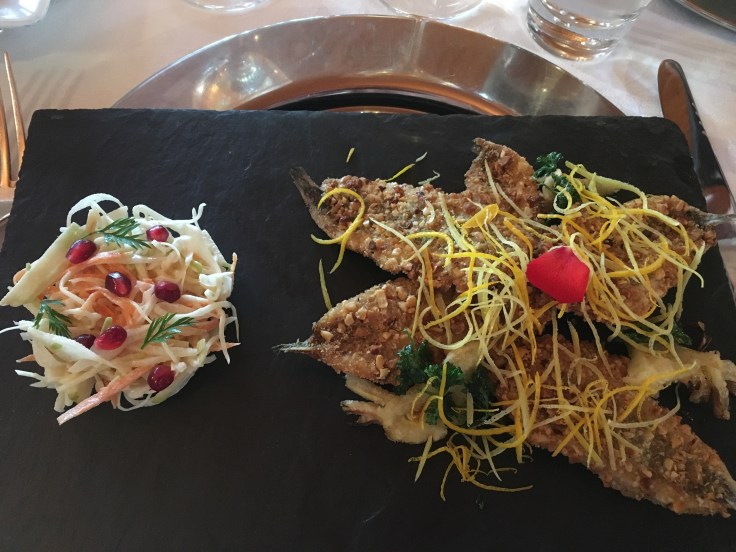
For my starter I had fresh anchovies that had been coated in chopped hazlenuts and then deep fried and served with crisp purple artichokes, thin slivers of lemon and orange peel and coleslaw.  It was fresh tasting with a pleasing citrus zing to it.

IMG_0981 2.jpg

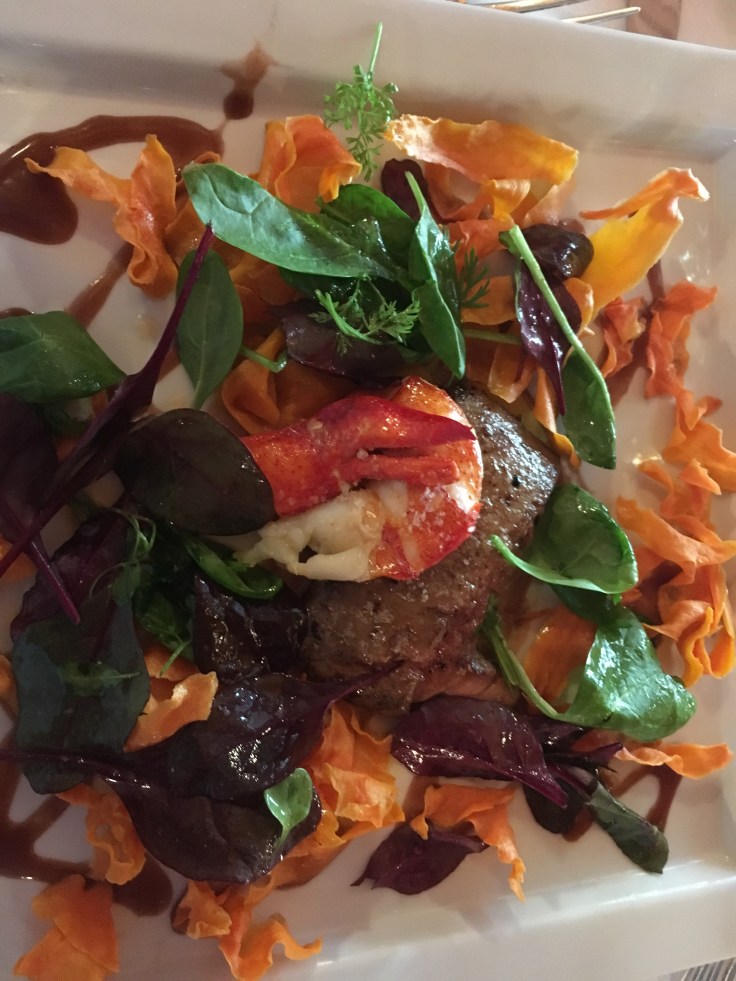
The main course was Lobster with pan-fried fresh foie gras.  Now these are two of my favourite things and in this instance they were very well cooked and presented, being served with crispy slivers of deep-fried  sweet potatoes and a few spinach leaves.  Delicious and colourful!

IMG_0982.jpg

Whilst the food was lovely there is something strange about how the place is run.  In short it doesn’t seem like a happy ship and that can spoil the entire effect.  At one point an almighty argument broke out in the kitchen which could be clearly heard throughout the room we were in.  Those with better Italian than I, described the language as being very colourful indeed. None of the waiting staff looked shocked by this so I can only assume its a fairly regular occurrence. I stopped eating Gordon Ramsey’s food years ago because of his nasty temper and I don’t want it anywhere else either.

Taffy Grub!

There follows a guest post by my friend Alex Lane – he’s Welsh (Taffy), as you might guess from the article and I’m happy that I once taught him to enjoy rabbit kidneys.

Unknown.pngIt is often erroneously said that Britain has no national dish or that all the food we eat is brown. I think that it is rather damning and unfair to say so, as there are some wonderful regional dishes which deserve to be mentioned.

images.jpeg
Welsh Rarebit (or Rabbit)

For the purposes of this wander through some of my favourite eats I am going to confine myself to the food of what could more strictly called my Motherland of Wales (the women are strong minded and usually the boss there).

Unknown-2.jpeg
Welsh Cakes

There are many dishes that could be considered welsh because of their ingredients or because of historic connections. I am thinking here of Welsh cakes, Bara brith, Caerphili Cheese, Glamorgan Sausages, Welsh Rabbit (Rarebit) and so on.


Three Dishes stand out as icons of y bwyd cymru (the food of Wales). Cawl, Cockles and Laverbread.

CAWL
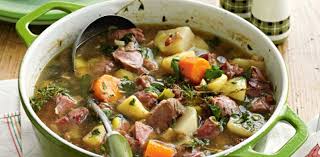
Every culture has a variation of this hearty winter dish. But what makes this very welsh is the Lamb or Mutton that is used in its preparation. Receipts for Cawl stretch back as far as the 14th Century. It consists of Lamb (welsh of course) or mutton cooked with leeks, carrots, turnips or more likely sweed, and potato, all cut into similar sizes and slowly simmered in water. At the end it is thickened with either oatmeal or flour.

There are some suggestions that it was eaten in two courses, the Stock first and then the meat and vegetables, but I have never experienced it this way, just eating it as it is with large chunks of Bread and Butter. Of course it is better eaten the second or even third day.

“Cawl cennin”, or leek cawl, can be made without meat but using meat stock. In some areas this is often served with bread and cheese.

Unknown-1.jpeg
Welsh Cawl

LAVERBREAD
Laverbread or bara lawr is an important traditional food. A national delicacy made from seaweed, it is washed and then cooked to a soft greenish black paste. Made from laver, one of the most nutritious varieties of seaweed, laverbread is full of health benefits. Rich in minerals and vitamins, full of protein and low in calories, this is a real superfood.  A rare plant source of vitamin B12, it is also full of iron and iodine.

It is especially found in South Wales around the Swansea and Gower peninsula area. Traditionally eaten as a breakfast dish eaten with fatty bacon and cooked in the Bacon fat, and often eaten with fried eggs and Cockles. Having said all this it is a very acquired taste!


Unknown.jpeg
Laverbread and Cockles

COCKLES
On the northern coast of the Gower peninsula in South Wales, you will find the coastal village of Penclawdd. In this area of rugged beauty, you can stand at the shoreline and feel the ancients calling as strongly as the pull of the unpredictable tides. not so very long ago, you would have seen the cockle-women of Penclawdd bent to their arduous task. As the ebbing tide retreated they would populate these sands, scraping away at the sand to expose the burrowing molluscs they would work at gathering the cockles until the tide decided to turn. The waters in these parts show no mercy and the exhausted women needed their wits about them should the tide begin to advance.

Cockles as I have said formed part of a traditional welsh breakfast. One of my earliest memories of eating cockles is in Swansea market in the pram eating a ¼ of a gill with pepper and vinegar – bliss.

Many welsh restaurants will serve cockles and bacon with a salad garnish and brown bread and butter as a starter, again a very good way to serve them.

Since the 1970s, the number of restaurants and gastropubs in Wales has increased significantly there are currently seven Michelin starred restaurants located in the country.

How do you eat an elephant?

The Trebbia flows into the great River Po not far from Piacenza and was, in 1799, the site of one of Napoleon’s battles.  A little before then, in December 218BC to be precise, there was another Battle of Trebbia when Hannibal (with his elephants) and the forces of Carthage, fought the Romans in the second Punic War.

The river itself meanders through the Colli Piacentini (the Piacenza Hills) and the area features a number of small, pretty, villages, some with Castles, such as the Castello Rivalta, belonging to the family of the Dukes of Parma and Piacenza.  The family still lives in this imposing building and in 1993 it played host to their friend, HRH The Princess Margaret, sister of the Queen Elizabeth II.

To the question ‘how do you eat an elephant?’, one can answer, ‘bit by bit’ (poco a poco is to my mind at the heart of the Italian philosophy of life). So it was that after a ‘bit’ of tourism by visiting the castle, the other day, it came time for a ‘bit’ of lunch.  By happy coincidence Antica Trattoria Giovanelli, in the Borgo of Sarturano di Agazzano, was just a short car ride away.

I’d heard of this restaurant (which has been going since 1937) many years ago from a colleague who used to visit Piacenza on a regular basis and loved eating there.  When I came to live in Italy three years ago I was particularly happy to be taken there for the first time and even happier to return a couple of days ago.

Naturally, a good restaurant should serve good food and deliver good service (to say the least) but a really good restaurant adds a secret ingredient to that mix – a sense of well-being and contentment that comes from eating good food in a comfortable and convivial setting.  Giovanelli delivers this in spades!  As well as the food, about which more in a moment, it was wonderful to chat amiably with the family about mutual friends and English regional accents and to discuss, in immense detail, not only what food we wanted to order but how we wanted it served.  That doesn’t happen very often in fine-dining establishments!

And so to the food.  First and foremost this a restuarant which serves local specialities, that is, dishes that are traditional in the Piacenza area of Emilia Romagna.

We were three people for lunch and decided to share the antipasto and pasta courses and choose our own mains.  The anti-pasto was a generous plate of cured meats (salumi) with a few sweet pickled onions and cold frittata.  This selection was delicious, consisting of pancetta, coppa, salami and 36 month old culaccia. The healthy-food facists might condemn all of this stuff as ‘processed food’ and therefore evil but for me it’s processed, not only with salt but with love and dedication and is heavenly!  In this case its all matured in the cellars of the restaurant and much of it made following the recipes handed down from grand parents.

img_0884

We ordered two pasta dishes to share among the three of us.  Piserei e faso, are little dumplings (tiny gnocchi, the size of peas) made with flour and bread crumbs, served with a sauce of white beans and tomato.  It is a typical dish of Emilia Romagna and was soft, comforting and warming on a cold day.  Secondly and beyond description in its loveliness, was Toretelli di erbette e ricotta al sugo di porcini.  Now the porcini season is all but finished and for that reason I hesitated for a moment before ordering it.  In fact the porcini used had been dried, a way of preserving these rich tasting mushrooms that preserves their deep, complex and meaty flavour.  The top chefs of the world try, and sometimes succeed, in producing an element on a dish which they might call a foam or an air, that delivers an intense flavour and then almost as quickly vanishes in the mouth.  In this case the tortelli, stuffed with fresh ricotta and herbs were so soft and thin that when you put them in the mouth there was the briefest sensation of a bubble bursting, followed by an intense flavour rush  and the after taste of that slowly braised porcini  mushroom ragu.  Wow! Amazing!

Next up was one of my favourite birds, Faraona al Forno (roasted Guinea Fowl).  I love them so much because they remind me of the taste of chicken when I was a boy – not the bland taste of today’s intensively farmed varieties but something with flavour! In the finest traditions of the Italian kitchens the meat dish was just that, meat, nothing else.  We opted, in discussion with the waiter, to add a sauce of sweet peppers and Mostarda di Cremona, a northern Italian accompaniment to meat or cheese, made from large chunks of candied fruit in a mustard flavoured syrup.  It’s something I’m coming to appreciate the value of more and more as these Italian years roll by but despite its popularity I generally prefer the English style chutneys and other tracklements.  In this case though, the mostarda, made by  Ditta Augusto Fieschi which has been in operation since 1867, was very good.  The guinea fowl itself was perfectly cooked with a crispy brown skin and moist white flesh.

I’m not usually one for puddings but in this case I was determined to try something and chose a semi-freddo, crunchy with nuts.  As with everything else we’d eaten it was excellent but with hindsight I would have preferred to finish with a piece of Parmesan.

img_0893

Another thing to note about Giovanelli is that it serves wine in ceramic bowls rather than glasses, following the tradition of the area.  It’s quirky and gives the wine a lot of air but  they will provide glasses for the timid!

img_0885

Great Expectations

The weather here in Lombardy has been wet of late but as a break in the rain yesterday coincided with a completely free day for me, a friend and I drove to Reggio Emiglia, the county-town, as it were, of the Province of Emilia-Romagna.  It’s a pretty city of some 170,000 inhabitants and sits firmly in the agricultural zone where such delights as Parmigiano Reggiano cheese and Lambrusco wine come from.  A lot of the architecture is baroque, with attractive squares and arcaded streets.  On the road in from the autostrada there are three very modern road bridges by the renowned architect, Santiago Calatrava.Unknown-3.jpegUnknown-2.jpegUnknown.jpegThe railway station, by the same architect is equally striking.images.jpeg

This blog though is about food, not buildings, so let’s get back to the main subject.  I wrote here about the importance of expectations when it comes to defining my kind of food. It’s not acceptable to lead me to expect one thing and then deliver another.

We found a nice looking place to eat lunch yesterday, called Cadauno.  It had the appearance of a wine shop with bottles  adorning the walls and stacks of wine cases everywhere.  The menu was posted in the window and I was particularly attracted by a couple of interesting dishes.  Chianina (a type of beef) Hamburger with foie gras sounded appealing as did the Kobe beef sausage spiedini (skewers) in a spicy sauce.  They also had Loch Fyne salmon tartar on the list.  I was looking forward to engaging the waiter in conversation about where they source their Kobe beef in the hope of being able to lay my hands on some myself.

The welcome was somewhat muted but leaving that aside we found a table and ordered some water while we waited to choose food and wine.  The menu arrived on a blackboard and I searched it in vain for the dishes which had so attracted me only a couple of minutes before.  On enquiry of the glum waitress we were told that the menu in the window is for evening service and lunch should be chosen from the blackboard.  The allure of Kobe beef, even if only in the form of a sausage had seized me and I was very disappointed that it now seemed very unlikely that I would get to try it.  The things on the blackboard were fine and if that’s all I’d seen I would’ve been happy enough but my expectations of eating either Kobe or foie gras were raised.

We explained the problem.  The waitress, without hesitation, brought us the full menu so once again my gastric juices flowed in anticipation.  We ordered starters and mains, including the two previously mentioned dishes, they were written on the pad, the menus were gathered up and the waitress plunged into the depths of the kitchen only to return a few minutes later to tell us we couldn’t have the main courses.

We had tried and failed to order the food they’d advertised on their window menu; now was the time to admit defeat.  We left with our expectations unfulfilled and somewhat  let down but still with the sneaking suspicion that we might’ve missed a notice on the menu in the window saying it was only available in the evenings (there was no such notice).  The staff apologised and suggested we might like to come back in the evening…

Our second and successful attempt to find food led us to Cantina del Carbone nearby.  Here the menu was a mix of Italian and mexican food – this seemed unusual and I guess it may be something to do with the personal preferences of the chef, or perhaps his or her nationality.

In any case there were plenty of interesting sounding things to choose from and the staff were welcoming enough.  We ordered pasta dishes to start.  For me it was spaghetti del carbone which included anchovies, mushrooms, tomatoes and parmesan.  The anchovies were the salted type and there were lots of them resulting in a really robust taste – too much for some I should think but I loved it its deep and salty flavour.

IMG_0864.jpg
My friend had casarecci ( a new pasta shape to me) in a creamy saffron sauce with rocket and torn bits of speck ham sprinkled on top.

IMG_0865.jpg

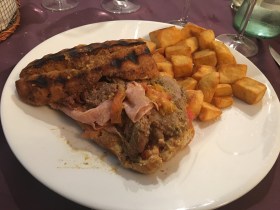
My companion, for his second course, choose Sandwich Cubano, which had originally interested me too.  The menu told us it would be a sandwich consisting of mojo pork (mojo being a spicy sauce from Cuba and other Spanish cultures), swiss cheese, smoked ham and tomatoes all served with ranch potatoes.

IMG_1980.JPG

The bread was quite well grilled (burned?) on the outside which ought to have indicated that it was nice and crunchy but apparently it was soft and ‘wet’ both inside and out.  He thought the pork a bit dry and certainly the potatoes were cold.  This dish was not the picture of loveliness of the other things we ate.  It’s a shame because I think it had the makings of something quite delicious but it simply didn’t deliver.

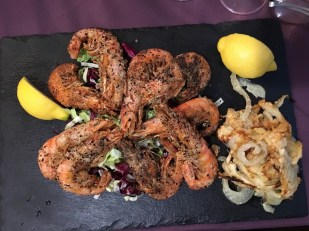
My second course was much nicer and was described as Gamberi al sale picante affumicato.  Big fat juicy prawns in a smokey, salty and spicy coating – they were messy to eat but absolutely delicious. They were served with a little salad of fennel and melted cheese, which I’m going to try cooking myself but I’ll served it warm not cold.

IMG_0866.jpg

I will go back to Reggio Emiglia one day and try to find other interesting places to eat.  Many bars seem to offer nibbles of parmesan cheese and the wonderful local hams and salamis so I think it’ll be a great place for an aperitivo too.

Blog at WordPress.com.

Up ↑